Primary Marine Flotation Assemblies & Float Hoses
Explore precision-molded floating modules and marine hose assemblies built to absorb hydraulic slamming forces, prevent line crimping, and maintain consistent marine freeboard.

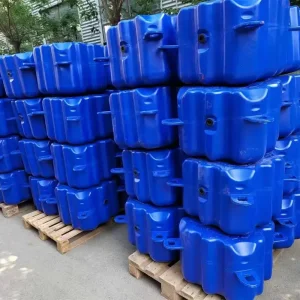

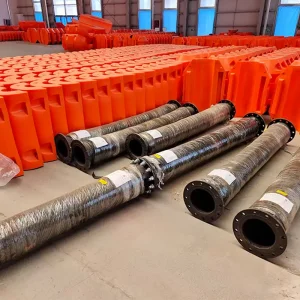
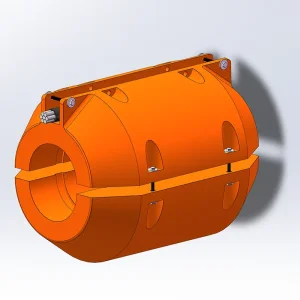
The Engineering Dynamics of Float Hose Manufacturing
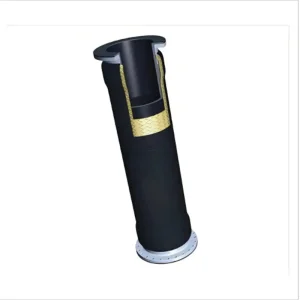
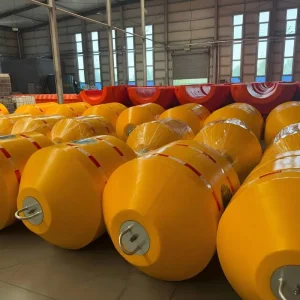
A float hose represents a mission-critical hybrid mechanical assembly: high-tensile elastomeric compound layers engineered to withstand abrasive mine tailings and slurry, jacketed with integral closed-cell polyurethane foam or clamp-on rotomolded polyethylene buoyancy shells.
Structural Integrity & Slamming Resistance
Unlike rigid pipelines, offshore float hoses undergo severe torsional deflection, wave slamming, and cyclical flexing. High-grade custom float hoses combine inner rubber tube liners (natural rubber/BR blends for slurry abrasion, or NBR for hydrocarbon resistance) with multiple plies of high-tensile cord and embedded helical spring steel wire.
Integrated vs. Modular Buoyancy Modules
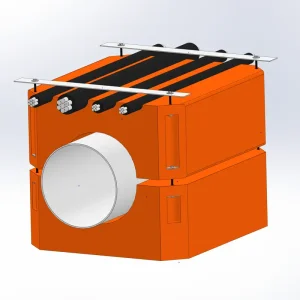
Procurement teams evaluate two core buoyancy designs: continuous integral floating hoses featuring closed-cell uncompressed cellular PU foam beneath an outer hypalon-coated cover, and modular rotational-molded high-density polyethylene (HDPE) clamshell float collars bolted externally over standard heavy-duty discharge hoses.
Hydrostatic Stability & Freeboard Ratios
Engineering standards demand that float hoses maintain a reserve buoyancy of 20% to 30% when fully laden with high-density slurry (specific gravity ranging from 1.3 to 1.8 t/m³). Inadequate reserve buoyancy leads to partial submergence, severe hydrodynamic drag, excessive anchor fatigue, and catenary stress failures.
Chinese Manufacturing Hub Advantages & Global Procurement
Why Tier-1 EPC contractors and marine terminal operators partner directly with specialized manufacturers in Shandong, China for large-diameter offshore buoyancy infrastructure.
Vertically Integrated Raw Materials
Binzhou and the greater Bohai Rim represent one of the world's most concentrated clusters for high-grade synthetic elastomers, polymer formulation, and heavy rotational tooling. Direct access to high-density polyethylene resin and synthetic polybutadiene compounds eliminates compounding markups and guarantees resin traceability batch by batch.
Advanced Microprocessor Control
Our production facilities utilize modern multi-axis automated rotational casting equipment equipped with variable-frequency drive controls and real-time electronic mold core pyrometers. This prevents thermal degradation of polymer cross-links, ensuring consistent wall thickness and zero internal voiding across the entire float body.
Port Proximity & Global Logistics
Operating near Qingdao and Tianjin maritime freight gateways minimizes domestic inland transit times for oversized marine float hoses and pipeline modules. Factory-level nesting and palletization techniques reduce 40-foot High-Cube shipping container volume requirements by up to 35%, delivering substantial total-landed-cost savings.
Slurry Pipeline Engineering Rule of Thumb
Never size float hose buoyancy based on an empty pipe dry weight. Calculate total displaced water against the maximum operational density of slurry, dynamic wave slamming margins, and fitting weights.
Custom Float Hose & Buoyancy System Pricelist Parameters
Market pricing for industrial float hoses fluctuates according to diameter, carcass reinforcement plies, working pressure ratings, and buoyancy architecture. Below is an engineering estimation guide.
| Nominal ID (mm/inch) | Working Pressure (bar) | Buoyancy System | Reserve Freeboard | Standard Length (m) | Typical FOB Price (USD) | Lead Time |
|---|---|---|---|---|---|---|
| DN200 (8") | 10 – 15 Bar | Modular HDPE PE Float Half-Rings | ≥ 25% Active Freeboard | 6.0m / 11.8m | $380 – $650 / segment | 10 – 15 Days |
| DN300 (12") | 15 – 20 Bar | Split Rotomolded PE / Polyurethane Cored | ≥ 25% Active Freeboard | 6.0m / 11.8m | $750 – $1,250 / segment | 15 – 20 Days |
| DN450 (18") | 15 – 25 Bar | Integrated Closed-Cell PU Foam Body | ≥ 28% Active Freeboard | 9.6m / 11.8m | $1,800 – $2,900 / unit | 20 – 25 Days |
| DN600 (24") | 15 – 25 Bar | Integrated Dual-Carcass Float Hose | ≥ 30% Active Freeboard | 11.8m Standard | $3,600 – $5,400 / unit | 25 – 35 Days |
| DN800 (32") | 10 – 20 Bar | High-Density Dredge Discharge Marine Assembly | ≥ 30% Active Freeboard | 11.8m Standard | $6,200 – $9,800 / unit | 30 – 40 Days |
*Disclaimer: Pricelist values represent typical baseline specifications for project budgeting. Final quotes vary by steel end fitting metallurgy (Q235, 316L, Duplex), inner tube abrasion compound thickness, and certification requirements (OCIMF, BV, CCS).
Global Standards & Quality Verification Framework
Industrial float hoses operating in open-water environments face stringent regulatory inspection. Compliance with established international standards guarantees risk mitigation against offshore spillages or line separation.
OCIMF & GMPHOM 2009
For hydrocarbon and near-shore fuel discharge lines, hose strings conform rigorously to the Oil Companies International Marine Forum Guidelines for the Manufacture of Offshore Mobile Marine Hoses.
ISO 28017 / EN 1762
Rubber hoses and hose assemblies for dredging applications are tested for elongation under proof pressure, minimum bend radius (MBR), burst safety factors (≥ 4:1), and carcass adhesion.
Third-Party NDT & Witnessing
Our manufacturing and testing lines provide complete accommodation for third-party auditing inspection bodies including Bureau Veritas (BV), Lloyd's Register (LR), DNV, and CCS.
UV & Salt-Spray Resistance
External PE shells and orange high-visibility chloroprene rubber jackets undergo accelerated weathering tests according to ASTM G154, ensuring no polymer brittleness after prolonged tropical marine exposure.
Localized Applications & Field Engineering Scenarios
Float hose strings and pipe float assemblies are customized across diverse marine environments, each presenting unique hydrodynamic and geochemical constraints.
Cutter Suction Dredging & Sand Bypass
Deployed in port deepening and channel dredging, where high flow velocities (up to 7-9 m/s) of sharp quartz sand accelerate abrasive wear. Heavy-duty natural rubber compounding and reinforced rubber bead flanges provide flexible articulation through dynamic tidal cycles.
Tailings Disposal in Mining Ponds
Mining operations often convey corrosive slurry containing heavy metals or chemical residues at high altitudes or sub-zero environments. Specialized UV-stabilized rotomolded HDPE modular pipe floats provide dependable, chemical-resistant buoyancy that avoids cold-cracking down to -40°C.
Offshore SPM / CALM Terminal Offloading
Single Point Mooring (SPM) lines transfer crude oil and refined hydrocarbons in open ocean conditions. Float hoses require dual-carcass construction with electronic leak detection, where an auxiliary outer carcass captures hydrocarbon leakage if the primary carcass experiences burst failure.
Frequently Asked Questions by Dredging & Marine Engineers
Essential answers covering engineering parameters, structural lifespan, mooring compatibility, and commissioning guidelines.
Specialized Flotation Solutions & Marine Hardware
Explore additional modular marine buoy systems, subsea support units, and specialized floating pipeline infrastructure.