
High-Integrity Floating Pipeline & Offshore Hose Modules
Explore our certified rotationally moulded clamp-on pipe floats, specialized submarine tie-in floaters, and heavy-duty slurry/oil suction and discharge rubber hoses designed for aggressive offshore conditions.

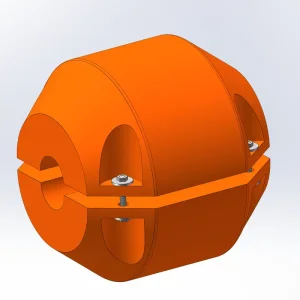
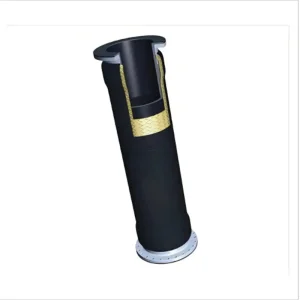
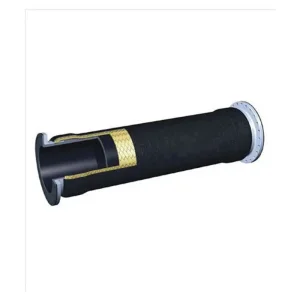
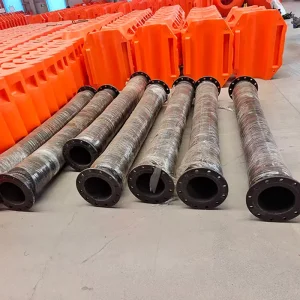

China Factory Manufacturing Advantages for Offshore Floating Hoses
How state-of-the-art rotational molding integration, automated vulcanization, and advanced elastomer polymer engineering deliver world-class hydrodynamic performance and substantial procurement savings.
In offshore marine infrastructure, deep-sea oil offloading, and aggressive capital dredging projects, floating hose offshore assemblies represent the single most critical link between fixed/floating production facilities (FPSO, FSO, CALM buoys) and shuttle tankers or land-based processing plants. For decades, international engineering procurement contractors (EPCs) were constrained by prohibitive lead times and inflated capital costs from legacy Western brands. Today, Shandong Binzhou Juhua Rubber & Plastic Co., Ltd. (operating internationally under Juhua / Giant Rubber) pioneers the modern paradigm of offshore flotation and fluid transfer manufacturing directly from China's coastal industrial belt.
Integrated Dual-Material Synergy
Unlike fragmented workshops that outsource buoyancy shells, our Lizhuang Town industrial complex merges precision polymer rotational moulding with heavy rubber vulcanization autoclaves under one roof. We co-engineer the high-density polyethylene (HDPE) buoyancy half-shells alongside our heavy-duty flexible elastomer cores, eliminating tolerance mismatch and clamp slip during open-sea cyclical wave bending.
Closed-Loop Temperature Control
Our rotomolding infrastructure utilizes electronic automatic infrared temperature measurement paired with variable-frequency axial rotation. This prevents internal stress concentrations and thin spots in our UV-stabilized Virgin LLDPE / HDPE shells, ensuring uniform 8mm to 18mm wall thicknesses capable of absorbing high-velocity vessel contact and cyclic ocean fatigue without stress cracking.
Total Supply Chain Compression
By controlling raw virgin resin compounding, computerized synthetic tire cord reinforcement winding, and high-tensile carbon steel flange machining in-house, Juhua compresses manufacturing lead times from the Western standard of 28–36 weeks down to 6–10 weeks, slashing project critical-path lead times while delivering a 30% to 45% CAPEX advantage.
Verified Interchangeability & Standardization
Standardized steel moulds with CNC-machined split lines guarantee identical bolt-hole circle PCDs, flange mating dimensions, and external cradle tolerances batch after batch. Replacement floating hose segments integrate seamlessly into legacy offshore strings originally supplied by Yokohama, Dunlop, or Trelleborg without requiring on-site flange re-drilling or buoyancy re-balancing.
Macro Industry Megatrends & Offshore Technology Shifts
From the strict enforcement of OCIMF GMPHOM 2009 dual-carcass standards to green bunkering for alternative fuels, floating hose architectures are undergoing unprecedented technical evolution.
Double Carcass Secondary Containment
Global offshore environmental regulations (led by OCIMF GMPHOM guidelines) mandate fail-safe dual-carcass systems. Our offshore floating strings integrate an independent inner primary carcass that absorbs operating fatigue, wrapped inside a robust secondary containment carcass equipped with optical or hydraulic leak sensors that trigger immediate alerts upon primary carcass rupture.
Closed-Cell Polyurethane Foam Integration
Traditional hollow blow-moulded floats pose severe environmental risks when punctured by floating debris or workboat propellers. Modern Juhua floating bodies utilize high-density polyurethane (PU) foam filling injected via computerized high-pressure machines. Even if the outer PE skin suffers catastrophic breach, the closed-cell matrix absorbs <1% water volume, preserving pipeline freeboard.
Green Fuel & Offshore Bunkering Evolution
As the international maritime fleet pivots to methanol, biofuels, and liquid hydrogen/ammonia carriers, offshore floating hoses require advanced inner linings. Juhua's R&D engineering incorporates cross-linked synthetic elastomers, fluoro-elastomers, and UHMWPE composite barrier plies that prevent chemical permeation, swelling, and ozone-induced surface micro-fissuring.
Mission-Critical Offshore Applications & Hydrodynamic Environments
Each maritime deployment imposes distinct mechanical stresses—from high shear wave dynamics at open-sea buoy moorings to heavy abrasive solids transfer in deepwater land reclamation.
| Offshore Application | Primary Hydraulic Medium | Predominant Hydrodynamic Stresses | Recommended Hose & Buoyancy Architecture |
|---|---|---|---|
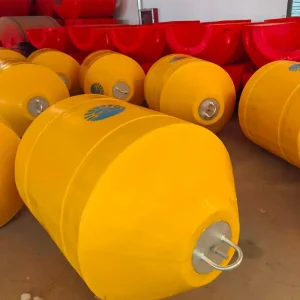
| CALM / SPM Crude Offloading | Crude Oil, Condensates (Density 0.82–0.94 g/cm³) | Cyclic wave fatigue, 360° weathervaning, tanker berthing surge, torsional wind-up | GMPHOM 2009 Double Carcass Mainline String + Barbell Tail Hose + Integral Flange Buoyancy |
| FPSO Tandem Offloading String | Stabilized Crude, Slops, Water-Cut Emulsions | Severe axial dynamic tension, prop-wash impingement, high-amplitude hogging/sagging | Continuous Integral Foam Floating Hoses + Heavily Reinforced Tanker Rail End Hose |
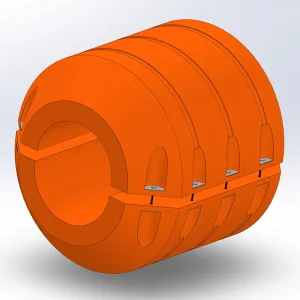
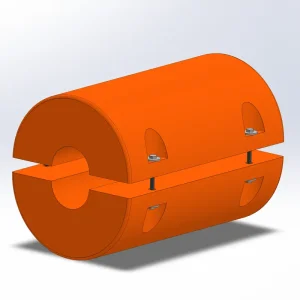
| Capital Dredging & Sand Reclaim | Abrasive Sand Slurry, Coral (Density 1.6–2.1 g/cm³) | Severe internal carcass abrasion, sudden vacuum collapse, shore surf zone impact | Heavy-Duty Steel-Ring Reinforced Flexible Rubber Hose + Split-Clamp HDPE Pipe Floats |
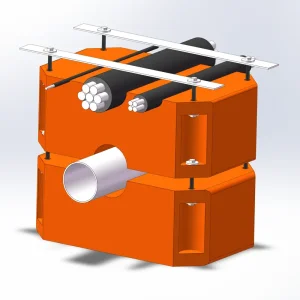
| Offshore Mine Tailings Disposal | Acidic/Alkaline Slurries, Heavy Tailings | Chemical corrosion, localized settling plug loads, UV degradation, deepwater currents | Anti-Corrosive Inner EPDM/Natural Rubber Hose + UV-Stabilized LLDPE Pipe Floats with Cable Troughs |
| Subsea Tie-In & Shore Approach | Hydrocarbons, Desalination Brine, Process Water | Transition bending at seafloor riser touch-down, tidal surf wave pounding, rocky abrasion | Graded Stiffness Submarine Hoses + Subsea Tie-In Floats with Calibrated Step-Down Buoyancy |
System Solutions: Buoyancy Sizing & String Hydrodynamic Stability
The cardinal sin in offshore pipeline engineering is sizing buoyancy modules against an empty hose. Real-world hydrodynamics demands rigorous calculation under peak slurry gravity and high-sea wave excitation.
The Offshore Reserve Buoyancy Theorem
To prevent dynamic sinking, submerged vortex shedding, and excessive flexural wear on end flanges, the net buoyancy provided by the pipeline floats or integral foam matrix must guarantee that 20% to 30% of the hose outer diameter remains constantly above the waterline (freeboard) during maximum operating throughput.
            B_total ≥ [W_hose + W_flanges + (V_internal × ρ_slurry) + W_accessories] × (1.20 ~ 1.30)


            Where:

            • B_total = Total Buoyancy Provided (kgf)

            • W_hose = Dry Mass of Hose Assembly (kg)

            • V_internal = Internal Fluid Volume (m³)

            • ρ_slurry = Conveyed Medium Density (kg/m³)

            • 1.20 - 1.30 = Safety Factor for Wave Action & Marine Growth
Critical String Configuration Architecture
An offshore floating hose string is never a homogenous run of identical hoses. An engineered offshore string incorporates specialized functional segments designed to withstand localized bending moments:
- First-Off Buoy / Manifold Hose: Equipped with reinforced end-stiffeners and extra buoyancy to absorb continuous cyclic motion directly adjacent to the Single Point Mooring (SPM) or CALM buoy swivel.
- Mainline Floating Hoses: Standard float segments engineered with uniform bending stiffness ratios (BSR) to maintain a smooth catenary profile without localized "knuckling".
- Reducer & Y-Piece Floats: Specially moulded asymmetric float bodies that accommodate diameter changes while keeping the string level on the water surface.
- Tail / Tanker Rail Hose: Highly flexible, non-buoyant or barbell-floated end segment designed to be hoisted safely over the shuttle tanker manifold rail without kinking or damaging internal fabric plies.
Global Enterprise Procurement Criteria: FAT, QA/QC & Lifecycle TCO
Procuring offshore floating hose infrastructure demands zero room for failure. Review the mandatory quality documentation and testing verifications standard on every Juhua export consignment.
Factory Acceptance Testing (FAT)
Every floating hose and buoyancy shell undergoes 100% Factory Acceptance Testing. Hose cores are subjected to hydrostatic proof testing (typically 1.5x to 2.0x design working pressure), electrical continuity/discontinuity verification, vacuum resistance testing, and full bending stiffness analysis witnessed by third-party surveyors (DNV, ABS, or Bureau Veritas).
Traceable Mill Certifications
We supply comprehensive EN 10204 3.1 / 3.2 inspection certification packages. This includes virgin LLDPE polymer melt-flow index (MFI) and tensile yield tests, polyurethane foam core compression density curves (minimum 35–45 kg/m³), rubber vulcanization cure rheometer charts, and carbon steel flange chemical/impact test certs.
Optimized Export Packaging Logistics
Marine floats and heavy hoses present substantial shipping volume challenges. Juhua utilizes customized container nesting packing matrices that enable split-shell clamp floats to nest compactly within 40ft High Cube containers, lowering trans-oceanic freight costs by up to 35% compared to pre-assembled bulk transport.
Frequently Asked Questions: Offshore Floating Hoses & Buoyancy
Comprehensive engineering clarifications addressing design calculations, seawater corrosion resistance, warranty covenants, and procurement requirements.
Comprehensive Marine Buoyancy, Pontoon & Specialty Hose Assemblies
Explore our extended portfolio covering robust pontoon sections, floating barrier trash booms, deepwater subsea pipeline floats, and specialized high-performance sediment transfer rubber hoses.




Initiate Your Custom Offshore Floating Hose Project
Collaborate directly with our senior marine flotation engineers. Send your pipeline specifications, medium densities, and bathymetric data for verified buoyancy calculations, CAD drawings, and export container packing layouts.