
Industrial Flotation & Marine Dock Modules
Engineered for extreme hydrodynamic loads, high saline exposure, and continuous industrial dredging duty.




Global Commercial & Industrial Landscape of HDPE Maritime Systems
Evaluating structural shifts from legacy steel pontoons and degraded timber to high-molecular rotomolded polyethylene docks in marine infrastructure.
Corrosion Elimination & OPEX Shift
Traditional maritime berthing and floating industrial docks built from coated mild steel or treated timber suffer rapid degradation under continuous saline, thermal, and biological attack. The high-density polyethylene (HDPE) paradigm delivers an inert surface that prevents electrochemical corrosion entirely.
- Zero anti-fouling paint recoating cycles required
- Immunity to sulfate-reducing bacterial micro-corrosion
- Over 60% reduction in long-term maintenance costs
Dynamic Elasticity & Wave Attenuation
Rigid concrete pontoons experience extreme shear stress when operating under non-linear cyclic wave loading in open anchorages. Engineered HDPE dock units utilize rotational molecular orientation to exhibit controlled viscoelastic deflection under high shock loads.
- Elastic shock dispersion during heavy commercial vessel impact
- Self-dampening behavior in shallow water chop conditions
- Reduced anchor-cable fatigue tension by up to 28%
Modular Scalability for EPC Delivery
Modern coastal mega-projects require modular components that pack efficiently into standard 40ft high-cube shipping containers and assemble with rapid mechanical interlocks on remote coasts without requiring heavy crane barges.
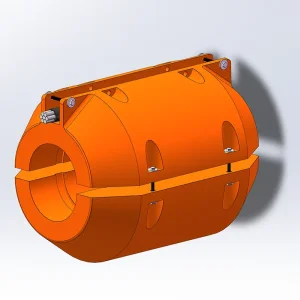
- Interchangeable shell halves for global logistics efficiency
- Hot-dip galvanized or 316 stainless connecting hardware
- Rapid turnkey commissioning with standard field tooling
Precision Manufacturing & Structural Architecture
How Juhua’s automated process lines ensure wall thickness consistency, high impact resistance, and exact buoyancy control.
Variable-Frequency Closed Moulding
Shandong Binzhou Juhua utilizes multi-axis biaxial rotomoulding systems equipped with precise electronic multi-zone temperature controls. This closed-loop process ensures uniform resin flow, eliminating thin corners and structural pinch defects across complex geometries.
High-Density Closed-Cell Core
The interior cavity of our heavy-duty marine pontoons and dredging floats is pressure-injected with marine-grade polyurethane (PU) closed-cell foam. Even in the rare event of puncture from high-energy vessel collision, water absorption remains under 1% by volume.
UV-8 & Thermal Stabilization
Raw materials are compounded with premium virgin low-density and high-density polyethylene polymer matrices infused with UV-8 stabilizers and carbon dispersion masters. This molecular structure protects against brittle failure under continuous equatorial solar radiation.
Buoyancy Margin Calculation Standard
Engineering principle for continuous dynamic stability under full slurry displacement:
Specialized Industrial & Coastal Application Environments
Proven engineering solutions deployed across 80+ countries in major ports, inland waterways, and heavy mining infrastructure.
Deep-Sea Port Maintenance & Expansion
High-capacity pipe floats and navigational mooring buoys provide continuous buoyancy for suction cutter dredging pipelines during berth deepening and fairway navigation protection.
Mining Tailings & Slurry Transport
Engineered float assemblies built to handle high specific gravity slurries (ρ > 1.4 t/m³) with integrated conduit channels for auxiliary high-voltage pump power lines.
Hydroelectric Dams & Trash Booms
Modular floating barriers configured with subsurface steel debris curtains prevent waterborne wood, plastic pollution, and silt from entering turbine water intakes.
Modular Marinas & Work Pontoons
Non-slip modular floating work platforms and commercial marina finger berths adaptable to seasonal tidal ranges with minimal environmental impact on the seabed.
Compliance, Material Testing & Quality Governance
How Shandong Binzhou Juhua guarantees batch-to-batch structural integrity, interchangeability, and environmental compliance.
Raw Material Traceability
Every polymer batch is certified with Melt Flow Index (MFI), Environmental Stress Crack Resistance (ESCR ASTM D1693 > 1000 hrs), and standardized Charpy impact testing documentation.
100% Interchangeability Standard
Standardized CNC precision moulds ensure both symmetrical halves fit installed dredge lines precisely. Replacement shells bolt into existing pipelines seamlessly, reducing downtime.
Project Handover Warranty Policy
Our comprehensive factory guarantee extends 18 months from buyer handover to the site investor, or 12 months from final project commissioning, backed by global engineering support.
Technology Roadmap: Next-Generation Smart Marine Buoyancy
Advancing marine flotation with integrated IoT monitoring, circular bio-polymers, and advanced subsea composite cores.
IoT-Enabled Buoyancy Telemetry
Embedding LoRaWAN-connected displacement and draft sensors directly into rotomolded float shells to monitor pipeline slurry sedimentation and freeboard levels in real-time.
Circular Closed-Loop Marine HDPE
Developing 100% recyclable, circular-economy marine floats using high-tenacity post-industrial ocean polymers with certified tensile strength retention.
Deepwater Syntactic Formulations
Engineering specialized hybrid syntactic core fills for ultra-deep subsea tie-in applications resistant to long-term hydrostatic pressure without water ingress.
Self-Navigating Modular Pontoons
Developing autonomous dock modules equipped with solar electric propulsion for automated dynamic positioning in offshore energy and emergency flood scenarios.
Frequently Asked Technical Questions
Practical engineering insights for dredging superintendents, port designers, and marine procurement directors.
What are pipeline floats, and what is their primary function?
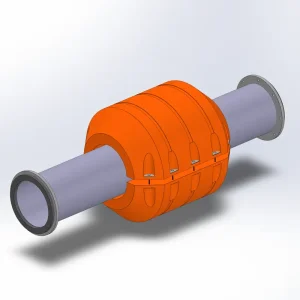
Pipeline floats—also known as dredge floats or buoyancy modules—are clamp-on polyethylene bodies fitted around discharge pipelines. They keep dredging or water-transfer pipelines floating, structurally aligned, and clearly visible above the water surface to protect against excessive bending fatigue and marine traffic collisions.
How do you calculate the required buoyancy volume for slurry pipelines?
Total float buoyancy must exceed the combined operating weight of the pipe shell, the conveyed slurry medium at maximum concentration, and all connection flanges/bolts. As an industry rule of thumb, buoyancy should provide a 20% to 30% reserve margin, ensuring approximately 25% of the pipe diameter stays safely above the water surface under full load.
Why is rotomolded polyethylene superior to steel for marine docks?
Polyethylene is electrochemically inert and completely immune to salt spray, electrolytic corrosion, and marine borers. Unlike welded steel pontoon floats that require sandblasting, recoating, and sacrificial zinc anodes, HDPE dock products are maintenance-free, resilient against impact, and do not contaminate sensitive aquatic environments.
What is the standard warranty coverage on custom factory orders?
Our warranty takes effect the day the buyer hands over the equipment to the investor/owner and covers up to 18 months post-handover, or 12 months after the completed field installation date—whichever occurs first. This protects against manufacturing defects, structural delamination, and premature UV degradation.
What technical data is required to order custom-sized pipe floats?
To deliver an accurate hydrodynamic quotation, provide: outside pipe diameter (OD), pipe wall thickness and material, slurry density (t/m³), line operating pressure, ambient water type (freshwater, seawater, or tailings tailrace), wave height exposure, required freeboard height, and destination port for freight optimization.
Can float geometry, markings, and bolt patterns be fully customized?
Yes. In addition to our modular standard range, our in-house engineering team designs and fabricates custom cast aluminum and sheet-steel CNC rotomoulds. We can incorporate molded cable troughs, custom bolt slot patterns, high-visibility marine pigmentation, reflective solar tapes, and raised customer branding logos directly into the shell.
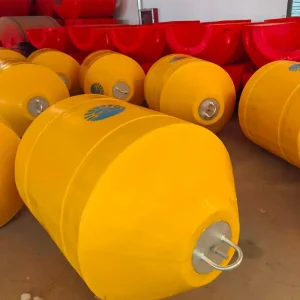
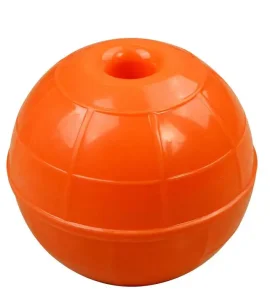
Specialized Offshore Mooring, Subsea & Pontoon Modules
Heavy-duty marine components tested for critical anchorage, subsea line balancing, and water infrastructure.


Factory Verification & Technical Consultation
Work directly with Shandong Binzhou Juhua’s rotomolding engineers to eliminate distribution markups, accelerate delivery, and ensure exact project compliance.
Direct Engineering Hotline
Bypassing trading intermediaries gives you instant access to mould technicians and marine buoyancy specialists for fast quotation calculations and custom CAD drawings.
- WhatsApp / Direct: +86-158-6665-7686
- Technical Email: [email protected]
Factory Address & Audits
We welcome third-party technical quality audits (SGS, Bureau Veritas, DNV) at our advanced manufacturing campus in Shandong Province, China.
- West Industrial Park, Lizhuang Town
- Huimin County, Binzhou City, Shandong
Rapid Turnaround Capabilities
With an extensive mould inventory covering dredging pipe outer diameters from DN110 to DN1200, we support rapid tooling and high-volume order dispatch.
- Short lead times for standard diameter shells
- Direct container stuffing and sea-freight packing