High-Performance Pipeline Flotation Systems
Featured rotational molded industrial pipe floats engineered for maximum hydrostatic stability, tensile strength, and impact resistance in critical fluid transfer applications.



Macro-Industrial Demand & Global Procurement Dynamics
Analyzing high-tonnage marine logistics, civil coastal protection, hydraulic dredging, and tailings remediation infrastructures worldwide.
Civil Maritime & Reclamation
Global megaprojects in land reclamation, deepwater navigation channel desilting, and port expansions require heavy-duty buoyancy shells capable of supporting discharge lines over 1,200 mm OD. Pipeline buoyancy failure directly triggers pump cavitations, sediment pipeline rupture, and immense vessel standby demurrage costs.
Mining Tailings & Slurry
Modern mineral extraction operations are switching toward overland floating tailings transfer to reduce footprint and dam failures. Heavy-density slurry transfers (often with specific gravities exceeding 1.35 to 1.65 t/m³) mandate custom-engineered polyurethane foam fills that resist hydrostatic crushing under violent surges.
Offshore Desalination & Energy
Thermal effluent discharge, brine outflow dispersal lines, and floating intake networks for industrial desalination plants demand high UV resistance, chemical inertness, and marine organism anti-fouling characteristics that steel pontoons cannot sustainably deliver without toxic coatings.
Engineering Buoyancy Calculation Benchmark
Procurement teams frequently underestimate the submerged weight dynamics of sediment pipelines. Standard operational protocols dictate that total float buoyancy must not simply balance an empty pipe, but provide a 20% to 30% reserve margin under peak slurry loading conditions.
This ensures that approximately ¼ of the pipeline's outer diameter remains clearly elevated above the waterline, mitigating hydrodynamic wave drag, seabed scouring during low tides, and structural hogging-sagging fatigue.
            // Hydrostatic Calculation Equation


            Total Buoyancy Reserve (Bres) ≥ [

              Wpipe (kg/m) +

              (π × (ID/2)² × ρslurry) +

              Wflange_bolts (kg/m)

            ] × Safety Factor (1.25 ~ 1.30)


            *Where ρslurry represents hyper-concentrated medium density (1,300 - 1,650 kg/m³).
Rotomolding Innovation & Structural Reliability
Our Huimin manufacturing complex operates high-yield rotational molding facilities engineered with variable-frequency controls and robotic pyrometric temperature tracking.
Virgin LLDPE Polymers
Utilizing premium rotomolding-grade Linear Low-Density Polyethylene infused with UV stabilizers (UV8 to UV16). Zero recycled regrind ensures pristine chemical resistance against marine saline, hydraulic fluids, and severe solar photodegradation.
Automated Thermal Control
Closed-loop, electronically managed multi-axis rotational heating ensures an ultra-uniform shell wall thickness (8 mm to 22 mm). Eliminates traditional corner thinning and weld seams, eliminating stress cracks under heavy wave impact.
Closed-Cell PU Core Infill
Pressure-injected high-density polyurethane foam (32–45 kg/m³) provides failsafe flotation. Even in the extreme event that external wall integrity is breached through collision, the non-absorbing closed-cell core prevents water ingress.
Marine-Grade Hardware
Fastening recesses molded directly with anti-rotation locking profiles. Supplied with hot-dip galvanized (HDG) or AISI 316 stainless steel bolts, flanged washers, and high-tensile locking nylon nuts to eliminate loose slippage under vibration.
Standardization, Verification & Global Compliance
Juhua ensures uncompromising reliability, adhering strictly to global marine construction and industrial fluid transfer quality benchmarks.
Hydrostatic Compression
Modules undergo destructive compression tests and buoyancy displacement validation in water chambers to simulate deep-water subsea tie-in operations and high-velocity discharge shockloads.
ISO 9001 & ASTM Standards
Every batch meets rigorous testing protocols for Tensile Yield Strength (ASTM D638), Flexural Modulus (ASTM D790), Environmental Stress Crack Resistance (ASTM D1693), and Shore D Hardness.
Worldwide Project Logistics
Custom nested stacking molds maximize volumetric sea-container utilization (20GP, 40HQ, Flat Rack). Backed by an 18-month warranty post-handover or 12-month post-installation guarantee.
Technical Roadmap: Smart Flotation & Ecological Engineering
Meeting the evolving demands of autonomous marine monitoring, offshore renewable infrastructures, and circular materials.
IoT-Enabled Buoyancy Telemetry
Integration of low-power solar IoT sensors, GPS geofencing transponders, and pressure sensors embedded inside pipeline float cavities to monitor localized pipe stress, tilting, and mooring detachment in real time via satellite telemetry.
Cable-Integrated Floating Ducts
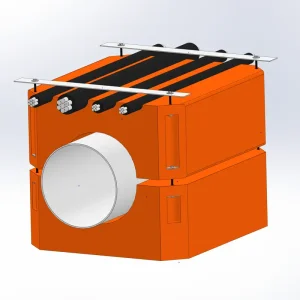
Next-generation pipe floats featuring built-in upper cable troughs designed to simultaneously transport heavy industrial discharge conduits and power/data umbilical cables to floating offshore substations and pump barges.
Circularity & Bio-Compatible Shells
Pioneering the utilization of recyclable non-leaching polyolefin polymers and bio-compatible outer texturing that minimizes microplastic breakdown under extreme abrasion from riverbed cobbles and high-current marine sands.
Frequently Asked Questions on Heavy-Duty Pipe Floats
Authoritative technical insights for marine contractors, dredging engineers, and industrial procurement managers.
What are pipeline floats and how do they function?
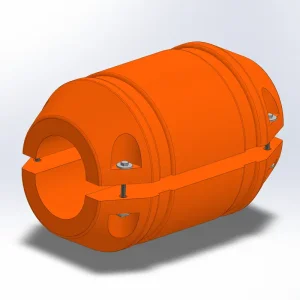
Pipeline floats (also termed dredge floats or buoyancy modules) are rotationally molded clamp-on polyethylene bodies designed in matching semi-circular halves. Secured tightly around steel, HDPE, or flexible rubber discharge pipelines, they offset the submerged deadweight of the pipes and the internal fluid slurry to maintain required freeboard, pipeline alignment, and visibility on water surfaces.
How do you accurately calculate the quantity of floats required?
Total buoyancy must exceed total weight. Calculate the combined weight of the pipe, the conveyed medium (slurry density must be used, not clean water), and all fittings/flanges. The floats should deliver a minimum 20% to 30% reserve buoyancy margin, ensuring roughly ¼ of the pipeline's diameter sits above the waterline to counteract hydrodynamic wave shock and avoid bottom scouring.
Why is rotational molded polyethylene preferred over steel pontoons?
Polyethylene is inherently chemically inert, never rusts, and exhibits exceptional resistance to saltwater corrosion, heavy marine fouling, and UV photodegradation. Unlike welded steel pontoon floats, PE floats do not require sandblasting or toxic anti-corrosion coatings, eliminating costly re-coating maintenance and the risk of catastrophic sinkage from weld cracking.
What is the standard warranty and field lifecycle?
Standard warranty begins on the date the buyer hands over the goods to the end investor, valid for 18 months from that handover or 12 months after installation, whichever occurs first. In actual field deployment, UV15-stabilized virgin PE shells consistently operate reliably for over 10 to 15 years in temperate marine and tropical river environments.
What parameters are required for a customized OEM quotation?
To supply an exact engineering quotation, provide: Pipe Outer Diameter (OD), pipe material and wall thickness, conveyed medium specifics (fluid slurry density in t/m³), total pipeline length, environmental setting (river, port, tailings pond, or offshore wave action), target freeboard, color/marking requirements, and destination seaport for logistical consolidation.
Can floats incorporate integrated cable and power troughs?
Yes. Custom rotational molds can be tailored to incorporate dedicated continuous top or side troughs. This enables contractors to safely mount power cables, control umbilicals, GPS wiring, and warning LED battery cables away from water contact, protecting vital electronic systems from abrasive pipe torsion.
Explore More Flotation & Marine Infrastructure Products
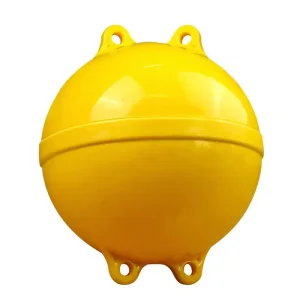
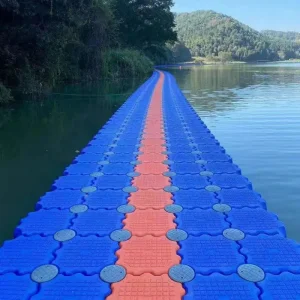
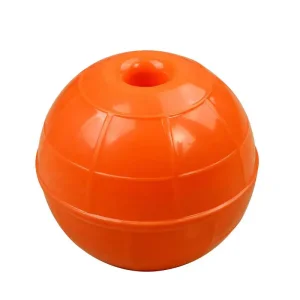
Extended inventory of rotomolded buoys, mooring systems, and floating platforms engineered to global industrial specifications.