
Top-Tier Infrastructure Systems
Industrial Pipeline & Floating Marine Assets
Engineered for seamless compatibility across marine extraction, high-pressure slurry discharge, deep-water pipeline anchoring, and continuous water transport operations.
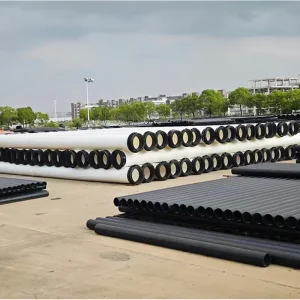
ODM Heavy-Duty Pipeline for Versatile Water and Fluid Transport
Explore Specification
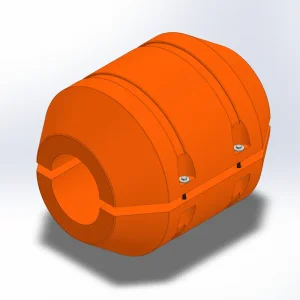
High-Quality Pipe Floats for Mining & Marine Pipeline Systems
Explore Specification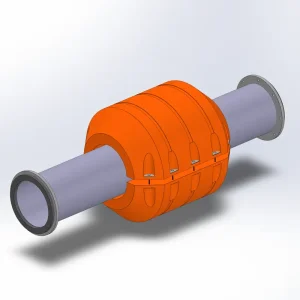
High-Quality Pipeline Float With Modular Buoyancy for Subsea
Explore Specification
Custom Mooring Buoy for Marina Berths and Offshore Platforms
Explore Specification
ODM Subsea Tie-In Pipeline Float – Reliable Underwater Buoyancy
Explore Specification
ODM Floating Barrier Systems for Water Safety & Project Efficiency
Explore Specification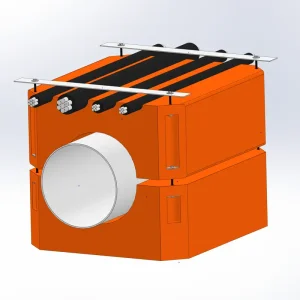
Custom Floating Pipe Supports with Integrated Cable Troughs
Explore Specification
Material Science & Structural Architecture
Advanced Elastomeric Engineering for Mission-Critical Fluid Transfer
In modern industrial hydraulic systems, dredging operations, and high-pressure chemical transport, a rubber hose is never merely a conduit—it is a dynamically flexed pressure vessel subjected to continuous multi-axial shear, abrasive slurries, and aggressive chemical environments.
For more than two decades, Shandong Binzhou Juhua Rubber & Plastic Co., Ltd. (operating globally as Juhua / Giant Rubber) has pushed the engineering boundaries of customized elastomeric design. Modern industrial projects demand strict adherence to hydrodynamic efficiency, tensile reinforcement, and compound resilience. Rather than supplying generic, commodity-grade hoses, modern manufacturing requires formulating vulcanized compounds tuned to molecular molecular kinetics.
When engineering high-duty discharge, suction, or floating dredging hoses, inner tube liners must be formulated according to fluid morphology. For instance, in abrasive quartz sand dredging or iron ore tailings conveying, our compounds utilize high-tensile Natural Rubber (NR) / Polybutadiene (BR) blends exhibiting DIN 53516 abrasion loss metrics under 50 mm³. For hydrocarbon-saturated transfer, hydrogenated Nitrile-Butadiene Rubber (NBR) resists swell fatigue, while EPDM / Chlorosulfonated Polyethylene (CSM) variants withstand severe ozone cracking and thermal oxidation in maritime sun-exposed decks.
Structural integrity depends upon reinforcement geometry. Using computer-controlled high-modulus spiral steel wire winders and multi-ply aramid/polyester cords, each hose achieves a calibrated balance between minimum burst pressure ratings (often exceeding 3:1 or 4:1 design safety factors) and optimal longitudinal flexibility to mitigate hydraulic hammer shockwaves.
Multi-Tier Hose Wall Morphology
Cross-sectional structural integrity calculated for severe fatigue cycling:
-
01
Inner Liner (Primary Fluid Barrier):
Custom-compounded NR/BR, NBR, or conductive cross-linked EPDM with anti-static earthing threads.
-
02
Sub-Liner Cushion Matrix:
High-adhesion skim rubber ensuring mechanical bonding between the liner and radial tensile plies.
-
03
High-Tensile Reinforcement Core:
Dual spiral high-carbon spring steel wire embedded alongside synthetic multi-filament cord arrays.
-
04
Outer Ozone & Wear Shell:
Micro-corrugated or smooth synthetic rubber resisting saltwater oxidation, UV radiation, and impact tear.
20+
Years Engineering Expertise
80+
Countries Deployed
≤45mm³
DIN 53516 Abrasion Loss
4:1
Design Safety Margin
Macro Industry Solutions
Integrated Cross-Sector Hydraulic Systems & Flotation Infrastructure
Connecting heavy manufacturing output with complex field challenges across dredging contractors, port authorities, municipal infrastructure, and mineral processing facilities.
Marine Dredging & Land Reclamation
Dredging pipelines endure continuous high-velocity slurry friction combined with cyclic wave bending. We match custom heavy-duty armored suction and self-floating discharge rubber hoses directly with precision-rotomolded HDPE pipe floats. This single-source synthesis guarantees balanced neutral buoyancy, prevents kinking during severe ocean swells, and extends overall dredge string longevity.
Mining Tailings & Slurry Pumping
Mining operations transporting abrasive crushed ores, thickened slurries, and caustic chemical tailings require exceptional liner durability. Our custom-compounded thick elastomer tubes withstand gouging and severe chemical cavitation. Coupled with floating pipeline systems featuring integrated cable troughs, operations keep slurry transfer and power delivery cleanly bundled on tailing dams.
Port & Harborside Vessel Bunkering
Harbor infrastructure involves relentless vessel berthing, tide fluctuations, and fuel/water transfer risks. Our heavy-duty dock loading hoses incorporate vulcanized built-in steel flanges, eliminating the leakage hazards of external clamp-on couplings. Integrated with modular mooring buoys and navigational channel markers, we deliver complete turn-key port conduit logistics.
Municipal Flood Control & Hydro Projects
Emergency dewatering, reservoir bypass, and temporary water routing demand rapid deployment. By combining lightweight rotomolded floating barriers with high-flexibility suction/discharge hose lines, project managers safeguard hydroelectric intakes from aquatic debris while managing continuous fluid volumes without unexpected hydraulic pressure drops.
Smart Manufacturing Ecosystem
China Factory 4.0: Supply Chain Resilience, Automation & Scale Efficiency
How Juhua’s centralized Shandong manufacturing hub converts digital process control and complete vertical integration into rapid delivery, cost predictability, and zero-defect consistency.
Automated Quality Gate Protocols
Every production batch in our Lizhuang Town industrial facility undergoes automated, recorded stage gates:
1. Spectrometric Compound Verification:
Testing polymer-to-carbon black dispersion ratios, Mooney viscosity, and rheometer cure kinetics.
2. Continuous Mandrel Extrusion Monitoring:
Ultrasonic gauge arrays ensuring concentric wall thickness uniformity within ±0.2mm tolerance limits.
3. Hydrostatic Proof & Burst Chamber:
100% proof pressure testing to 1.5x working limit; sample lot destruction validation to 4x rating.
Global EPC contractors and international marine operators frequently face dual risks: protracted procurement lead times and inconsistent batch quality from fragmented subcontractors. China’s Industry 4.0 manufacturing evolution has transformed this landscape. In our Huimin County industrial zone, Juhua merges precision rotational molding lines with computerized heavy hose fabrication facilities.
Our production line operates under variable-frequency speed control, electronic automatic temperature measurement, and closed-loop PLC steam vulcanization autoclaves. By automating the thermal cure cycle, the polymer matrix avoids under-curing soft zones or over-vulcanized brittleness. The consequence for site operators is total structural interchangeability: whether deploying an expansion string today or ordering identical replacement sections three years later, flange pitch, hose stiffness, and dimensional clearances align precisely.
Furthermore, China’s comprehensive upstream industrial matrix—anchoring domestic production of carbon black, synthetic elastomers, high-tensile steel cord, and rotational molding polyethylene resins—shields international buyers from raw material volatility. With over 100 dedicated technical operators and in-house tooling workshops, we bypass intermediaries, slashing OEM sample turnaround times to under 10 business days and delivering bulk container shipments within tight project timelines.
Forward Engineering
Technical Roadmap & Future Outlook: Next-Gen Elastomers & Smart IoT Hoses
The next decade of fluid transport will bridge mechanical endurance with embedded digital sensing and carbon-neutral polymer architectures.
Embedded Telemetry & Wear Sensors
Juhua’s R&D engineering lab is pioneering the integration of conductive rubber layers and fiber-optic Bragg grating (FBG) filaments woven directly into the carcass plies. These smart telemetry strands continuously monitor real-time wall degradation, structural hoop strain, and temperature anomalies, alerting operators through predictive maintenance dashboards before critical cavitation breaches happen on remote offshore dredging strings.
Bio-Based Polymers & Circular Curing
In response to international ESG directives and scope-3 supply chain emissions scrutiny, our laboratory is scaling sustainable compounding formulations. By incorporating recycled ultra-high molecular weight elastomer particulates, silica compounds derived from rice husk ash, and low-energy continuous curing accelerators, we reduce carbon footprint by up to 28% without compromising tensile break strength or abrasion resilience.
Cryogenic & Deep-Sea Synthesis
With deep-water mineral harvesting and offshore LNG/hydrogen bunkering accelerating, conventional rubber configurations face thermal embrittlement and rapid decompression blister failures. Our technical roadmap introduces fluorosilicone-graphene hybrids rated for extreme ranges (-50°C to +180°C) capable of resisting micro-fissuring under profound hydrostatic deep-sea pressures exceeding 300 meters water column.
Procurement & Quality Governance
Global Engineering Sizing, Standards & Regulatory Conformance
Addressing the technical evaluation parameters demanded by Chief Engineers, Naval Architects, and International EPC Procurement Teams.
| Application Vector | Applicable Standards | Target Rubber Compound | Reinforcement Architecture | Nominal WP / Safety Margin |
|---|---|---|---|---|
| Heavy Slurry Dredge Suction | ISO 28017 / PIANC 2010 | Natural Rubber / BR Blend (≤45mm³) | Dual spiral spring wire + Aramid fabric | 15 to 25 Bar (4:1 Safety Factor) |
| Self-Floating Slurry Discharge | ISO 28017 / EN 1765 | Tear-Resistant NR / SBR Shell | Closed-cell PE foam + Textile plies | 10 to 20 Bar (3.5:1 Safety Factor) |
| Harbor Fuel & Oil Bunkering | EN 1765 / BS EN 13765 | High-Grade Nitrile (NBR) Class F | Embedded anti-static copper wires + Steel | 16 Bar (4:1 Safety Factor) |
| Corrosive Acid & Chemical Flow | EN 12115 / ISO 16999 | Cross-Linked Polyethylene (XLPE) / EPDM | High-strength synthetic textile braid | 10 to 16 Bar (4:1 Safety Factor) |
| High-Pressure Concrete / Grout | ISO 3834 / DIN 53516 | Heavy-Duty Antistatic NR/BR | 4-ply alternating high-tensile steel cord | 40 to 85 Bar (3:1 Safety Factor) |
Total Cost of Ownership (TCO) vs. Initial Acquisition Cost
For international procurement directors, the true financial impact of rubber hose selection is rarely found on the purchase invoice. Premature hose rupture during marine dredging or offshore slurry transfer incurs crippling vessel standby costs, dry dock delays, and catastrophic environmental penalties. By deploying premium wear-resistant rubber liners paired with matched, rotationally molded polyethylene floats, Juhua systems regularly achieve a 40% to 65% reduction in lifecycle operating expenditures (OPEX) over standard off-the-shelf alternatives.
All exported assemblies undergo comprehensive factory acceptance testing (FAT), documented via Mill Test Certificates (MTC) in strict accordance with EN 10204 3.1. Third-party visual and hydrostatic witness inspections by independent notified bodies—including Bureau Veritas (BV), DNV, ABS, or SGS—are seamlessly accommodated at our factory.
Hydrodynamic Sizing & Floating Buoyancy Rule-of-Thumb
A frequent error encountered in dredge string design is sizing pipeline floats purely based on the pipe's unladen dry weight. Under operating duty, high-density slurries significantly increase the total line mass. Sizing engineers must maintain a 20% to 30% buoyancy reserve above the gross aggregate mass (pipe shell + conveyed high-density slurry + mechanical flanges):
Total System Buoyancy ≥ [Mass(Hose/Pipe) + Mass(Slurry) + Mass(Hardware)] × 1.25
This reserve ensures approximately one-quarter of the hose diameter remains visible above the water surface line, minimizing hydrodynamic drag from sub-surface currents and safeguarding against wave overwash sinking.
Technical Clarifications
Custom Rubber Hose Engineering: Frequently Asked Questions
In-depth technical answers addressing material selection, pressure ratings, flange integration, and international shipment logistics.
What is the technical difference between built-in vulcanized flanges and clamped couplings?
Built-in vulcanized flanges integrate high-tensile steel collar flanges seamlessly into the inner reinforcement cord matrix during the mandrel-winding phase. The rubber lining continues completely over the face of the flange, guaranteeing zero metal-to-slurry contact and eliminating leak paths. Clamped nipples rely on external compression, which can loosen or pinch under cyclic bending loads and high pulsating pressures.
How does Juhua determine the correct elastomer formulation for abrasive dredging?
We analyze the conveyed medium's physical profile: mineral hardness (Mohs scale), particle granulometry (microns to boulders), slurry velocity (m/s), and fluid pH. For fine quartz sand slurries, high-resilience natural rubber with rapid rebound prevents cutting wear. For sharp gravel or tailing slurries, polybutadiene-toughened blends resist gouging tear mechanisms.
Can pipeline floats be paired with flexible rubber hoses as well as steel/HDPE pipes?
Yes. Juhua engineers rotomolded polyethylene pipe floats matched to the outside diameter (OD) and bending radius of rubber discharge hoses. When mounted on flexible lines, internal ribbed collar grips hold the float firmly in position without crushing the elastomeric hose wall, providing stable localized buoyancy without restricting joint articulation.
What is the standard warranty period for heavy industrial hoses and flotation assets?
Standard export warranties initiate on the formal date of handover to the project investor and extend for 18 months post-handover, or 12 months following initial active site commissioning, whichever milestone arrives first. Extended lifecycle warranties and preventative spares supply packages are available for multi-year capital projects.
What testing data is supplied with custom manufactured rubber hose orders?
Every shipment comes accompanied by a complete QA documentation dossier including Mill Test Certificates, rubber batch cure rheometer curves, dimensional wall concentricity scans, and hydrostatic proof test verification certificates. Burst test, electrical conductivity, and tensile pull-apart test reports can be furnished upon request.
How are large-diameter hoses and buoyant floats packed for long ocean transits?
Heavy hoses are secured on reinforced steel cradle skids with UV-protective heavy wrapping, preventing ovalization or flat-spotting under cargo weight. End flanges are sealed with heavy wooden or composite end-protectors to safeguard sealing faces. Rotomolded floats are nested or bundled systematically within high-cube shipping containers to optimize freight density.
Complete Offshore & Industrial Ecosystem
Expanded Fluid Handling, Marine Floats & Heavy Rubber Hoses
Complementary engineering components enabling integrated, turn-key hydraulic conduit networks worldwide.
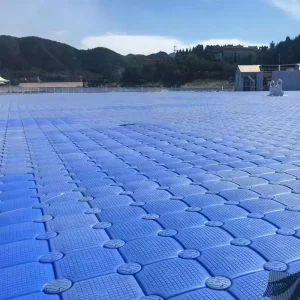
Best High-Performance Floating Pontoon for Water Platforms
Explore Specification
Custom Deepwater Pipeline Support Float – Modular & Reliable
Explore Specification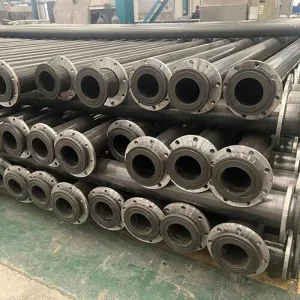
High-Quality Robust Pipeline for Reliable Material Transport
Explore Specification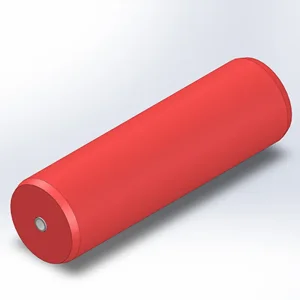
Custom Floating Barrier Systems for Effective Water Safety
Explore Specification
High-Quality Reliable Floating Barriers for Pollution Control
Explore Specification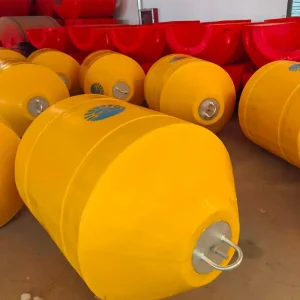
ODM Mooring Buoy for Reliable Marine Infrastructure
Explore Specification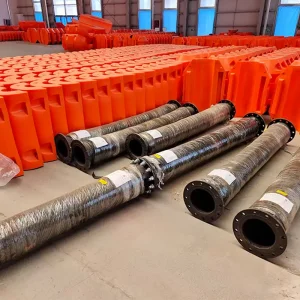
Custom Heavy-Duty Rubber Hose for Marine & Water Management
Explore Specification