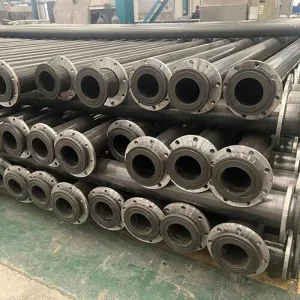
High-Performance Pipeline Floats & Aquatic Marine Modules
Explore standard and customized floating pipeline buoyancy components calibrated for dredging, subsea tie-in, cable integration, and severe coastal operations.
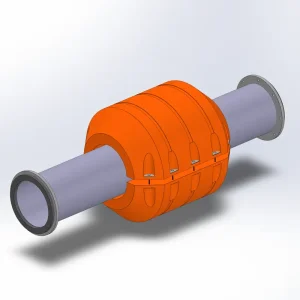
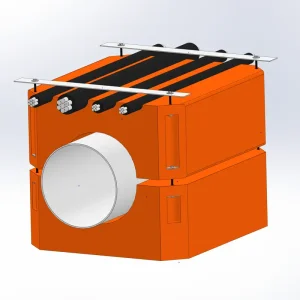



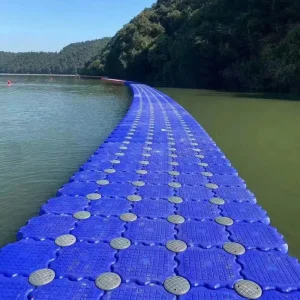
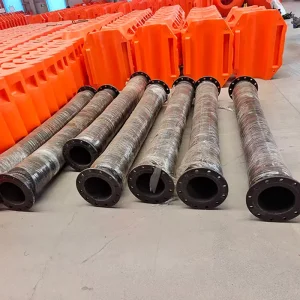
Engineering Architecture of Unitiger Floating Balls & Spherical Buoyancy Modules
A rigorous examination of material selection, rotational moulding mechanics, internal hydrostatic integrity, and hydrodynamic performance across demanding marine environments.
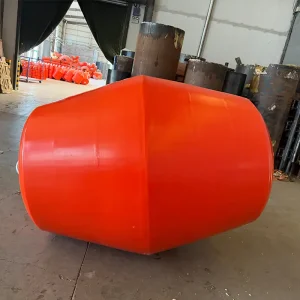
In global marine engineering, dredging operations, and process-fluid management, the term Unitiger floating ball designates high-density, multi-layer spherical and symmetrical flotation modules specifically engineered to withstand omnidirectional hydraulic pressures, intense ultraviolet exposure, and dynamic slurry loads. Unlike conventional hollow blow-moulded spheres that suffer from environmental stress cracking (ESC) and thin polar walls, Unitiger-grade floating balls manufactured by Shandong Binzhou Juhua Rubber & Plastic Co., Ltd. (Juhua / Giant Rubber) rely on advanced rotational moulding technology utilizing virgin high-density polyethylene (HDPE) or linear low-density polyethylene (LLDPE) copolymers combined with closed-cell polyurethane foam injection.
From an engineering perspective, the spherical and semi-spherical geometry provides the highest volumetric displacement-to-surface-area ratio of any hydrodynamic body. This unique structural advantage minimizes surface drag while maximizing gross buoyant force. When deployed in large-scale reservoir covers (such as shade ball blankets), open mining leach pads, aquaculture buffer zones, or as intermediate stabilizing floats for offshore pipelines, Unitiger floating balls must maintain dimensional equilibrium under continuous wave action, chemical leachate contact, and water temperature extremes spanning from -35°C to +75°C.
Material Science and Structural Polymer Kinetics
The manufacturing protocol at Juhua utilizes variable-frequency speed control on biaxial rotational moulding armatures combined with electronic multi-point automatic temperature monitoring. This ensures complete fusion of the polymer matrix without localized resin degradation. Virgin polyethylene is fortified with UV8/UV12 stabilizer packages and carbon black or specialized color masterbatches to prevent photo-oxidative degradation caused by direct sunlight. When subjected to the ASTM D1693 environmental stress-crack resistance test, the outer shell exhibits a failure threshold exceeding 1,000 hours in 10% Igepal CO-630 solution at 50°C, ensuring that micro-fractures do not propagate under repeated surface swell cyclic fatigue.
For submerged, semi-submerged, and subsea tie-in applications, internal filling is paramount. Unitiger floating balls can be configured as solid hollow hermetic units for surface evaporation control or high-pressure polyurethane (PU) closed-cell foam cores. The closed-cell PU matrix features a minimum 92% closed-cell content, ensuring that even in the catastrophic event of a localized outer puncture from sharp marine rocks or dredging equipment impact, water permeation remains negligible (less than 1.5% by volume), preventing negative buoyancy and catastrophic pipeline sinking.
| Performance Dimension | Unitiger Hollow Ball | PU Foam-Filled Unitiger Ball | Heavy-Ballast Stabilized Ball | International Standard |
|---|---|---|---|---|
| Base Polymer Matrix | Virgin LLDPE / HDPE (UV8+) | Crosslinked PE Shell + PU Core | High-Impact UV-Stabilized HDPE | ASTM D1248 / ISO 17855 |
| Wall Thickness Uniformity | 5 mm - 12 mm (±5%) | 6 mm - 18 mm (±4%) | 8 mm - 20 mm (±3%) | ISO 1183 Ultrasonic Gauge |
| Core Buoyancy Medium | Hermetic Nitrogen / Dry Air | Rigid PU Foam (38-42 kg/m³) | Dual Chamber (Foam + Water/Gravel) | DIN 53420 / ASTM D1622 |
| Tensile Strength at Yield | ≥ 21.5 MPa | ≥ 24.0 MPa (Composite) | ≥ 23.5 MPa | ISO 527-2 (50 mm/min) |
| Environmental Stress Crack | > 1,000 hrs (F50) | > 1,200 hrs (F50) | > 1,500 hrs (F50) | ASTM D1693 Condition B |
| Operating Temperature | -30°C to +65°C | -40°C to +80°C | -35°C to +75°C | Continuous Field Exposure |
| Target Application | Reservoirs, Shade Covers | Pipelines, Dredging, Mining | Severe Wind Tailings Ponds | Engineered Custom Orders |
Global Enterprise Sourcing Criteria for Custom Floating Ball Systems
Understanding the rigorous operational thresholds and risk-mitigation demands of international EPC contractors, civil infrastructure syndicates, and port developers.
Dredging Contractors & Subsea Line EPCs
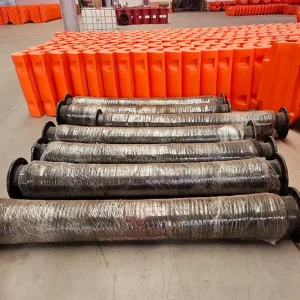
Dredging operators demand floating balls and pipeline buoyancy shells that eliminate hydrodynamic surging during high-discharge cycles. Key procurement metrics include high resistance to internal slurry scouring, dimensional tolerance matching exact pipeline outer diameters (OD), and non-crush performance during rough handling by crane slings.
Mining Tailings & Acid Leach Operations
Industrial mining ponds require chemical passivity against high-acid (pH 1.5) or hyper-alkaline leachates, cyanide-bearing slurries, and dynamic tailings deposition. Floating balls must prevent bird strikes, mitigate acidic aerosol evaporation, and function as reliable pontoon cable supports without material brittleness.
Municipal Water & Reservoir Authorities
Municipal water managers require NSF/ANSI 61 compliant food-grade raw materials for reservoir shade covers. Enterprise procurement demands balls that prevent sunlight penetration (blocking algal photosynthesis and bromate formation), control up to 90% of water evaporation, and withstand gale-force winds without displacement.
Integrated Chinese Supply Chain: The Juhua Manufacturing Matrix
Combining heavy-tonnage rotational casting infrastructure, CNC mould making, and vertical supply chains to deliver rapid delivery and cost-effective scalability for international projects.
Dedicated 1,000+ m² Rotomoulding Facility
Equipped with large-diameter multi-axis carousels and shuttle ovens, capable of producing floating balls from 100mm to 2000mm in diameter with automated thermal profiling and rapid turnaround.
In-House Tooling & Mold Prototyping
Direct CNC aluminum and steel mold engineering accelerates sample fabrication from CAD blueprints in under 15 days, allowing bespoke geometry, internal channels, and reinforced bolt-through flanges.
Container Packing & Ocean Logistics Optimization
Strategically nested packaging and optimized palletization matrices maximize cubic container utilization (40ft HQ), reducing per-unit transoceanic freight costs by up to 32% for overseas contractors.
Full Process Interchangeability & Traceability
Every Unitiger floating ball and pipe floater is batch-coded with verifiable polymer heat numbers, ultrasonic wall-thickness logs, and pressure certification sheets for rapid field auditing.
Buoyancy Reserve Calculation & Slurry Hydraulic Modeling
A proven mathematical framework used by Juhua marine engineers to calculate total displaced volume, preventing subsea sag, slurry overload, and pipeline hydrodynamic roll.
The Juhua Dredge-Float Reserve Criterion
Gross Buoyancy Required (F_B) ≥ [ W_pipe + W_lining + (π/4 × D_int² × L × ρ_slurry) + W_accessories ] × Safety Factor (1.25 to 1.35)
Where W_pipe is steel/HDPE dry mass, ρ_slurry is operating mixture density (commonly 1.25 to 1.80 kg/dm³ for iron ore or coarse dredging sand), and the Safety Factor of 1.25–1.35 ensures that 25% to 35% of the floating assembly's volumetric profile remains visibly buoyant above the waterline (freeboard) to resist high-period oceanic swell impacts.
Phase 1: Dynamic Slurry Density Auditing
Standard municipal water tables (1.0 kg/dm³) fail in dredging. We verify the exact suspended solids percentage and specific gravity of your target tailings to configure the correct displaced volume.
Phase 2: Polar Stress & Bolt Clamping Torque
For cylindrical and split-sphere modules, clamp contact pressures must be balanced. We formulate torque tables preventing point indentation on HDPE pipelines while maintaining non-slip grip.
Phase 3: Wave Surge & Drag Minimization
Using spherical or curved-tapered profiles reduces the lateral drag coefficient (C_d) by up to 45% compared to rectangular floats, drastically reducing tension on mooring anchors.
Localized Support & Global Regulatory Compliance
Ensuring complete conformance with European CE marine standards, USACE requirements, ISO quality registries, and environmental zero-leach protocols.
ISO 9001:2015 & ISO 14001 Standards
Every phase from raw polymer lot inspection to final high-pressure water tightness testing complies with certified quality and environmental management protocols, guaranteeing consistent batch-to-batch excellence.
PIANC & USACE Dredging Specifications
Engineered to meet the World Association for Waterborne Transport Infrastructure (PIANC) marine buoy recommendations and US Army Corps of Engineers standards for navigable waterway containment and pipeline security.
REACH, RoHS & Food Contact Non-Toxicity
Our raw polyethylene materials contain no heavy metals, lead, or prohibited phthalates. Formulated to be 100% recyclable, non-leaching, and completely safe for potable municipal water storage and sensitive marine flora.
High-Stakes Application Scenarios Worldwide
Examining operational parameters where Unitiger floating balls and modular pontoons provide critical flotation, evaporation mitigation, and debris containment.
Reservoir Evaporation Control Blankets
Millions of custom black Unitiger floating balls are deployed across municipal and agricultural water reservoirs in arid regions (Middle East, Australia, American Southwest) to eliminate up to 90% of evaporative water loss, suppress toxic blue-green algae blooms, and prevent sunlight-induced bromate transformation.
Mining Tailings Ponds & Aeration Lagoons
In gold, copper, and lithium mining operations, floating balls serve as insulating blankets that reduce odor, prevent acid-mist dispersal, and deter migratory wildlife and waterfowl from landing on hazardous chemical tailings basins, ensuring rigorous environmental compliance.
Harbor Silt Curtains & Trash Barriers
Strung along stainless steel wire ropes or heavy galvanized chains, Unitiger float balls provide continuous line buoyancy for heavy-duty silt curtains, geotextile turbidity skirts, and industrial harbor trash booms, preventing harbor basin sedimentation and debris intrusion.
Subsea Pipeline Pre-Buoyancy & Positioning
During marine pipeline installation and subsea manifold tie-ins, Unitiger buoyancy spheres act as auxiliary buoyancy modules. By providing calibrated, localized uplift, they reduce barge pull loads and protect pipelines from localized buckling during seabed touchdown.
Future Industry Megatrends in Marine & Industrial Flotation
Anticipating the technological disruptions shaping the next generation of polymer buoyancy modules and maritime engineering infrastructure.
Circular Polymers & Bio-Attributed Resins
Global decarbonization mandates are driving rapid adoption of chemically recycled polymers and bio-attributed LLDPE in marine flotation manufacturing. Juhua's R&D division is testing post-consumer maritime waste polymer formulations that maintain 95% of virgin resin tensile strength while slashing product lifecycle carbon emissions.
Smart IoT Buoyancy & Integrated Telemetry
Next-generation Unitiger floating systems integrate ultra-low-power NB-IoT and LoRaWAN sensors embedded inside the rotomolded cavity. These intelligent modules track reservoir surface temperature, solar radiation intensity, chemical pH shifts, and real-time mooring chain load stress back to automated SCADA monitoring hubs.
Offshore Floating Solar (FPV) Expansion
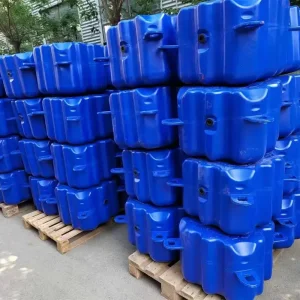
As offshore solar farms move into open sea environments, floating balls and pontoon modules require higher wave-surge fatigue resistance and flexible cable passage troughs. Specialized rotomolded floats are being developed to dissipate rough hydrodynamic forces and support high-load bifacial photovoltaic arrays.
Frequently Asked Questions: Technical & Commercial Evaluation
Comprehensive engineering, operational, and warranty answers for international buyers, consulting engineers, and logistics specialists.
Specialized Offshore Pipelines, Mooring Buoys & Industrial Floats
Heavy-duty slurry discharge pipelines, foam-filled ocean navigation buoys, subsea installation modules, and rotomolded platform solutions.