

Direct Factory Inventory
Engineered Dredging & Marine Flotation Solutions
Explore precision-molded components engineered for aggressive slurry pumping, subsea positioning, and extreme coastal hydrodynamic environments.
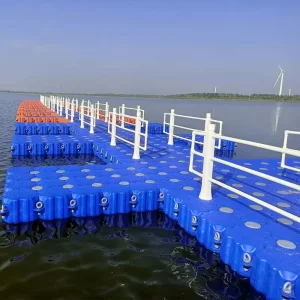
Custom Premium Floating Boat Pontoon for Safe and Stable Water Platforms Products, Quotes
View Specifications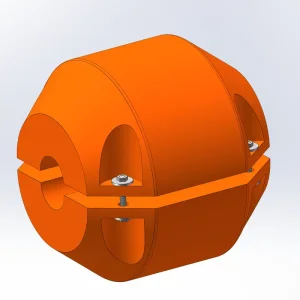
ODM Pipe Floats for Pump Discharge and Water Transfer Lines Manufacturers, Company
View Specifications
ODM Polyethylene Mooring Buoy for Harbors and Floating Facilities Manufacturers, Pricelist
View Specifications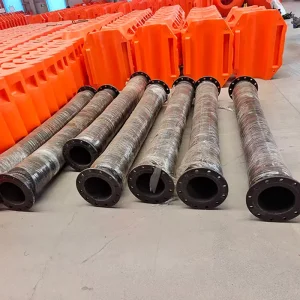
Custom Flexible Rubber Hoses for Advanced Fluid and Sediment Transport Products, Quotes
View Specifications
Custom Pipe Floats for Floating Pipeline Stability in Water Transfer and Industrial Projects Companies, Factory
View Specifications
High-Quality Robust Floating Boat Pontoon for Safe and Flexible Water Platforms Product, Factories
View Specifications
Custom Pipe Floats for Stable Pipeline Support and Reliable Floating Systems Quotes, Factory
View Specifications50+ Yrs
Design Service Life (PE100)
4.2x
Abrasion Resistance vs Steel
DN90-1200
Production Diameter Range
PN4 - PN25
Operating Pressure Classes
Executive Summary
The Paradigm Shift to High-Density Polyethylene Dredging Pipelines
Over the past two decades, global dredging, port development, and land reclamation operations have undergone a decisive material evolution. Traditional carbon steel and spirally welded discharge pipes—notorious for corrosive decay in saline water, excessive unladen weight, high friction losses, and complex joint fabrication—have been rapidly superseded by engineered High-Density Polyethylene (HDPE 100 / PE100-RC) piping systems.
Manufactured from bimodal virgin resins with tightly controlled molecular weight distributions, modern HDPE dredge pipes deliver unmatched elongation at break (>350%), superior resistance to rapid crack propagation (RCP), and extreme chemical inertia against brackish and hyper-saline discharge slurries.
- Manning Roughness Coefficient: Ultra-smooth inner bore (n = 0.009 vs. steel n = 0.015), reducing pumping head requirements by up to 25%.
- Wave and Current Compliance: Modulus of elasticity allows continuous flexure under heavy swells without risk of catastrophic structural fatigue.
- Zero Internal Scaling: Completely prevents biological foul encrustation and chemical scale build-up inside the slurry flow path.
Engineering Calculation Model
Slurry Hydro-Transport Buoyancy Equation
Marine civil engineers must evaluate buoyancy under worst-case slurry specific gravity rather than clear seawater.
B_net = (V_float × ρ_water) - (W_pipe + W_slurry + W_hardware) ≥ 1.30 × W_total
Where B_net delivers a mandatory reserve freeboard margin of at least 30%, keeping 25% of pipe diameter above the waterline under high-density sand/gravel transport (ρslurry ≈ 1.65 - 1.85 t/m³).
Market Intelligence
Global Enterprise Procurement Dynamics & Structural Trends
Strategic analysis of macroeconomic dredging drivers across coastal defense, port deepening, and offshore energy infrastructure.
Megaproject Demand
Coastal Climate Adaptation
Rising sea levels and intensified cyclone frequencies drive multi-billion-dollar coastal protection, barrier island reconstruction, and beach nourishment initiatives in North America and Western Europe, necessitating resilient, non-corroding marine pipelines.
Logistics Evolution
Post-Panamax Deepwater Access
Container ports are globally deepening access channels to 16–18 meters draft. This requires Cutter Suction Dredgers (CSDs) and Trailing Suction Hopper Dredgers (TSHDs) to transport highly abrasive quartz sand over discharge corridors exceeding 8 kilometers.
Mineral Processing
Mining Tailings Hydro-Transport
Copper, lithium, and bauxite tailings handling requires closed-loop slurry pipelines capable of surviving chemically acidic slurries, sharp aggregate scour, and extreme diurnal ambient temperature fluctuations without degradation.
Industry 4.0 Ecosystem
China Smart Manufacturing: Supply Chain Resilience & Quality Control
China's maritime plastics cluster—centered in Shandong and coastal economic zones—has transformed into the global epicenter of precision polyolefin processing. Leading production lines integrate continuous multi-layer co-extrusion technology coupled with Industry 4.0 real-time feedback loops.
By employing variable-frequency drive extrusion, automated gravimetric dosing systems, and inline ultrasonic multi-axis wall thickness sensors, manufacturing deviations are reduced to fractions of a millimeter. Every meter of pipe conforms strictly to ISO 4427, EN 12201, and ASTM F714 standards.
- Automated Rotational Moulding: Closed-loop ovens equipped with dual thermal infrared sensors ensure homogeneous polymer cross-linking across every float half.
- Pre-Welded Stub Ends: Dual-head hydraulic fusion machinery pre-fabricates stub ends with integrated galvanized or 316 stainless-steel backing rings for instant sea assembly.
- Supply Chain Depth: Immediate proximity to premier petrochemical refineries guarantees uncompromised access to high-tier virgin PE100 resins (e.g., Sinopec, Borealis, Basell).
| Physical Parameter | Test Benchmark | Standard Specification |
|---|---|---|
| Polymer Density | ISO 1183 | ≥ 0.955 g/cm³ |
| Melt Flow Rate (MFR) | ISO 1133 (190°C/5kg) | 0.2 - 0.4 g/10 min |
| Carbon Black Content | ASTM D1603 | 2.0% - 2.5% (UV-Stabilized) |
| Tensile Yield Strength | ISO 527-2 | ≥ 23 MPa |
| Elongation at Break | ISO 527-1 | > 350% |
| Slow Crack Growth (PENT) | ASTM F1473 | > 10,000 Hours (PE100-RC) |
Procurement Reference
Comprehensive HDPE Dredge Pipe Pricelist & Dimension Matrix
Benchmark FOB factory valuation across common Standard Dimension Ratios (SDR). Actual contract rates fluctuate according to virgin polymer index, wall thickness, and flange configuration.
| Nominal OD (mm) | Standard SDR | Wall Thickness (mm) | Nominal Pressure (Bar) | Weight (kg/m) | Indicative Price Range (USD/m) |
|---|---|---|---|---|---|
| DN 250 | SDR 17 / SDR 21 | 14.8 / 11.9 mm | PN 10 / PN 8 | 11.2 - 14.1 kg | $24.50 - $34.00 |
| DN 315 | SDR 17 / SDR 26 | 18.7 / 12.1 mm | PN 10 / PN 6 | 17.8 - 22.4 kg | $39.00 - $52.50 |
| DN 400 | SDR 17 / SDR 21 | 23.7 / 19.1 mm | PN 10 / PN 8 | 28.5 - 35.8 kg | $63.00 - $86.00 |
| DN 500 | SDR 17 / SDR 26 | 29.7 / 19.2 mm | PN 10 / PN 6 | 44.5 - 55.6 kg | $98.00 - $132.00 |
| DN 630 | SDR 17 / SDR 21 | 37.4 / 30.0 mm | PN 10 / PN 8 | 70.8 - 89.2 kg | $158.00 - $210.00 |
| DN 800 | SDR 21 / SDR 26 | 38.1 / 30.8 mm | PN 8 / PN 6 | 114.2 - 142.0 kg | $255.00 - $345.00 |
| DN 1000 | SDR 21 / SDR 26 | 47.7 / 38.5 mm | PN 8 / PN 6 | 178.0 - 221.5 kg | $395.00 - $530.00 |
Commercial Cost Drivers Breakdown
1. Raw Resin Index: Virgin bimodal PE100 prices linked to global ICIS benchmark pricing. Recycled regrind blends should strictly be barred from slurry applications due to premature brittle fatigue.
2. Flanged End Pre-Fabrication: Factory butt-fusion of flared stub flanges with hot-dip galvanized (HDG) or epoxy-coated ductile iron rings saves up to 70% of field assembly time compared to on-barge fusing.
3. Containerized Nesting Logistics: Advanced logistics teams nest smaller pipe diameters (e.g., DN 250, DN 315) inside larger pipes (DN 630, DN 800) within 40ft High Cube containers, slitting ocean freight charges per cubic meter dramatically.
Field Deployments
Worldwide Engineering Deployments & Case Studies
Demonstrated performance across complex marine hydraulic works, river desilting, and industrial waste handling.
Middle East Region
Artificial Island Reclamation
Over 14 kilometers of DN 800 SDR 17 HDPE pipe paired with closed-cell polyurethane-filled rotomolded floats operated under severe Persian Gulf ambient heat (+48°C) and hypersaline conditions, maintaining consistent throughput of over 3,500 m³/hr of coral sand.
Southeast Asia
Deep-Draft Estuary Desilting
Navigational fairway maintenance utilizing DN 500 dredge lines floating across active shipping routes. High-visibility orange PE floats coupled with marine channel buoys prevented maritime collisions while absorbing 2.5m wave oscillations without joint shear.
South America
High-Altitude Tailings Evacuation
Slurry lines operating at 3,800m elevation transporting copper concentrator tailings. The flexibility of PE100 absorbed severe hydraulic water hammer shocks and seismic earth movements that routinely cracked adjacent welded steel pipe runs.
Lifecycle Value Analysis
Total Cost of Ownership (TCO): PE100 vs. Carbon Steel
Direct financial comparison illustrating why civil infrastructure developers prioritize long-term polymer systems over initial raw metal procurement.
| Evaluation Parameter | Virgin HDPE / PE100 Pipeline | Carbon Steel Slurry Pipe | Engineering Benefit |
|---|---|---|---|
| Dry Weight per Meter | ~950 kg/m³ (Floats easily with modular shells) | ~7,850 kg/m³ (Requires oversized steel pontoon tanks) | 70% reduction in crane handling and transport expense |
| Wear Life Index (Sand Slurry) | Up to 4.2x greater wear endurance than mild steel | Rapid erosion along invert bottom; requires 90° pipe rotation | Extends operation cycles before replacement by 300% |
| Corrosion Resistance | Total immunity to saltwater, H2S, and microbiological pitting | Severe galvanic decay; requires external & internal cathodic epoxy | Zero recoating maintenance expense over 25+ years |
| Hydraulic Pumping Energy | Consistently low roughness coefficient (Hazen-Williams C=150) | Deteriorates over time due to rust pitting (C=100-110) | Lowers continuous fuel/electricity consumption by 15-22% |
| Scrap & Circularity Value | 100% mechanically recyclable into non-pressure grade poly products | Oxidized corroded scrap with modest salvage recovery | Direct ESG compliance and circular economy alignment |
Engineering Help Desk
Frequently Asked Questions: Technical & Sourcing Authority
In-depth responses to the critical inquiries posed by marine engineering specialists, dredging estimators, and municipal procurement directors.
How does SDR selection affect dredge pipe longevity and burst capacity?
The Standard Dimension Ratio (SDR) defines the ratio of outside diameter to minimum wall thickness (OD/t). In dredging applications, lower SDR ratings (such as SDR 17 or SDR 13.6) provide thicker walls capable of absorbing high static pump heads (10 to 16 Bar) while providing a substantial 'sacrificial abrasion barrier' for aggressive silica sand or coarse gravel. Higher SDR ratings (such as SDR 26) are restricted to low-pressure gravity tail lines or calm-water clear intake operations.
Why is PE100-RC superior to conventional PE80 or standard PE100 in slurry dredging?
PE100-RC (Resistance to Crack) is compounded with specialized hexene or octene co-monomers that drastically increase polymer tie-molecule density. This chemical morphology provides an order-of-magnitude increase in Slow Crack Growth (SCG) resistance (passing 10,000 hours in the Full Notch Creep Test vs. 300-500 hours for standard PE). In harsh dredging environments, where sharp rocky aggregates score inner pipe walls, PE100-RC prevents notch stress concentrations from propagating into brittle pipe fractures.
What is the standard buoyancy design factor for floating dredging lines?
Engineering consensus mandates a minimum safety margin of 25% to 30% positive reserve buoyancy under full hydraulic charge (conveying sediment slurry at specific gravity between 1.40 and 1.70 g/cm³). Rotomolded polyethylene pipe floats must be spaced along the line so that one quarter of the pipeline's cross-sectional diameter remains consistently above the waterline. This preserves stability under crosswinds, prevents snaking, and keeps line friction balanced.
How do Chinese smart factories ensure wall thickness uniformity in heavy-wall large-bore pipes?
High-tier Chinese extrusion facilities utilize automated 360-degree rotating ultrasonic scan heads positioned immediately downstream from vacuum calibration tanks. These sensors continuously pulse the molten extrudate along 8 to 16 measuring axes, communicating directly with automated thermal die bolts. If any angular segment exhibits sag or wall thinning, local thermal controllers dynamically adjust temperature fields to equalize flow velocity instantly.
Can HDPE dredge pipelines be integrated with flexible rubber suction and discharge hoses?
Yes. In standard marine dredging strings, rigid HDPE flanged pipe segments are periodically interspersed with flexible reinforced rubber hoses (typically one flexible hose every 3 to 6 rigid pipes, or directly coupled to the dredger stern and discharge manifold). This modular hybridization dampens mechanical vibrations generated by centrifugal slurry pumps and absorbs extreme torsional pitching induced by ocean swells.
Complete Marine Catalog
Engineered Pipeline Flotation & Navigation Buoys
Direct manufacturer offerings engineered to interface seamlessly with heavy-duty HDPE slurry pipelines worldwide.

Best Precision Marine Buoys for Safe and Efficient Navigation Manufacturer, Factories
View Specifications
Best Polyethylene Mooring Buoy – Reliable Floating Solutions for Modern Marine Projects Suppliers, Company
View Specifications
ODM Deepwater Pipeline Support Floats – Reliable Subsea Buoyancy Solutions Manufacturer, Companies
View Specifications
High-Quality Pipe Floats for Industrial Water Lines and Floating Pipeline Support Manufacturers, Companies
View Specifications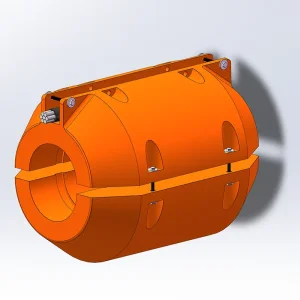
Custom Reliable Pipeline Floats for Marine and Engineering Projects Company, Pricelist
View Specifications
Custom Durable Pipe Floats for Reliable Marine Operations Suppliers, Manufacturers
View Specifications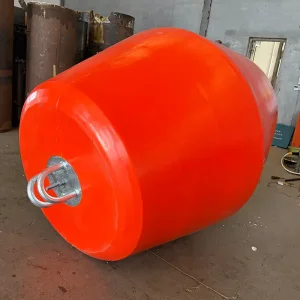
Best Offshore Mooring Buoy for Secure Vessel Anchoring and Marine Floating Systems Manufacturer, Companies
View Specifications