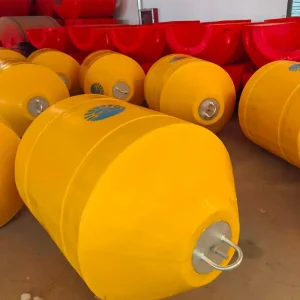
Primary Dredging & Marine Flotation Solutions
Engineered to standard ISO/ASTM criteria, featuring UV resistance, crack resistance, and modular configuration parameters for heavy fluid mechanics.




Global Landscape of High-Density Polyethylene Piping
A macroeconomic transition toward flexible, non-corrosive, thermoplastic conveyance systems replacing legacy ductile iron and carbon steel infrastructures.
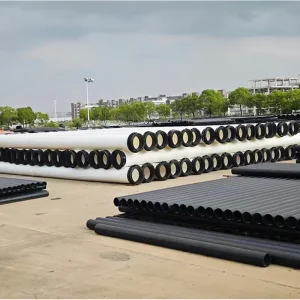
Across modern fluid mechanics, mineral extraction networks, and municipal conveyance channels, High-Density Polyethylene (HDPE) solid wall piping has become an indispensable technical baseline. The global commercial pipeline market is undergoing rapid evolution driven by aging civil networks, trenchless pipe installation technologies (Horizontal Directional Drilling - HDD), and heightened environmental protection standards across municipal water, natural gas distributions, and deep-sea dredging.
Traditional ferrous metallic pipes are inherently vulnerable to aggressive marine corrosion, electrochemical breakdown, microbiologically influenced corrosion (MIC), and cyclic dynamic shear fatigue. HDPE materials (specifically PE100 and PE100-RC virgin grades) deliver superior crack propagation resistance (SCG > 1,000 hours under ISO 13479), zero interior scale accumulation, and hydrodynamically smooth interior surfaces (Hazen-Williams C coefficient = 150), decreasing operational energy usage and pump friction head-loss by up to 25% over metallic equivalents.
Furthermore, worldwide initiatives aimed at reducing infrastructure carbon emissions lean heavily on the life-cycle assessment (LCA) advantages of polyethylene. Fully butt-fusion or electrofusion joined HDPE setups eliminate joint leakage points, while the lightweight properties drastically reduce logistical, handling, and heavy-crane equipment deployment costs across complex worksites.
Key Drivers Reshaping Industrial Piping Systems
Strategic technological evolutions influencing capital expenditures, project viability, and international marine infrastructure engineering.
Next-Gen PE100-RC Polymers
Adoption of PE100-RC (Resistance to Crack) eliminates the strict requirement for specialized granular sand backfill during trenchless and rock-bed civil deployment. Point loading and notch-induced stress cracking thresholds are expanded tenfold.
Integrated Dredging Flotation Ecosystems
Pipelines in marine land reclamation and channel deepening demand precision modular flotation. Virgin PE rotomolded shells packed with high-density closed-cell polyurethane ensure zero sinking risk even during accidental outer wall punctures.
Total Cost of Ownership (TCO) Prioritization
While bare steel procurement raw costs fluctuate wildly with steel tariffs, HDPE systems slash installation labor, cathodic protection maintenance, recoating, and emergency failure repair costs over their half-century operational lifespans.
Engineering Dimensional Reference & International Pricing Benchmark
Estimated FOB base pricing framework for PE100 SDR structural configurations. Exact pricing dynamically adjusts to polymer index, SDR rating, and project scale.
| Nominal OD (mm) | Standard SDR Rating | Nominal Pressure (PN / Bar) | Approximate Weight (kg/m) | Indicative Price (USD / Meter) | Primary Industrial Use |
|---|---|---|---|---|---|
| DN110 (4") | SDR 11 / SDR 17 | PN 16 / PN 10 | 2.78 / 1.86 | $4.80 - $8.20 | Potable Municipal Bypass, Agricultural Intake |
| DN250 (10") | SDR 13.6 / SDR 17 | PN 12.5 / PN 10 | 14.20 / 11.50 | $28.50 - $42.00 | Mining Slurry Pumping, Marine Outfalls |
| DN400 (16") | SDR 17 / SDR 21 | PN 10 / PN 8 | 28.90 / 23.60 | $68.00 - $95.00 | Harbor Dredging, Industrial Waste Transfer |
| DN630 (24") | SDR 17 / SDR 26 | PN 10 / PN 6.3 | 71.50 / 47.90 | $165.00 - $235.00 | High-Volume Sand Reclamation, River Desilting |
| DN800 (32") | SDR 21 / SDR 26 | PN 8 / PN 6.3 | 94.20 / 77.10 | $240.00 - $340.00 | Heavy Offshore Discharge, Stormwater Trunk |
| DN1200 (48") | SDR 26 / SDR 33 | PN 6.3 / PN 5 | 172.00 / 138.00 | $480.00 - $690.00 | Subsea Gravity Outfalls, Major Canal Diversion |
Engineering Buoyancy Balance Equation
Proper sizing prevents sagging and high-current stress on pipe connectors.
Comprehensive Application Engineering Environments
Field installations deployed under high-stress hydraulic forces, abrasive solids, and extreme climate fluctuations.
Port & Harbor Capital Dredging
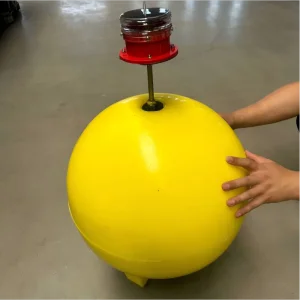
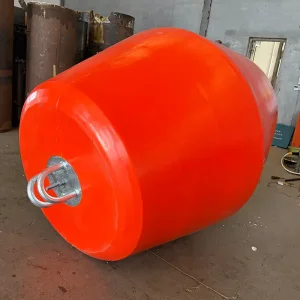
Constant marine traffic requires high-visibility floating pipelines configured with clamp-on polyethylene floats. These setups resist salt saturation, continuous cyclic swell, and abrasive seabed slurry without brittle joint fractures.
Mining Tailings & Slurry Transport
Tailings handling lines carrying coarse silica, copper tailings, or coal fines leverage the extreme abrasion resistance of PE100. Laboratory testing proves HDPE outlasts plain steel pipes 3- to 4-fold under heavy abrasive slurries.
Reservoir Intake & Flood Bypass Lines
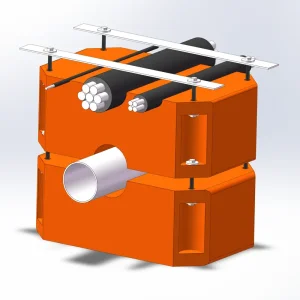
Emergency drainage, temporary pump bypasses, and reservoir municipal intakes require quick modular assembly. Lightweight HDPE sections fitted with integrated cable channels and tie-in floats can be rapid-deployed without heavy crane logistics.
Enterprise Solutions & Rotomolding Production Roadmap
Combining computer-controlled thermal rotomolding, wall-thickness ultrasound telemetry, and continuous material lifecycle tracing.
Thermal & Process Control
Production infrastructure utilizes variable-frequency speed regulation and electronic automatic temperature control. This produces balanced wall thickness across all pipe float shells, ensuring complete interchangeability across batches.
Comprehensive System Integration
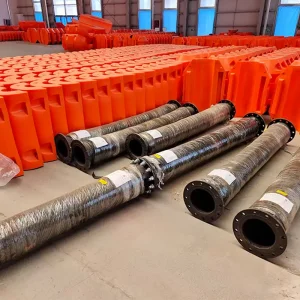
Supplying dredging contractors with unified pipeline packages: HDPE mainlines, rotationally molded modular pipe floats, flexible marine rubber hoses, and pipeline tie-in mooring assemblies from a single coordinated manufacturer.
Sustainability & Traceability 2030
Researching bio-based polyolefin blends and 100% closed-loop post-industrial re-extrusion pipelines. Integrating internal passive RFID chips into flotation bodies for subsea and surface lifespan tracking and predictive maintenance.
Frequently Asked Questions on HDPE Pipes & Buoyancy Systems
Key technical and procurement criteria queried by dredging contractors, marine engineers, and supply chain managers.
What are pipeline floats, and how do they function?
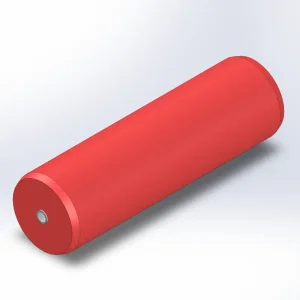
Pipeline floats (dredge floats or buoyancy modules) are clamp-on polyethylene bodies fitted around discharge pipes. They keep dredging or water-transfer pipelines afloat, aligned, and clearly visible on the water surface while handling continuous dynamic currents.
How do you accurately calculate required pipeline buoyancy?
Total buoyancy must exceed total weight. Add the weight of the pipe, the conveyed material (slurry density, not fresh water), and all fittings. Floats should provide 20–30% reserve buoyancy beyond this sum to ensure one quarter of the pipe diameter stays above the waterline.
Are HDPE pipes and PE floats resistant to seawater attack?
Yes. Virgin PE100 and rotationally molded polyethylene are chemically inert against saltwater corrosion, biological marine growth, and UV degradation. Unlike conventional carbon steel floats, PE never rusts or requires sandblast recoating.
What is the standard manufacturing warranty period?
The standard warranty starts on the date the buyer hands over the completed equipment to the investor and concludes 18 months from that handover milestone, or 12 months after the installation date, whichever threshold comes first.
What details are needed to request a formal RFQ quotation?
Please supply pipe outer diameter (OD), wall thickness (or SDR rating), conveyed medium density (t/m³), total pipeline length, working pressure (PN), marine conditions (wave height/currents), and target destination discharge port.
Can custom colors, dimensions, and fittings be produced?
Yes. Custom shell thicknesses, bright visibility options (international orange, navigation yellow), integrated cable and power harness slots, and specialized internal diameter clamping pads are fully supported via bespoke mold designs.
Specialized Fluid Transport & Mooring Infrastructure
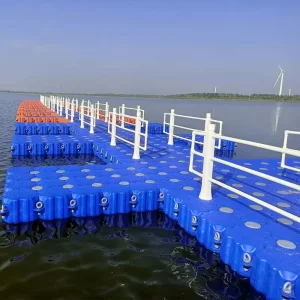
Heavy-duty fluid lines, pontoon units, and reinforcement components for marine, mining, and municipality installations.