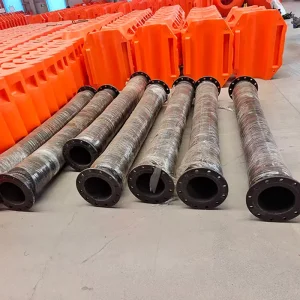
Featured Marine Buoyancy Modules & Systems
Explore high-tensile, foam-filled modular buoyancy bodies designed to stabilize slurry transfer lines, navigation channels, and near-shore installations across the globe.





Global Commercial Landscape of High Buoyancy Floats
Analyzing maritime land reclamation, deep-sea mining slurry dynamics, offshore wind array cabling, and advanced polymers in marine hydrodynamics.
Geopolitical Port Expansion
Rapid urbanization in coastal regions and expanding shipping lane draught demands have driven dredge slurry volumes to historic highs. Modern megaprojects necessitate discharge pipeline infrastructure that can survive unrelenting open-ocean swells without sudden structural buckling or displacement.
Subsea Cabling & Floating Solar
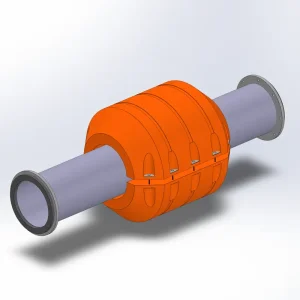
The transition toward clean energy has created massive demand for specialized cable-trough floats and floating photovoltaic (FPV) pontoon platforms. Modular buoyant clamp structures provide localized hydro-mechanical dampening to shield subsea transmission power lines from acute fatigue stress.
Asset Integrity vs. Steel Floats
Traditional steel cylindrical drums require continuous cathodic protection, anti-fouling coatings, and frequent weld inspections. Modern offshore engineering leans decisively toward rotational-molded LLDPE/HDPE shells which eliminate rust, lower pipeline deadweight, and resist heavy chemical leaching.
Hydrodynamic Calculation Principles & Technical Roadmaps
Precise mathematical buoyancy reserves safeguard marine equipment against dynamic slurry shockloads, tide currents, and severe hydrodynamic drag forces.
Dynamic Buoyancy Reserve Criterion (The Working Condition Standard)
Engineering a buoyant pipeline based merely on clean water filling values precipitates catastrophic sagging during active pumping. Sizing must calculate the total composite weight of HDPE pipe, steel backing flanges, fasteners, rubber expansion joints, plus saturated slurry with specific gravities scaling up to 1.6 t/m³.
This design guarantees a visible freeboard equivalent to 25% to 30% of the pipe outer diameter, securing rapid visual line monitoring and minimizing submergence fatigue caused by wave slap.
Future Technology Roadmap: 2026 - 2030
Compounding high-stress-crack-resistant virgin resins with bio-derived linear polyethylenes to reduce corporate carbon footprints without lowering ductile toughness.
Internal molded housings with GPS positioning, tilt-angle gyro sensors, and ultrasonic pipeline wall-wear monitors directly relaying real-time telemetry back to dredging dredgers.
Development of pressurized eco-friendly blowing agents yielding micro-cellular core matrices, providing 100% rupture resistance even under significant deep-sea hydrostatic load.
Variable-frequency heat balancing and robotic automated demolding to achieve absolute inner/outer radial tolerances (±0.5mm), optimizing bolt clamp tension.
Engineered Industrial Flotation Across Sectors
From coastal estuary channel desilting to high-altitude mine tailing impoundments, our rotomolded modules adapt to severe physical stressors.
Port, Harbor & Estuary Maintenance
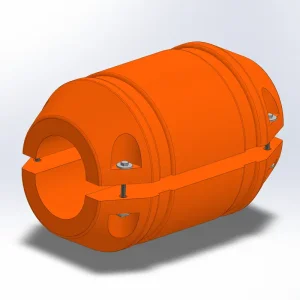
Maintains navigational draft across active harbors. Symmetrical circular clamp designs minimize cross-current hydrodynamic drag, reducing anchor mooring anchor drag on floating discharge strings.
Coastal Land Reclamation
Transfers millions of cubic meters of oceanfloor sand across kilometer-long floating spans. Resistant to abrasive particulate scoring and rapid diurnal temperature swings.
Mining Slurry & Tailings Decant
Extreme pH resistance across acidic or caustic mineral leachates. Securely suspends de-watering pumps, electrical supply lines, and high-density sludge bypass conduits.
Offshore Mooring & Navigational Aids
High-visibility channel markers conforming to IALA safety recommendations. Fabricated with inner galvanized steel load-distribution tie-rods capable of withstanding heavy vessel bollard pull.
Hydroelectric Intake Security & Trash Booms
Engineered floating cylindrical barriers linked via heavy alloy chains prevent flotsam, trash, and tree-debris from penetrating turbines, lowering costly reservoir maintenance downtime.
Subsea Tie-In Modular Floats
Engineered modular installation systems facilitating the smooth lowering, surface towing, and subsea tie-in alignment of heavy deepwater conduits with step-wise release configurations.
High Buoyancy Floats Engineering Dimensions & Pricelist
Standard industrial dimension metrics for rotationally molded PE shell pipeline floats. Custom internal diameters and bespoke core densities are produced to order.
| Pipe Outer Diameter (OD) | Outer Float Dia × Length (mm) | Wall Thickness (mm) | Total Net Buoyancy (kg) | Standard Core Matrix | Est. Reference Pricelist (USD/Pair) |
|---|---|---|---|---|---|
| 110 mm - 160 mm | 500 × 800 mm | 5.5 ± 0.5 mm | ~ 135 kg | Closed-Cell EPS (38 kg/m³) | $45 - $68 |
| 200 mm - 250 mm | 680 × 1100 mm | 6.5 ± 0.8 mm | ~ 310 kg | Closed-Cell EPS / PU | $85 - $130 |
| 315 mm - 355 mm | 850 × 1200 mm | 8.0 ± 1.0 mm | ~ 560 kg | High-Density EPS (42 kg/m³) | $145 - $220 |
| 400 mm - 450 mm | 1100 × 1500 mm | 9.5 ± 1.0 mm | ~ 1,120 kg | Hydrophobic Rigid PU Core | $280 - $395 |
| 500 mm - 560 mm | 1300 × 1800 mm | 11.0 ± 1.2 mm | ~ 1,850 kg | Heavy-Duty Marine PU Core | $460 - $620 |
| 630 mm - 710 mm | 1500 × 2200 mm | 13.0 ± 1.5 mm | ~ 2,900 kg | Cross-linked Rigid Foam Core | $780 - $1,050 |
| 800 mm - 1000 mm | 2000 × 2500 mm | 16.0 ± 2.0 mm | ~ 5,400 kg | Reinforced Closed Polyurethane | $1,450 - $2,100 |
* Note: Prices vary depending on raw polymer resin index, freight quotes, UV stabilizer additive classes, and galvanized/stainless 316 fastener configurations.
Frequently Asked Technical Questions
Detailed clarifications on rotomolding wall tolerances, freeboard physics, saltwater longevity, and custom bespoke fabrication.
What are pipeline floats, and what is their primary hydrodynamic function?
How do you precisely calculate required float quantities for a heavy slurry line?
Why is rotational-molded Polyethylene preferred over traditional welded Steel drums?
What are the standard warranty terms and structural operational life?
Can flotation bodies be custom-engineered for non-standard pipelines or cable routing?
What data parameters must an engineer supply to receive an accurate pricing proposal?
Explore Additional Flotation & Marine Accessories
Heavy-duty foam-filled mooring buoys, flexible sediment transfer hoses, and containment barriers ready for factory export dispatch.