

Subsea Equipment
Engineered rotomolded polyethylene products directly supplied by certified manufacturing facilities, designed to withstand severe hydro-environmental stress.
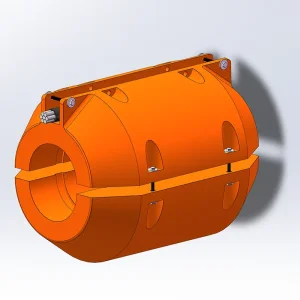
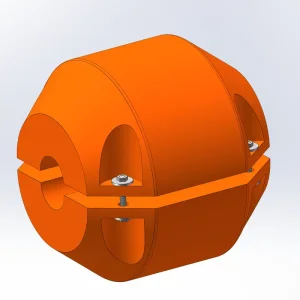




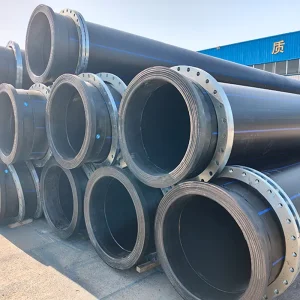
Mooring buoys and their integrated lantern systems have transitioned from passive, battery-swapped navigation markers to intelligent, self-powered maritime assets. Understanding these technical dynamics prevents multimillion-dollar downtime and vessel collisions.
Modern mooring lights integrate multi-crystalline or mono-crystalline solar panels encased in UV-stabilized, impact-resistant polycarbonate housings. By utilizing MPPT (Maximum Power Point Tracking) microcontrollers, energy harvesting efficiency increases by 35%, ensuring autonomy exceeding 21 operational days in complete darkness.
Replacing tungsten and halogen configurations, high-intensity surface-mount LEDs offer up to 180 lumens per watt. Chromaticity profiles strictly align with IALA E-200-1 recommendations, ensuring unambiguous recognition of red, green, yellow, and white navigational signals across nominal ranges of 2 to 6 nautical miles.
Factory-integrated Type 1 and Type 3 AIS (Automatic Identification System) transponders broadcast real-time synthetic or virtual AtoN coordinates directly to ship ECDIS. Embedded NB-IoT and satellite modems transmit battery health, solar generation current, and anchor drift alerts directly to port command desks.
Procuring offshore mooring buoys and integrated signaling devices requires multi-tiered evaluation beyond primary quote margins. Infrastructure authorities demand strict material traceabilities and lifecycle durability.
| Evaluation Parameter | Rotomolded Virgin PE Mooring System | Fabricated Structural Steel Buoys | Composite Elastomer Systems |
|---|---|---|---|
| Corrosion Resistance | Impervious to salt brine, H2S, and marine growth | Requires regular sacrificial anodes & marine coatings | High resistance; core susceptible if skin is punctured |
| Impact Absorption | Elastic deformation; rebounds upon vessel collision | Rigid denting; risks hull damage and structural rupture | Excellent energy dissipation; expensive to re-skin |
| Buoyancy Internal Core | Closed-cell EPS or high-density Polyurethane foam | Hollow compartmented air chambers (leak risk) | Flexible polyolefin closed-cell resilient foam |
| 20-Year TCO Index | Low: Zero repainting; LED/battery drop-in modules | High: Heavy drydock sandblasting & hot-work repairs | Moderate: Periodic polymer skin restoration |
| Factory Traceability | Automated rotational heating curves & resin batch testing | Weld X-ray/NDT and hydro-testing records | Cross-linking cure cycle logs and tear testing |
A common failure mode in maritime mooring projects is calculating buoyancy using only static deadweight. Offshore swell, fouling weight, line tension, and hydrodynamic drag require an active safety coefficient.
End-to-end turnkey packages matching pipeline conveyance floats, heavy harbor anchorages, and intelligent navigation signals for challenging operating environments.
Multi-berth operations necessitate rapid visual zoning. Our color-coded rotomolded mooring buoys integrate flash-synchronized solar lights, preventing ship-to-marker collisions while streamlining harbor pilot tug assignments through calibrated daymark pigments.
Long discharge lines carrying abrasive sand and coral slurries impose high hydrodynamic drag. Matched pipe floats with tie-in anchor buoys preserve pipeline curvature, preventing line rupture in heavy surf zones and securing dredging channel visibility.
High-energy open-ocean fish farms and subsea tie-in manifolds require buoys engineered for cyclic wave loading. Integrated autonomous lanterns alert commercial traffic up to 5 miles away, preventing catastrophic net cage or cable snags.
Transforming marine polymer production through computerized rotational moulding lines, strict thermal indexing, and future-forward sensory telematics.
Utilization of 100% virgin LLDPE/HDPE with C8 hexene/octene co-monomers, incorporating UV15+ stabilizer packages to prevent environmental stress-cracking in extreme tropical UV conditions.
Automated internal air temperature tracking throughout the rotomolding cycle prevents under-curing (brittle skin) and over-curing (polymer degradation), securing uniform wall thickness.
Embedding multi-sensor arrays directly into the buoy body to monitor water temperature, current velocity, chain tension, and lantern health, reporting to cloud SCADA setups via MQTT protocols.
Deployment of non-contaminating, ozone-friendly polyurethane foam fillers and fully recyclable skin shells, aligning with global green port decarbonization directives and marine environmental mandates.
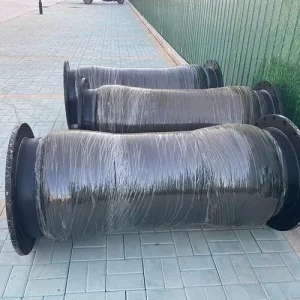
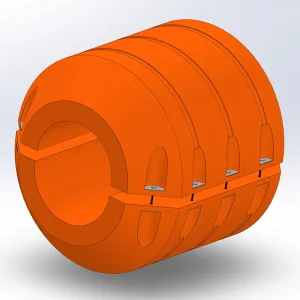
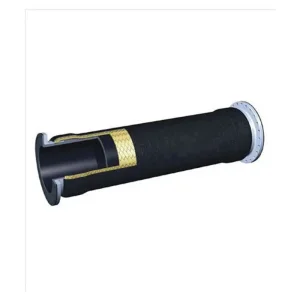
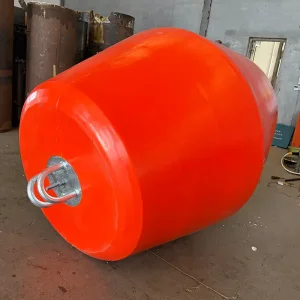
Examine factory-direct dredging pipes, flexible rubber lines, aquaculture platforms, and heavy-duty mooring buoys engineered for international port and engineering projects.


Direct technical answers from rotational moulding specialists and marine installation superintendents.