
High-Efficiency Marine Buoyancy & Mooring Portfolio
Engineered for high mechanical stress resistance, continuous exposure to harsh marine environments, and optimal dynamic line balance.
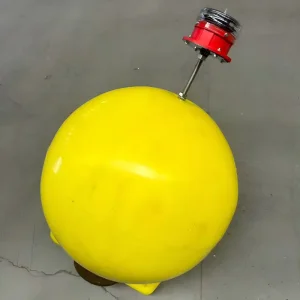
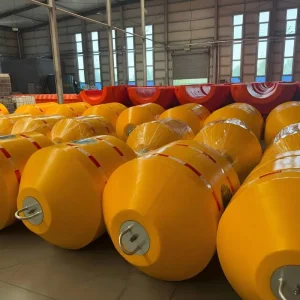
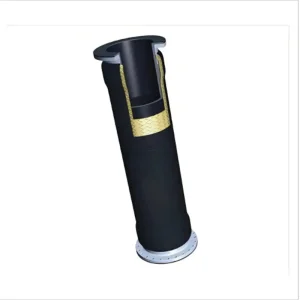




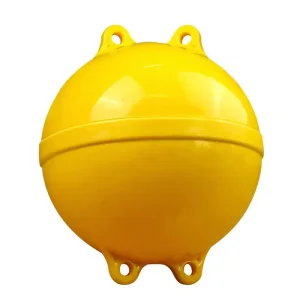
Macro Industry Solutions: Engineering Flotation for Critical Hydrodynamics
Modern offshore dredging, tailing containment, and subsea pipeline tie-ins require mathematically rigorous hydrodynamic buoyancy solutions. In floating discharge operations, premature pipeline failure is primarily triggered by cyclic bending moments and catastrophic fatigue at coupling interfaces caused by dynamic swells.
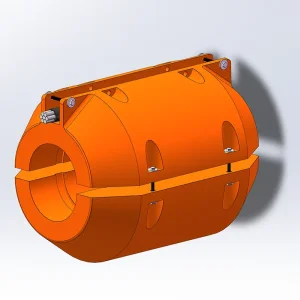
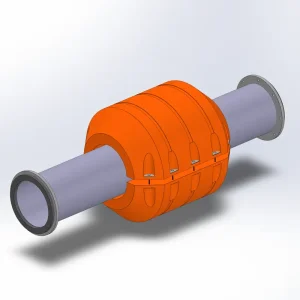
As a leading Original Design Manufacturer (ODM), our factories engineer buoyancy pipes equipped with variable internal geometries, high-impact virgin PE shells, and closed-cell polyurethane cores. By optimizing reserve buoyancy margins according to slurry specific gravity, our systems neutralize excessive sagging stresses, ensuring unbroken throughput in capital-intensive maritime projects.
- Hydrodynamic Shell Contouring: Reduces hydrodynamic drag coefficients by up to 34% compared to legacy cylindrical profiles.
- Integrated Anti-Slip Clamping Ribs: Resists axial shear forces along steel and HDPE pipes without damaging external coatings.
- Zero Water Absorption Infill: Formulated with hydrophobic polyurethane foam to sustain nominal buoyancy even upon structural puncture.
Dynamic Freeboard Calculation Standard
Ensure non-submerged operating balance during full slurry transit conditions:
B_total ≥ (W_pipe + W_medium + W_acc) × SF
Where:
- SF (Safety Factor) = 1.25 to 1.30
- Medium Density = 1.35 to 1.80 t/m³
Standardized calculations mandate sizing for peak solid-sediment concentration rather than standard freshwater displacement to prevent mid-channel sinking.
Global Industrial Landscape & Supply Chain Resilience
The global shift toward coastal resilience programs, mega-port expansions, and sustainable offshore tailings disposal drives demand for certified rotomolded polymers over conventional steel pontoons.
Corrosion-Resistant Polymer Adoption
Global operators are decommissioning steel floats in favor of rotomolded polyethylene due to electrochemical oxidation, which causes corrosion failures in marine environments. High-density polymers offer maintenance-free operation across 15+ year operational life cycles.
Mega-Scale Port Dredging Demand
With post-Panamax maritime trade demands requiring harbor depths exceeding 16 meters, coastal dredging projects rely on oversized discharge lines (OD 800mm to 1200mm) demanding structural buoyancy pipes with proven impact resistance.
Environmental & Safety Compliance
Tightening maritime regulations demand zero paint leaching and non-toxic polymer stabilization. Our manufacturing systems use pure UV8 to UV15 stabilized grades compliant with international clean water standards.
Localized Engineering Support & Global Compliance Framework
Ensuring cross-border project viability with turnkey mechanical validation, certified raw polymers, and dedicated field engineer accessibility.
ISO 9001:2015 Quality Controls
Fully certified rotational molding processes utilizing computerized temperature mapping to eliminate structural residual stresses and wall thinning.
Raw Polymer Traceability
Every production batch uses virgin polyethylene resin traceable to certified lots, verified for Melt Flow Index (MFI) and dynamic environmental stress crack resistance (ESCR).
On-Site Project Dispatch
Field engineering teams provide dockside assembly instruction, correct torque parameters for galvanized or stainless steel hardware, and dynamic ballast checks.
18-Month Standard Warranty
Comprehensive warranty covers 18 months post-handover or 12 months in-service, protecting your capital investment against environmental degradation.
High-Stress Marine Deployment Scenarios
Engineered to adapt to localized ocean currents, abrasive slurries, high tidal ranges, and critical municipal water interfaces.
Port Channel Maintenance
Provides visible flotation markers for cutter suction dredge lines, maintaining clear channels for commercial shipping.
Offshore Land Reclamation
Maintains continuous flow for long-distance sand slurry discharge lines across open water subjected to severe swell dynamics.
Mining Tailings Transport
Features heavy-duty buoyancy profiles specifically calculated for high-density mining slurries across tailing retention lakes.
Reservoir Water Bypass
Ensures stable surface routing for temporary municipal bypass conduits during dam rehabilitation and desilting operations.
Cable-Integrated Lines
Equipped with specialized cable troughs for routing underwater power lines, telemetry links, and discharge monitoring systems safely above water.
Technology Roadmap: The Future of Smart Marine Flotation
Driving forward the integration of composite matrix rotomolding, circular economy polymers, and IoT predictive monitoring.
IoT-Enabled Structural Sensing
Developing integrated pressure sensors and trim telemetry modules to track dynamic ballast shifts and pinpoint localized pipe stress points in real time.
Circular Bio-Polymer Matricies
Advancing our proprietary rotomolding formulations to include ocean-recovered and recycled circular polymers without compromising stress rupture strength.
Multi-Layer Co-Extrusion Tech
Implementing dual-wall rotational tooling to bond a hard outer wear layer with a flexible core, achieving superior impact resistance against heavy marine vessels.
Heavy-Duty Dredging Pipes, Pontoons & Cable-Support Modules
Specialized rotational molded items crafted to tight tolerances for subsea, littoral, and open ocean infrastructure operations.



Frequently Asked Questions: Buoyancy Mechanics & Factory Capabilities
Detailed technical answers for dredging superintendents, procurement directors, and marine project consultants.