
High-Efficiency Marine Buoyancy & Pipe Floater Series
Explore our industrial-grade rotationally molded pipe floats, marine navigation buoys, and dynamic floating barriers, manufactured for extreme hydrodynamic stability and harsh saltwater environments.
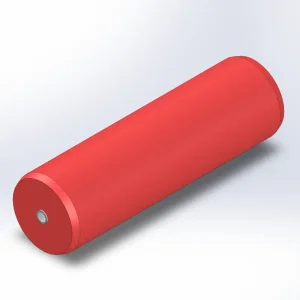
Floating Barriers for Marine and Industrial Protection
Explore Specifications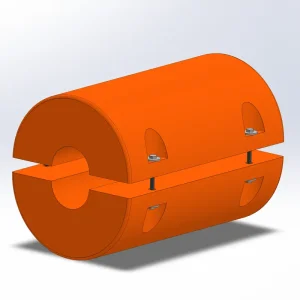
Pipe Floats for Floating Pipeline Support & Water Transfer
Explore Specifications
OEM Foam-Filled Mooring Buoy for Chain Berths
Explore Specifications
ODM Mooring Buoy for Offshore Vessel Anchorage
Explore Specifications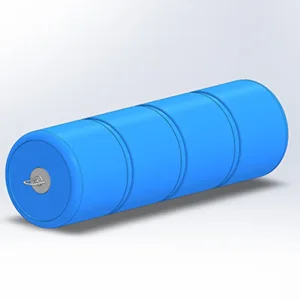
Reliable Floating Barriers for Pollution Control
Explore Specifications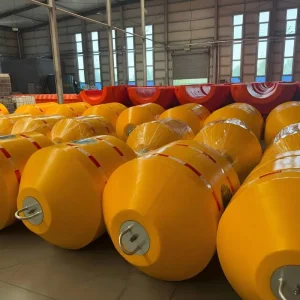
Offshore Mooring Buoy for Marine Infrastructure
Explore Specifications
Mooring Buoys for River Terminals & Workboat Berths
Explore Specifications
Reliable Marine Navigation Buoy for Safe Waterways
Explore SpecificationsThe Global Commercial & Engineering Reality of Floater Pipes
A comprehensive examination of supply chain transitions, capital-intensive marine infrastructure, and why custom Original Design Manufacturer (ODM) engineering has replaced off-the-shelf catalogues in hydraulic dredging and tailings transport.
The Steel-to-Polymer Paradigm Shift
Over the last decade, maritime hydraulic transport has shifted decisively away from traditional welded steel pontoon floats toward rotationally molded High-Density Polyethylene (HDPE) buoyancy modules. Steel floats are prone to galvanic corrosion, pitting fatigue from salinity, stress cracks at weld seams, and catastrophic flooding upon impact.
By contrast, ODM polyethylene floater pipes engineered with seamless rotational molding offer exceptional environmental stress-crack resistance (ESCR > 1,000 hrs per ASTM D1693), immunity to marine fouling, zero cathodic protection maintenance, and superior rebound memory during open-water collisions.
- Zero electrochemical rust or corrosion oxidation
- Lower dynamic tow friction and reduced drag coefficient
- Up to 65% reduction in dry handling and assembly weight
High-Density Slurry & Megaproject Demands
Modern cutter suction dredgers (CSDs) and trailing suction hopper dredgers (TSHDs) deploy booster pumps operating at extreme pressures, carrying high-solids slurries (specific gravity spanning 1.35 to 1.85 t/m³). Under these conditions, standard catalogue floats fail due to inadequate buoyancy margins, causing pipelines to sag, kinking discharge hoses, and triggering catastrophic line submergence.
Industrial clients now demand precision-engineered ODM units calibrated to dynamic slurry gradients, variable tidal kinematics, and lateral cyclic wave loads, ensuring non-stop operations in high-throughput ports and reclamation sites.
- Calibrated for slurry SG ranging from 1.25 to 1.95
- Heavy-duty galvanized hardware conforming to ISO 1461
- Integrated anti-slip internal rib geometry for pipe grip
Total Lifecycle Costing & OPEX Mitigation
In offshore and capital dredging contracts, vessel standby penalties often exceed $45,000 to $90,000 USD per day. A submerged discharge pipeline or failed float module doesn't just represent damaged hardware; it halts the entire dredging spread. Procurement strategies now prioritize Total Cost of Ownership (TCO) over initial unit cost.
Shandong Binzhou Juhua Rubber & Plastic Co., Ltd. builds rotomolded float shells backed by 20+ years of manufacturing pedigree, eliminating unplanned downtime and ensuring interchangeability across fleets deployed in more than 80 countries.
- 15+ years service life in high UV marine zones
- High residual salvage value via recycled polymer repurposing
- Certified interchangeable dimensions across global spreads
Localized Industrial Deployment Scenarios
How ODM pipe float architectures are tailored to regional hydrodynamic profiles, mineral chemistries, and extreme ambient parameters worldwide.
Middle East Port Expansion & Desalination
Geographical Context: Arabian Gulf, Red Sea megaprojects (NEOM, King Abdulaziz Port, Jebel Ali).
Engineering Challenges: Seawater salinity exceeding 42 practical salinity units (PSU), persistent surface water temperatures reaching 38°C, and extreme solar UV indices (>11) that rapidly accelerate polymer photo-oxidation and thermal cracking.
ODM Technical Solution: Rotomolded shells compound-extruded with UV-8 / UV-20 grade hindered amine light stabilizers (HALS). The inner foam utilizes flame-retardant, high-temperature closed-cell polyurethane that resists interior gassing, ensuring continuous sand transport for island reclamation.
South American High-Altitude Tailings
Geographical Context: Andean Copper Belt, Atacama Desert (Chile & Peru, elevations > 3,500m AMSL).
Engineering Challenges: Drastic diurnal thermal cycling (-15°C at night to +28°C midday), severe barometric pressure drops impacting closed-cell gas retention, and hyper-abrasive mineral slurries (pH 2.0 to 11.5).
ODM Technical Solution: Polymer shells formulated with high-impact elastomeric hexene copolymer resins. Fasteners incorporate 316L stainless steel or PTFE-coated Grade 8.8 bolts. Built-in cable troughs channel power telemetry lines to submersible pontoon slurrying pumps without external brackets.
Southeast Asian Coastal Reclamation & Rivers
Geographical Context: Straits of Malacca, Java Sea, South China Sea coastal corridors.
Engineering Challenges: Intense monsoonal tidal bores, high debris impact loads (submerged timber, marine traffic hazards), and ultra-long discharge distances exceeding 5 to 12 kilometers across sensitive navigational channels.
ODM Technical Solution: Hydrodynamic parabolic float silhouettes with reinforced rib profiles to dampen harmonic vortex-induced vibration (VIV). Integrated high-visibility reflective striping and modular marine navigation buoys safeguard pipeline corridors from commercial barge collisions.
Precision ODM Rotomolding & Chemical Architecture
A breakdown of the materials, internal foaming protocols, and quality control systems deployed inside our dedicated manufacturing hub in Lizhuang Town, Huimin County, Binzhou.
Virgin LLDPE / HDPE Outer Matrix
The structural shell is the first line of defense against hydrodynamic wave slamming, abrasive sand scour, and vessel contact. We utilize 100% virgin Linear Low-Density Polyethylene (LLDPE) and PE100 resins compounded with carbon black and antioxidant stabilizers.
Our computer-monitored rotational ovens utilize multi-axis variable-frequency rotational speed control and electronic automatic infrared thermal profiling, ensuring uniform wall thickness (8mm to 22mm) even along sharp radial geometries, eliminating thin-wall stress risers.
High-Density Closed-Cell PU Foam Core
Floater survivability hinges on core integrity. Juhua injects a 35 to 45 kg/m³ rigid polyol-isocyanate closed-cell polyurethane foam system under high-pressure metering directly into the molded shell. The micro-cellular structure exhibits over 92% closed-cell content.
If outer shell perforation occurs due to major mechanical trauma or propeller impact, water absorption remains under 1.5% by volume per ASTM D2842. The floater maintains over 98% of its buoyant lift capacity, preventing sudden line submersions.
Stress Dissipation & Locking Hardware
Standard float clamps can slip when steel or HDPE pipelines flex under wave swells. Our ODM pipe floats incorporate longitudinal non-slip gripping ribs and chamfered entries that accommodate pipe elastic deflection without local stress concentrations.
Hardware connections employ hot-dip galvanized or Marine Grade 316 stainless bolts, heavy nylon locking nuts, and wide-bearing spring washers to absorb cyclical vibrations generated by slurry pump pulsations.
| Property Parameter | Test Standard | Juhua Industrial Metric | Operational Significance for Contractors |
|---|---|---|---|
| Shell Material Grade | ASTM D1248 / ISO 1183 | Virgin LLDPE / PE100 Compound | Guarantees environmental stress crack resistance (ESCR > 1000h) |
| Tensile Strength at Yield | ASTM D638 / ISO 527 | ≥ 21.5 MPa | Resists mechanical hoop-stress deformation from pipe expansion |
| Charpy Notched Impact | ISO 179 (-30°C) | ≥ 18 kJ/m² | Maintains ductileness and shatter resistance in freezing mining reservoirs |
| Core Foam Density | ASTM D1622 | 35.0 - 45.0 kg/m³ | Optimal ratio between high buoyancy displacement and compressive rigidity |
| Water Absorption (Foam) | ASTM D2842 / ISO 2896 | ≤ 1.5% v/v (after 96h submersion) | Ensures no waterlogging even if the outer shell suffers puncture damage |
| UV Photostability Rating | ASTM G155 / UV-8 / UV-20 | > 20,000 Hours Exposure | Prevents embrittlement and color fading in tropical maritime zones |
Buoyancy Sizing Methodology for Dredging Pipelines
A rigorous engineering formula to calculate float displacement, ensuring the optimal freeboard ratio and avoiding common calculation errors on job sites.
The Core Buoyancy Reserve Equation
The most catastrophic error in pipeline flotation design is calculating buoyancy based on an empty pipe or clean fresh water. Under operational conditions, slurry density, pipe flange weights, electrical umbilical lines, marine fouling, and dynamic tidal currents apply severe downward and lateral vectors.
1. Slurry Mass Impact
Heavy tailings or coarse marine sand can reach specific gravities (ρslurry) between 1.4 and 1.8 t/m³. Flotation volume must be sized to this maximum density rather than ambient seawater.
2. Target Freeboard Ratio
Optimal stability is achieved when 25% to 30% of the pipe diameter sits above the static waterline, balancing center-of-gravity stability against aerodynamic wind loads.
3. Safety Reserve Margin
A reserve buoyancy coefficient (Rreserve) of 20% to 30% is mandatory to withstand wave slamming, slurry slug surges, and biofouling accumulation over multi-year deployments.
Macro Solutions: From Dredge Discharge to Environmental Containment
Our OEM/ODM manufacturing capability spans complementary flotation components, delivering full system reliability from vessel flange to discharge terminus.
Dredging Discharge & Land Reclamation
We supply matched pipeline float sets paired with heavy-duty HDPE dredging pipes, armored rubber discharge hoses, and pipeline float tie-in units. Interchangeable split-ring shells allow rapid replacement on waterborne spreads without disassembling pipe flanges, cutting turnaround times by up to 70%.
- Accommodates steel, HDPE, and composite pipelines
- Available in outer diameters from 110mm to 1200mm+
Floating Barriers & Pollution Control
Protecting intake lagoons, hydropower dams, and sensitive marine reserves requires durable physical containment. Our rotomolded floating barriers, silt curtain floats, and trash booms prevent plastic debris, river garbage, and industrial oil slicks from compromising water intake pumps.
- UV-resistant rotomolded hollow or foam-filled bodies
- Interlocking high-load tensile link chains and shackles
Navigation & Offshore Mooring Systems
Safe operation along active navigation channels requires reliable marking. Our marine navigation buoys and chain-connected mooring buoys adhere to IALA maritime standards, incorporating solar lighting mounts, radar reflectors, and reinforced internal steel through-tie structures.
- Certified IALA maritime colors (Red, Green, Yellow)
- Steel core load paths hot-dip galvanized to ISO 1461
Technological Evolution & Future Outlook (2025–2030)
How the convergence of smart telemetry, bio-circular polymers, and advanced rotational molding automation is redefining performance in marine flotation systems.
1. IoT Sensor Telemetry & Smart Floaters
Traditional pipe floats are passive components. The next generation of ODM floater pipes integrates low-power Narrowband IoT (NB-IoT) and LoRaWAN multi-sensor arrays directly within the mold cavity. These modules monitor real-time freeboard depth, axial pipeline bending stresses, internal core temperature, and impact acceleration vectors, relaying live kinematic telemetry to dredger command bridges.
2. Circular Polymers & Bio-Recycled Polyethylene
With ESG compliance tightening across international port authorities, project operators demand verified lower carbon footprints. Our engineering roadmap includes mass-balanced bio-circular polyethylene resins derived from certified renewable non-fossil feedstocks, reducing embodied Scope 3 emissions by up to 45% while preserving raw mechanical tensile modulus and crack resilience.
3. Automated Dynamic Wall Profiling
Applying digital twin simulations to rotational molding allows automated robotic distribution of resin powders inside cast aluminum toolings. This engineering approach yields variable thickness gradients, reinforcing mechanical stress nodes around bolt-securing lugs while thinning low-stress zones, optimizing strength-to-weight ratios across deep-sea deployments.
Comprehensive Floater Pipe FAQ
Straightforward answers to the structural, operational, and commercial questions marine contractors, port engineers, and procurement teams raise before issuing tenders.
Heavy-Duty Dredging Pipes, Floats & Rotomolded Tanks
Explore our heavy-duty marine pipelines, industrial liquid storage tanks, and high-buoyancy clamp-on modules engineered for mining tailing dams and open-water dredging spreads.

Custom Pipe Floats – Reliable Buoyancy for Marine Pipelines
Explore Specifications
Pipe Floats for Water Pipelines & Marine Projects
Explore Specifications
Pipe Floats for Stable Water Transfer & Marine Pipelines
Explore Specifications
Pipe Floats for Water Transfer, Mining & Marine Systems
Explore Specifications
Offshore Polyethylene Mooring Buoy – Maintenance-Free
Explore Specifications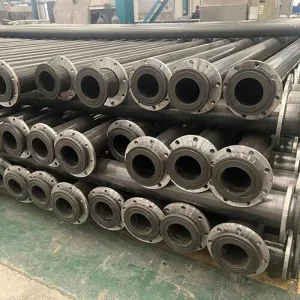
Robust Pipeline for Reliable Fluid & Material Transport
Explore Specifications
Pipe Floats for Floating Pipeline Water Transfer
Explore Specifications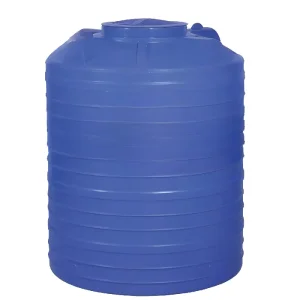
Rotomolded Polyethylene Storage Tanks for Liquid Solutions
Explore SpecificationsConsult Directly with Our Flotation Engineering Specialists
Connect directly with our engineering team for hydrodynamic buoyancy calculations, custom CAD mold drawings, and technical export proposals. We evaluate your pipeline diameter, medium density, and wave spectra, delivering a verified calculation sheet within 24 hours.