
High-Integrity Barrier Floats & Marine Modules
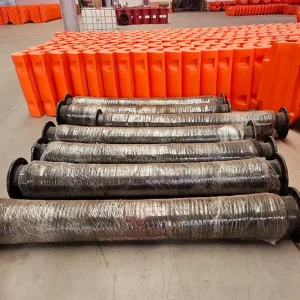
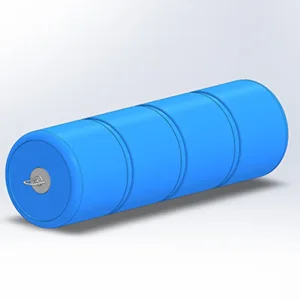
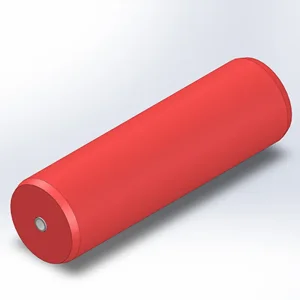
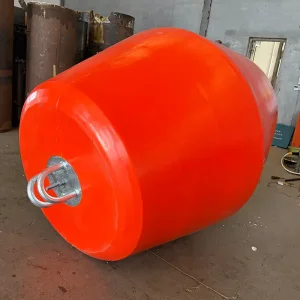
Explore our core engineered float assemblies optimized for industrial dredging, intake trash interception, municipal silt control, and severe offshore deployment.



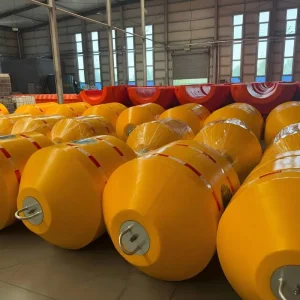
Macro Industry Solutions & Commercial Flotation Dynamics
Across the global commercial maritime, hydroelectric, municipal water, and mining sectors, dynamic surface containment and physical water barrier systems have transitioned from passive safety markers to mission-critical operational infrastructure.
Hydroelectric Turbine & Dam Protection
Modern hydroelectric power stations face severe risks from waterborne driftwood, plastic flotsam, and invasive macrophyte mats. Uncontained riverine debris causes turbine cavitation, trash rack clogging, forced outages, and multimillion-dollar operational losses.
Heavy-duty OEM barrier floats equipped with articulated underwater drop-screens effectively deflect debris toward extraction chutes, handling hydraulic loads exceeding 3.5 m/s approach velocity without hydrodynamic roll-over or anchor-chain fatigue.
Municipal Watershed Silt & Debris Defense
Global climate anomalies and intensified storm surges deliver unprecedented volumetric debris loads to drinking water intakes and municipal drainage channels. Traditional static netting collapses under sudden vegetative drag.
Segmented rotationally molded polyethylene barrier floats provide predictable buoyancy reserve curves. When engineered with integrated internal load-bearing spine cables, these modular barriers yield flexural compliance against peak hydrostatic crests while holding heavy suspended silt curtains.
Offshore Mining & Port Security Exclusion
Mining tailings dams require chemical-inert, non-leaching decanting barriers capable of withstanding acidic leachate (pH 2.0 to 12.0) and severe heavy-metal suspended solids without environmental embrittlement.
Simultaneously, commercial ports, naval bases, and offshore energy corridors demand impact-absorbing demarcation booms that establish physical standoff zones against unauthorized maritime intrusion, certified under IALA and PIANC navigation guidelines.
Rotomolding Material Science & Structural Architecture
A rigorous examination of polymer compounding, wall thickness uniformity, closed-cell polyurethane cores, and internal load-transfer geometry.
Polymer Compounding: High-Density Linear Polyethylene (HDPE/LLDPE)
The exterior shell of an industrial barrier float dictates its service lifespan in aggressive marine environments. We formulate our rotational molding feedstock utilizing 100% virgin hexene/octene-copolymerized linear low-density and high-density polyethylene (density 0.935–0.942 g/cm³, MFI 3.5–5.0 g/10 min).
To eliminate photo-oxidative degradation under extreme equatorial solar exposure, compounding includes UV20+ stabilization packages (incorporating Hindered Amine Light Stabilizers [HALS] and micronized titanium dioxide or carbon black). This ensures environmental stress crack resistance (ESCR) surpassing 1,500 hours under ASTM D1693 Condition B (10% Igepal CO-630 at 50°C).
Closed-Cell In-Situ Polyurethane (PUR) Foam Core
Outer skin puncture in violent debris collisions or vessel contact must never compromise total buoyancy. Every barrier float chamber is pressure-injected with a two-component closed-cell rigid polyurethane foaming system (density 35–45 kg/m³).
The resulting matrix demonstrates a closed-cell content exceeding 92% under ASTM D2856. Water absorption under hydrostatic submersion is limited to less than 2.0% by volume (ASTM D2842). Even in the catastrophic event of a severed outer shell, the inner monolithic foam block sustains designed net freeboard, preventing chain sinking.
Continuous Furnace Thermal Profiling
Utilizing high-precision multi-arm biaxial rotational ovens equipped with wireless inner-mold thermal monitoring, our manufacturing process eliminates cold spots, micro-porosity, and localized thinning. Minimum wall thickness tolerances stay tightly locked within ±0.75 mm across complex curves.
Internal Spine Load Isolation
Tension forces do not pass through the plastic skin. Barrier sections incorporate central through-hull structural sleeves (galvanized steel or 316L stainless) allowing continuous steel wire rope or heavy mooring chain to absorb axial tensile loads up to 450 kN without shell deformation.
Hydrodynamic Profile Optimization
Cylindrical, spherical, and elliptical float profiles are hydrodynamically tuned to suppress vortex-induced vibration (VIV) in high-velocity flumes. Low frontal drag coefficients (Cd < 0.65) significantly reduce the catenary tension transferred to shore and bed anchor arrays.
OEM Barrier Floats Specification & Pricing Benchmark
Real-world engineering pricelist based on standard mold configurations, polyurethane filling grades, and export volume pricing matrices.
| Model Series | Outer Dimensions (OD × Length) | Wall Thickness | Core Foam Density | Net Buoyancy (kg) | Through-Hole Bore | Working Load Limit | Indicative Price (USD/Unit) |
|---|---|---|---|---|---|---|---|
| BF-S300 Industrial | Ø300 mm × 600 mm | 6.0 mm ±0.5 | 35 kg/m³ PUR | 38 kg | Ø35 mm sleeve | 45 kN | $38.00 – $52.00 |
| BF-S400 Standard | Ø400 mm × 800 mm | 7.5 mm ±0.5 | 38 kg/m³ PUR | 86 kg | Ø50 mm sleeve | 75 kN | $68.00 – $89.00 |
| BF-M500 Trash Boom | Ø500 mm × 1000 mm | 8.5 mm ±0.7 | 40 kg/m³ PUR | 172 kg | Ø65 mm sleeve | 120 kN | $115.00 – $148.00 |
| BF-M650 Dam Heavy | Ø650 mm × 1200 mm | 9.5 mm ±0.8 | 42 kg/m³ PUR | 360 kg | Ø80 mm sleeve | 180 kN | $195.00 – $245.00 |
| BF-H800 Silt/Security | Ø800 mm × 1500 mm | 11.0 mm ±1.0 | 45 kg/m³ PUR | 680 kg | Ø100 mm sleeve | 260 kN | $340.00 – $420.00 |
| BF-X1100 Offshore Boom | Ø1100 mm × 2000 mm | 13.5 mm ±1.2 | 48 kg/m³ PUR | 1,650 kg | Ø130 mm sleeve | 420 kN | $780.00 – $980.00 |
Localized Engineering Applications & Field Configurations
Specific field implementations of our OEM barrier floats across demanding hydrological and municipal infrastructure sectors.
Hydropower Plant Trash Boom: Mekong River Basin
Deployment: 420 meters diagonal intake diversion boom using BF-M650 floats, equipped with 1.2 m underwater stainless mesh drop-screens.
Operating Conditions: Monsoon current velocity peaking at 2.8 m/s, carrying bamboo clumps and heavy logs. Submerged trash collection efficiency increased to 94.6%, cutting turbine maintenance shutdowns by 68% annually.
Copper Mining Tailings Decant Barrier: Atacama, Chile
Deployment: Continuous closed-circuit perimeter floating barrier around decant towers using high-acid resistant BF-S400 assemblies.
Operating Conditions: Extreme UV radiation at 3,200m elevation, water pH 3.2 with high sulfate content. The proprietary UV20+ virgin polymer compound demonstrated zero degradation or skin cracking after 48 months in field inspection.
Naval Base Security Demarcation: Arabian Gulf
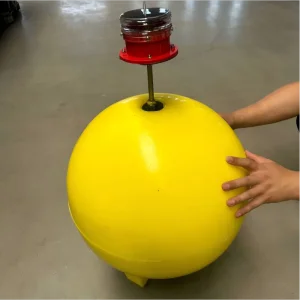
Deployment: 1.5 km international safety zone enclosure utilizing BF-X1100 barrier floats with integral solar LED beacons and radar reflectors.
Operating Conditions: Water temperature 38°C, salinity 42 PSU, open sea swell Hs = 1.8 m. High visual acuity orange pigmentation maintained full luminance without color leaching or biological barnacle compromise.
Localized Support, Standards & Regulatory Compliance
Ensuring complete regulatory conformity for EPC contractors, government port authorities, and maritime consulting engineers globally.
Process Quality Control
Fully certified quality management covering raw resin traceability, continuous mold temperature logs, foam density cores, and automated leak detection for zero-defect consignments.
Marine Aids to Navigation
Conforms to International Association of Marine Aids to Navigation and Lighthouse Authorities recommendations for chromaticity coordinates, reflectivity, and daylight marking conspicuity.
Structural & Environmental
Tested in strict compliance with ASTM D638 (Tensile Strength > 21 MPa), ASTM D790 (Flexural Modulus > 850 MPa), and US Army Corps of Engineers standards for dam safety barrier deployment.
Ecological Compatibility
100% heavy-metal-free, phthalate-free, non-toxic polymer resins. Certified completely inert for deployment in protected potable drinking reservoirs and critical marine sanctuaries.
Technical Roadmap & Future Flotation Horizons
Pioneering the intersection of structural rotomolding, intelligent telemetry, and ecological circularity for 2026 and beyond.
IoT-Enabled Dynamic Load Telemetry
Integration of low-power LoRaWAN and satellite-linked strain gauge sensors embedded directly into central through-hull connection shackles. Real-time monitoring of catenary tension alerts control rooms to localized debris blockages or anchor creep before structural line rupture occurs.
Bio-Based Circular Polyethylene Matrices
Development and trial validation of second-generation bio-circular polymers derived from non-fossil renewable feedstocks, achieving identical mechanical elongation and UV resistance while slashing embodied carbon footprints by over 45% per float unit.
Autonomous Hydrodynamic Scouring Profiles
Next-generation rotational molds featuring biomimetic fluted surface contours that leverage localized current vorticity to continuously scour away biological fouling, microalgae, and zebra mussel adherence without mechanical intervention or toxic biocides.
Offshore, Pipeline & Specialized Flotation Assets
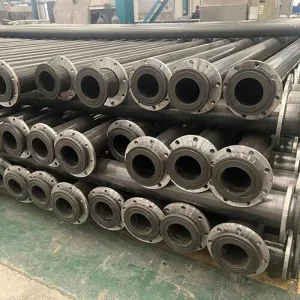
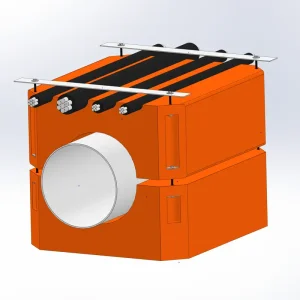
Complementary offshore mooring buoys, cable-trough pipe floats, floating pontoons, and slurry conveyance solutions manufactured to exacting OEM drawings.


Frequently Asked Questions: OEM Barrier Floats
In-depth responses covering buoyancy margin calculations, dynamic mooring catenary analysis, saltwater degradation resistance, and contract procurement.
How is the required buoyancy reserve calculated for floating trash barriers under current drag?
Buoyancy sizing must never rely strictly on static barrier deadweight. Hydrodynamic drag force ($F_d$) generated by water approach velocity against the submerged boom and drop-screen creates a downward rotational moment. Total buoyancy per lineal meter must follow the safety envelope equation: $B_{total} \ge (W_{dry} + W_{skirt} + F_{down}) \times SF$, where the safety factor ($SF$) ranges from 2.2 to 3.0. In rivers exceeding 2.0 m/s approach flow, floats are typically sized so that at least 50% of the total outer body remains above the still waterline under full screen trash accumulation.
What prevents rotationally molded polyethylene barrier floats from cracking in extreme UV zones?
Unstabilized polyethylene exhibits radical chain scission when exposed to ultraviolet radiation (specifically wavelengths 290–350 nm). Our OEM formulations incorporate synergistic masterbatches consisting of high-performance Hindered Amine Light Stabilizers (HALS Type 944/770) combined with benzotriazole UV absorbers. This compounding achieves over 20,000 hours of accelerated weatherometer testing (Xenon Arc ASTM G155), yielding an anticipated environmental working life exceeding 15 years in tropical and equatorial regions.
How do internal spine sleeves isolate axial tension from the plastic float body?
Our heavy-duty barrier floats feature molded-in or press-fitted heavy wall steel guide tubes extending from end face to end face. When barrier units are linked via galvanized or stainless steel through-cables or stud-link marine chains, all anchoring catenary tension is borne strictly by the steel spine. Polyurethane foam fill locks the inner sleeve coaxially, ensuring zero mechanical shear or tear stresses transfer to the rotomolded exterior hull during storm surges.
Can OEM barrier floats be customized for corrosive tailings, saline waters, or high-pH environments?
Yes. Virgin hexene polyethylene naturally resists organic acids, alkalis, and saturated chloride solutions without surface passivation layers that can fail. For high-temperature or extreme acid tailings dams (pH < 2.5), we tailor resin densities and substitute internal metal components with Titanium Grade 2, duplex 2205 stainless steel, or non-metallic ultra-high-molecular-weight polyethylene (UHMWPE) load straps.
What lead times and container loading efficiencies apply to bulk international orders?
Standard OEM production output ranges between 150 to 300 completed barrier float units per week depending on unit volume. For international freight optimization, float diameters and nesting lengths are computer-modeled for 40ft High Cube (40HC) container packing, enabling direct nesting or stack-loading that minimizes dead freight volume and yields rock-bottom CIF/FOB logistics costs.