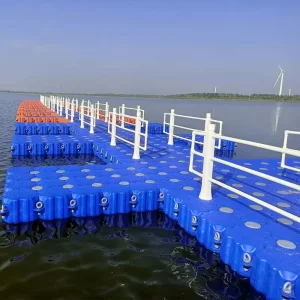
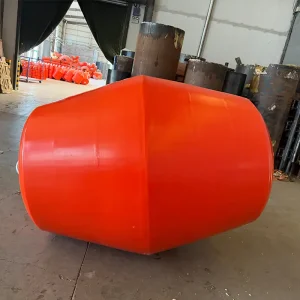
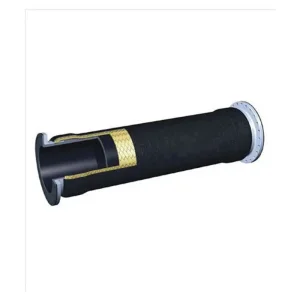
Featured Marine Flotation & Barrier Assets
Engineered rotational molding flotation units, mooring attachments, and high-tenacity demarcation systems for extreme offshore, mining, and civil dredging environments.




Technical Whitepaper: Buoy Rope Barrier System Dynamics
In modern offshore safety, security demarcation, and intake basin maintenance, buoy rope barriers serve as the frontline defense against navigational hazards, unauthorized vessels, and solid particulates.
Polymer Morphology & UV Stabilization
Manufactured using rotational-molded high-density polyethylene (HDPE) polymer shells compounded with Class-8 UV inhibitors, our buoy barriers resist embrittlement under extreme saltwater photolysis and high-salinity oxidative environments. The shell retains impact elastomeric memory even under sub-zero Arctic freeze cycles or tropical marine exposure.
Internal Core Closed-Cell Matrix
Each flotation unit is injected under high pressure with premium closed-cell polyurethane (PU) foam with a hydrophobic density rating of 35-40 kg/m³. In the event of catastrophic shell puncture caused by extreme collision or kinetic debris load, the moisture absorption is kept below 3%, preventing waterlogging and guaranteeing continuous operational freeboard.
Tension Load Lines & Moorings
The continuous structural tension is absorbed by high-modulus, ultra-high-molecular-weight polyethylene (UHMWPE) synthetic lines or hot-dip galvanized and stainless steel wire ropes. Load-spreading internal steel bushings prevent localized point-strain on plastic hulls, neutralizing cyclic fatigue from hydrodynamic surge forces.
Technology Roadmap: Next-Gen Autonomous Barrier Infrastructures
Strategic deployment of smart monitoring, environmental intelligence, and circular advanced composites into global marine safety lines.
IoT-Enabled Sensory Nodes
Integration of low-power NB-IoT and LoRaWAN strain gauges inside internal tension conduits to monitor localized dynamic wave loadings and anchor line stress remotely in real-time, preventing unexpected mooring failures during storm tides.
Photovoltaic Warning Systems
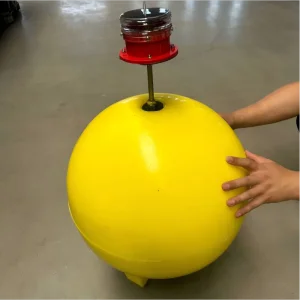
Self-sustaining micro-solar surface domes directly rotomolded into the buoy apex. Equipped with marine-grade LED synchronized navigation signaling compliant with IALA E-200 standards for visible 3-nautical-mile perimeter warnings.
Bio-Circular Resin Compounding
Formulating our long-chain polymer matrices with ocean-recycled plastics and cross-linked elastomers to achieve ISO 14040 full lifecycle carbon-neutral targets while preserving stress crack resistance (ESCR > 1000 hours per ASTM D1693).
Hydrodynamic Profile Optimization
Computational Fluid Dynamics (CFD) modeling of submerged buoy hulls to minimize hydrodynamic drag coefficients by up to 28%, significantly extending structural anchor block service intervals in high-velocity estuary rivers.
Macro-Industry Solutions & Engineered Implementations
Comprehensive turnkey demarcation and barrier installations across critical marine infrastructure segments.
Hydropower Dams & Water Inflow Basins
Trash boom systems and debris curtains block tons of floating timber, invasive water hyacinths, and industrial plastics from entering penstocks and turbine intakes. By pairing high-buoyancy HDPE floaters with heavy-gauge galvanized drop screens, operators eliminate catastrophic plant shutdowns and prevent multi-million-dollar turbine cavitation damages.
Offshore Dredging & Marine Mining
Navigational channel delineation, deep-sea dredging spoil lines, and mining tailings discharge operations require intense visual zoning and impact isolation. Flexible buoy rope barriers define safe operating radii around submerged dredge heads, escorting commercial freight traffic safely away from slurry corridors and submarine pipeline tie-ins.
Port Security & Exclusion Zones
Naval shipyards, offshore LNG terminals, and military coastal perimeters enforce zero-tolerance security perimeters. We supply high-tensile anti-intrusion marine security barriers engineered with continuous steel-reinforced core wire, anti-climbing spike appendages, and linked high-buoyancy pods designed to arrest small speedcraft incursions.
China Factory 4.0: Supply Chain Resilience & Process Precision
Combining intelligent rotational molding process controls, dedicated localized industrial ecosystems, and aggressive throughput scaling.
SCADA-Monitored Thermal Cure
Our Huimin manufacturing cluster operates computerized biaxial rotational ovens equipped with continuous infrared thermography. This eliminates localized internal cold-spots, guaranteeing isotropic wall thickness (tolerances within ±3%) and residual thermal stress reduction.
Vertical Supply Integration
Situated in Shandong's primary chemical and maritime polymer hub, Juhua leverages immediate, cost-efficient access to Sinopec polymer stock and marine hardware foundries, shortening order-to-container transit times to under 14 working days for critical projects.
In-House Hydrostatic Proof Testing
Every structural design undergoes strict pressure vessel chamber leak testing, axial eyelet pull-out load testing, and hydrostatic buoyancy immersion verification prior to crating, providing complete lot traceability back to raw polymer lot IDs.
Optimized Export Packaging Matrix
Modular shell nest designs and heavy-duty shrink palletization optimize 40ft High Cube container volumetric load efficiencies, effectively lowering international sea freight unit costs by up to 22% per deployed linear meter.
Global Enterprise Procurement, Compliance & Engineering Support
Aligning tier-1 engineering requirements with recognized international maritime safety standards and full documentation kits.
International Standards Compliance
Fabricated strictly to conform with ISO 9001 quality management procedures, ISO 14001 environmental frameworks, and IALA Guidelines for maritime markers. Mill test certificates, tensile yield sheets, and food-grade non-leaching reports (FDA/EU compliance for potable reservoirs) are supplied with all batches.
Procurement & EPC Sizing Calculations
Our dedicated engineering department supplies bespoke hydro-buoyancy calculation sheets for tender submittals. We mathematically balance system deadweight, fluid density drag, and environmental current parameters, guaranteeing an engineered 25-30% safety freeboard reserve during dynamic wave surge.
On-Site Engineering Commissioning
We provide global contractor support ranging from detailed CAD installation layout blueprints and anchor array tension calculations to dispatched field engineering supervision for large-scale reservoir deployments across the Middle East, Southeast Asia, South America, and Europe.
Buoy Rope Barrier Technical FAQ: Engineering & Procurement
In-depth responses to critical technical queries from marine contractors, harbor authorities, and procurement managers.
How do you mathematically determine total buoyancy and safety reserve margins for a barrier system?
Total buoyancy must substantially exceed the total combined static and dynamic load. The formula used is:
Total Buoyancy ≥ (Weight of Shells + Internal Foam + Central Rope/Chain Load + Submerged Debris Skirt + Trapped Bio-Fouling) × 1.25 to 1.35.
This engineered 25-35% safety margin ensures that the barrier line maintains at least one-quarter of its diameter above the waterline under maximum current flow and wind chop, avoiding wash-over failure.
How does rotational molding compare to blow molding for heavy-duty marine buoy barriers?
Rotational molding is an atmospheric stress-free process that produces seamless, uniform-wall polymer structures without internal weld seams or residual frozen strains. Blow molding generates thin, stressed corners that easily fracture under wave torsion. Rotomolded components offer dramatically higher environmental stress crack resistance (ESCR) and accommodate thicker structural walls (up to 12-16mm) required to withstand marine vessel impacts.
Can buoy rope barrier systems be customized with internal drop nets for silt and debris containment?
Yes. We design modular trash and silt booms with molded-in lower attachment eyes or integrated structural stainless brackets. These accept heavy-duty geotextile curtains or hot-dip galvanized chain-link mesh skirts descending 0.5 to 3.0 meters beneath the surface, weighted with bottom ballast chains to capture submerged aquatic weeds, silts, and waterborne microplastics.
What is the standard warranty period and expected offshore design life?
Standard OEM commercial warranty extends 18 months from the delivery date or 12 months from final field installation. Due to the high chemical inertness of virgin UV8-stabilized HDPE and our polyurethane foam fill formulation, the structural design life of our floating barriers exceeds 10 to 15 years in typical marine environments with basic annual line maintenance.
What precise technical parameters must be submitted to receive a turnkey engineering quote?
To ensure zero specification discrepancies, please provide: total line span length, water velocity (current speed in m/s), maximum wave height, tidal range, core purpose (debris control, anti-intrusion security, swimming demarcation, or pipeline escort), preferred rope/chain metallurgy, and the destination delivery port for maritime container packing calculation.
Comprehensive Flotation & Marine Transfer Catalog
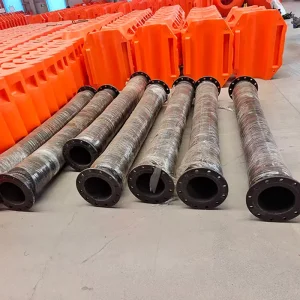
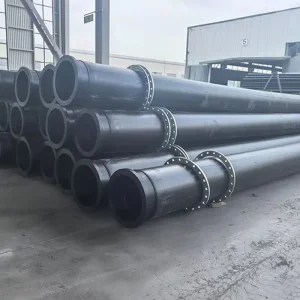
Complete your aquatic installation with our matched dredging pipelines, rubber suction hoses, and heavy-duty mooring buoys.