Featured Buoyancy & Offshore Pipeline Assemblies
Advanced OEM rotomolded modules, mooring systems, and floating conduits manufactured to international ISO, ASTM, and IALA maritime standards.
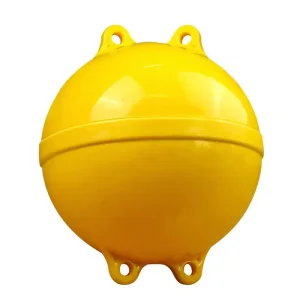
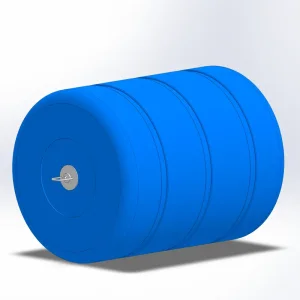
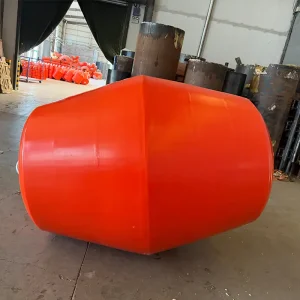
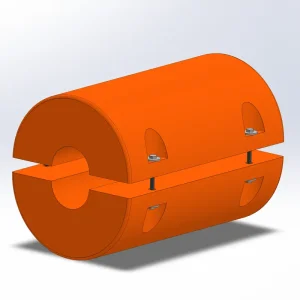
Engineering Precision in High-Density Polyethylene Marine Infrastructure
Why maritime contractors and EPC conglomerates transition from legacy metallic pipelines to certified High-Density Polyethylene (HDPE) polymer conduits.
Corrosion Immunity & Abrasion Resistance
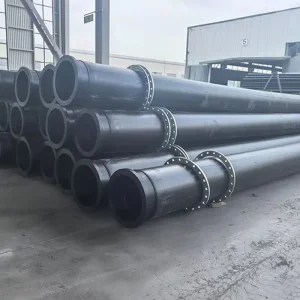
High-Density Polyethylene pipelines offer exceptional chemical inertness. Unlike carbon steel or ductile iron, HDPE resists electrolytic seawater corrosion, biological fouling, and chemical oxidation from harsh dredging runoffs.
The low frictional coefficient (Hazen-Williams C=150) mitigates dynamic hydraulic loss while providing 4 to 8 times the abrasive wear life of structural steel in slurries carrying quartz and tailings.
- Eliminates cathodic protection maintenance overheads
- Smooth lumen surfaces prevent mineral scaling
- Exceptional resilience under abrasive slurry slurping
Dynamic Buoyancy Equilibrium Dynamics
Marine dredging setups require fine-tuned buoyancy balances. Pipeline floats must overcome the dry pipe weight, the internal slurry medium density (which can reach 1.6 to 2.0 t/m³), and mechanical coupling hardware.
Engineered rotomolded shells filled with closed-cell polyurethane foam guarantee continuous operation even if outer skins suffer abrasive puncture during offshore operations.
- Engineered for an optimal 25-30% waterline reserve freeboard
- Closed-cell polyurethane maintains buoyancy under skin puncture
- Prevents sudden pipeline kinking during sea swell shifts
Monolithic Butt-Fusion Integrity
Thermally fused butt-welded HDPE joints create a continuous piping string that is structurally equivalent to or stronger than the unjointed pipe body itself, avoiding weak mechanical gasket points.
This zero-leakage, fatigue-resistant profile accommodates dynamic wave-induced tensile flexure, ground settling, and ocean floor subsea tie-ins without bolt loosening.
- Zero mechanical bolt failure along fused spans
- Withstands cyclic water hammer pressure transients
- High bend radius allows smooth contouring across ocean beds
Global Supply Chain Advantages & Chinese Manufacturing Ecosystem
Maximizing capital efficiency, reducing procurement lead times, and maintaining high engineering standards through advanced Chinese rotomolding clusters.
Full-Chain Upstream Integration
Situated in the industrial heartland of Shandong, our facility integrates high-grade raw polymer resin sourcing (Sinopec, Borealis, PetroChina) directly with on-site polymer compounding and UV stabilizer micronization.
- Consistent MFI (Melt Flow Index) batch control
- High-volume virgin polyethylene purchasing power
- Stable raw material pricing for mega-infrastructure
Automated Rotomolding Facilities
Modern production facilities run large-diameter automated rotational molding systems with variable-frequency controls and real-time internal thermocouple sensor arrays.
- Uniform wall thickness to avoid weak seam fractures
- Molds scaled from 110mm up to 1200mm Outer Diameters
- High throughput handling short-notice emergency spares
Port Proximity & Container Efficiency
Close access to Qingdao and Tianjin ports ensures streamlined container loading and lower inland haulage costs for bulk floats and pipes.
- Optimized nested packing designs cut shipping volume
- Custom export crating withstands rough ocean voyages
- Complete customs documentation and port logistics support
Bespoke Tooling & Mold Engineering
Dedicated internal CNC mold design teams turn complex project drawings into production tooling within 15 to 20 business days.
- In-house tooling reduces third-party development markups
- Fast prototyping for custom cable troughs and brackets
- Flexible customization for unique pipeline ODs
Global Quality Compliance, Standards & Certifications
Every HDPE pipe section and flotation module adheres to rigorous international technical specifications, ensuring full project sign-off compliance.
| Standard Specification | Governing Agency / Region | Material / Structural Focus | Quality Assurance Protocol |
|---|---|---|---|
| ISO 4427 / EN 12201 | International / European Standard | Polyethylene (PE) piping systems for water supply and drainage | Hydrostatic strength verification (80°C @ 165h & 1000h), Oxidation Induction Time (OIT) > 20 min |
| ASTM D3350 / F714 | North American Standard (ASTM) | Standard specification for polyethylene plastic pipe based on outside diameter | Cell classification analysis: Density, Melt Index, Flexural Modulus, Tensile Strength, and ESCR |
| AS/NZS 4130 | Australia / New Zealand | Polyethylene pipes for pressure applications in mining and civil projects | Slow crack growth resistance test (PENT > 500 hrs), longitudinal reversion testing |
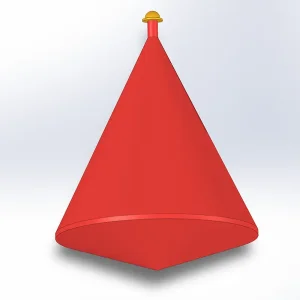
| IALA Guidelines | International Marine Aids to Navigation | Color fastness, visibility chrominance, and marine navigation buoys | Spectrophotometer color coordinate matching, UV degradation assessment (Xenon arc exposure) |
| API 15LE | American Petroleum Institute | Specification for polyethylene line pipe in transport and coastal operations | Cyclic fatigue resistance, burst pressure test rating, weld joint impact cleavage tests |
Localized Application Engineering & Heavy Marine Deployments
Tailored buoyancy modules and heavy-duty polymer pipelines built for specialized maritime and civil applications.
Nearshore Capital Dredging & Land Reclamation
For high-capacity harbor deepened projects, our large-diameter HDPE slurry lines and high-displacement floats handle thousands of tons of sand and gravel per hour without buckling or losing buoyancy under dynamic wave action.
- High-visibility safety finishes comply with local port waterway regulations
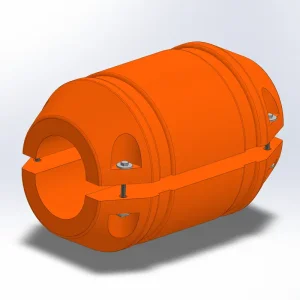
- Tough bolt-on marine collars keep pipeline runs firmly in position
Tailings Disposal in Mining & Mineral Processing
Mineral recovery often produces highly acidic or basic tailings slurry that wears out steel pipes rapidly. Our engineered PE100 thick-wall pipelines combined with float clamps deliver long service lives across tailings storage facilities (TSFs).
- Highly resistant to acid mine drainage (pH 1.5 to 13)
- Custom cable-trough floats run power and signal lines along the pipe
Offshore Aquaculture & Water Quality Preservation
Modern open-sea fish farms and reservoir containment projects rely on floating barrier systems and aerating water conduit strings. The food-contact grade, non-toxic properties of virgin PE preserve clean water environments.
- Zero heavy metals or plasticizer leaching into clean water
- Integrated floating trash barriers keep surface debris away from intakes
Emerging Trends in High-Density Polyethylene Marine Engineering
Key technological advancements driving the next generation of smart flotation and offshore piping infrastructure.
IoT-Enabled Smart Buoyancy Networks
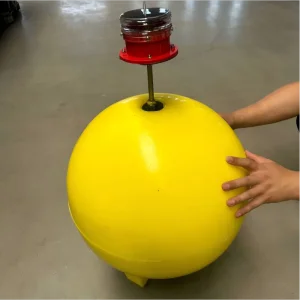
Modern maritime infrastructure incorporates sensory IoT devices into rotomolded buoys and pipe floats. These monitor pipeline structural stress, trace slurry flow, track GPS positions, and alert operators to pipe displacements in real time.
Sustainable Polymer Formulations
The industry is actively working on incorporating ocean-bound recycled plastics (OBP) into the outer protective shells of buoys and non-pressure pipe cores, cutting product carbon footprints while maintaining UV and crack resistance.
Co-Extruded Multi-Layer Anti-Wear Liners
New multi-layer extrusion co-extrudes an inner conductive, ultra-high-molecular-weight (UHMWPE) wear strip within a high-density polyethylene structural frame, offering extended wear protection against sharp diamond-sand dredging media.
Frequently Asked Questions (FAQ) & Technical Guidance
Clear, direct technical answers addressing buoyancy calculation, material specs, installation dynamics, and international procurement procedures.
Supplementary Marine Products & Heavy Flotation Systems
Heavy-duty marine equipment engineered for channel marking, dynamic berthing, and offshore pipeline stabilization.