
Primary Industrial Marine Flotation & Pipeline Series
Engineered for high-stress dredging lines, fluid transport pipelines, subsea positioning, and resilient harbor anchoring systems.
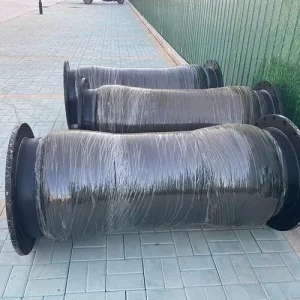
Best Durable Rubber Hoses for Efficient Fluid and Sediment Transport Products
Explore Product
Custom Pipeline Float For Subsea Tie-In And Controlled Positioning Products
Request Quote
ODM Subsea Tie-In Pipeline Float – Reliable Underwater Buoyancy
View Pricelist
Custom Reliable Marine Buoys for Safe Waterway Operations
Explore Product
OEM Pipe Floats For Reservoir Intake And Temporary Bypass Lines
Request Quote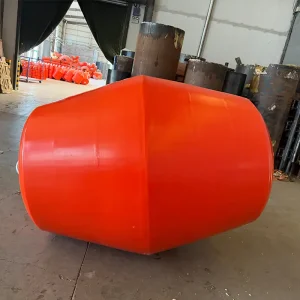
Best Foam-Filled Polyethylene Mooring Buoy for Marine Anchoring
View Specs
High-Quality Pipeline Float Tie-In – Modular Buoyancy Solution
View Pricelist
High-Quality Versatile Floating Boat Pontoon for Water Projects
Explore PontoonChina Factory Supply Chain Dominance & Rotational Molding Quality
A comprehensive examination of why global EPC marine contractors, offshore dredging firms, and port authorities partner with Chinese manufacturing infrastructure for custom flotation assets.
Vertically Integrated Raw Polymer Infrastructure
Unlike regional fabricators who rely on fragmented third-party compounders, Shandong Binzhou Juhua utilizes fully integrated polymer supply chains. We procure virgin grade LLDPE/HDPE with proprietary UV-inhibiting Masterbatch additives directly from petrochemical complexes, guaranteeing uniform melt flow index (MFI) and fracture resilience.
- UV8 to UV20 stabilized marine formulations
- Zero recycled scrap blending in core shells
Advanced Rotomolding Thermal Control
Our production floor operates multiple large-capacity rotational molding carousels equipped with variable-frequency speed controls and electronic automated multi-zone thermal probes. This engineering architecture eliminates internal stress, avoids brittle corners, and ensures an ultra-consistent shell thickness cross-section across every buoy diameter.
- Multi-axis bidirectional rotational balance
- Non-destructive wall thickness ultrasound audit
Closed-Cell Polyurethane Foam Hydro-Security
Even in the event of extreme kinetic impacts or external shell rupture caused by surface vessel collisions or sharp reef contact, our closed-cell polyurethane foam interior matrix (density: 35–45 kg/m³) provides failsafe hydro-buoyancy. The cross-linked polymer cells resist continuous hydrostatic water absorption over long operating lifespans.
- Water absorption rate below 0.05 g/cm³
- Integrated hot-dip galvanized (HDG) tension cores
Global Enterprise Procurement Dynamics & Compliance Engineering
Addressing international standards, maritime safety regulations, and why modern marine fleets are migrating away from traditional steel mooring buoys to rotomolded polymeric structures.
Stringent Regulatory & IALA Compliance
International marine operations demand uncompromising compliance with IALA (International Association of Marine Aids to Navigation and Lighthouse Authorities) chromatic coordinates and retroreflective luminance standards. Juhua's custom mooring and navigation buoys incorporate colorfast UV pigments blended directly into the melt matrix, ensuring chromatic compliance without toxic lead paints.
- IALA Recommendation E-108 Colorimetrics
- Bureau Veritas & CCS Third-Party Traceability
Total Lifecycle Cost Decoupling (TCO)
Global port authorities are systematically replacing conventional steel mooring buoys with modular rotomolded and pneumatic polymer designs. Traditional steel buoys require bi-annual drydock sandblasting, recoating, and anode replacement to combat severe galvanic corrosion. High-molecular polyethylene buoys eliminate corrosion maintenance entirely, cutting 15-year TCO by over 62%.
- Zero sandblasting or biocidal paint recoating
- Self-lubricating surface repels heavy bio-fouling
Containerized Modular Shipping Efficiency
One of the largest hidden procurement hurdles for marine engineering is ocean bulk logistics costs for high-displacement buoys. Our proprietary OEM split-assembly and optimized stackable geometry allow high-tonnage buoys and pipeline modules to be packed into standard 40ft High Cube containers, saving project procurement directors up to 40% in international shipping freights.
- Stackable interlock structure for rapid packing
- Pre-assembled hardware ready for dockside tie-in
Localized Applications & Hydrodynamic Deployment Models
Tailored buoyancy modules engineered to address extreme wave regimes, silt sedimentation, offshore loading, and sensitive marine park installations.
Deepwater Offshore SPM & CALM Terminals
Mooring buoys and support floats positioned in open-sea single point mooring (SPM) or Catenary Anchor Leg Mooring (CALM) terminal setups must endure continuous cyclic wave action, heavy tanker berthing tension, and harsh oceanic salt-spray. Our high-tensile internal steel core assemblies absorb massive hawser drag while preserving the buoyant hull.
- High proof-load pull-through swivel shackles
- High-visibility daylight markers and radar reflectors
Capital Dredging & Silt Reclamation Lines
Modern mega-dredgers move abrasive sand, coral slurry, and thick harbor mud at high volumetric flow rates. Our polyethylene pipeline floats are designed to clamp securely around discharge steel and HDPE pipelines, maintaining stable freeboard margins and dampening torsional shock during extreme tidal shifts and high current surges.
- Engineered reserve buoyancy calculations (120%-130%)
- Non-slip internal ribs to eliminate pipe longitudinal slippage
Harbor Security, Anti-Trash Booms & Eco-Zones
Harbor entrances, hydroelectric dam intakes, and sensitive marine reserves require continuous floating barrier demarcation to deflect drifting debris, contain hazardous oil spills, and restrict unauthorized watercraft access. Juhua's interconnected cylindrical floats create robust, virtually unsinkable surface security lines.
- Interlocking high-strength stainless steel link connections
- Submerged skirt attachment integration for debris control
Specialized Pipeline Float, Mooring & Pontoon Systems
Precision-engineered products engineered to perform in complex marine installations and industrial intake environments.
High-Quality Mooring Buoy with Reinforced Connections
Explore Product
OEM Modular Pipe Floats with Integrated Cable Channels
Explore Product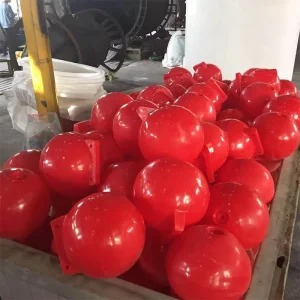
Best PE Float Ball – Durable Buoyancy Solution for Water Projects
Request Quote
Custom Pipe Floats for Floating Pipeline Stability
View Factory
Custom Pipe Floats for Floating Water Pipeline & Support
View Details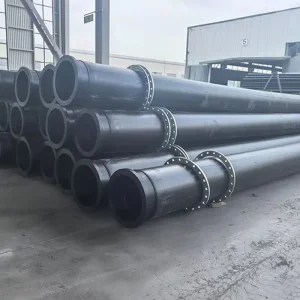
Best Heavy-Duty Pipeline for Safe and Efficient Transport
Explore Line
Best Custom Mooring Buoy for Boat Berths & Harbors
View Pricelist
Best Precision Marine Buoys for Safe Navigation
View FactoryFrequently Asked Engineering & Procurement Questions
Practical calculations, testing protocols, warranty stipulations, and field maintenance advice curated by senior offshore flotation engineers.
What is the standard engineering formula to calculate required dredge pipeline buoyancy?
The fundamental buoyancy equation requires: Total Float Net Buoyancy ≥ (Weight of Pipe + Weight of Max Density Conveyed Slurry + Weight of Flanges, Bolts, and Submerged Fasteners) × Safety Factor (typically 1.2 to 1.3). Sizing for 20% to 30% reserve buoyancy ensures that approximately 25% of the pipe diameter remains visible above the water surface, preventing line sag and vortex-induced vibrations.
Why is rotational molded polyethylene preferred over conventional welded steel buoys?
Polyethylene (PE) is inherently immune to electrochemical saltwater oxidation and biological biofouling. Unlike steel buoys that rust, pit, and require frequent sacrificial zinc anode replacement and sandblast recoating, PE buoys are maintenance-free, exhibit elastic memory upon impact with vessels, and reduce the overall anchoring chain pull weight by over 40%.
What parameters are required to generate an accurate OEM mooring buoy or pipeline float quote?
To deliver precise calculations, our engineering team requires: Pipe Outer Diameter (OD) and wall thickness, pipeline core material (HDPE, steel, composite), specific gravity of conveyed fluid/slurry (e.g., 1.0 to 1.8 t/m³), ocean current speed, peak wave height, installation site salinity, preferred shell color (IALA spec), and total continuous line distance.
What is the standard warranty coverage and factory service duration?
Our standard commercial warranty coverage commences on the date the equipment is formally handed over to the site operator and extends for 18 months post-handover, or 12 months after completed on-water installation and commissioning, whichever threshold is achieved first. Spare half-shells and connecting hardware retain full dimensional interchangeability for scheduled replacements.
Can pipeline floats and mooring buoys integrate subsea power and data cabling channels?
Yes. We manufacture customized modular floats with integrated recessed cable troughs. These custom-molded longitudinal channels enable underwater high-voltage dredge power cables, hydraulic control umbilicals, and fiber-optic telemetry cords to route safely alongside the slurry line without mechanical pinching, chafing, or tangling.
How does internal polyurethane foaming behave during severe exterior hull punctures?
Our automated high-pressure foaming systems inject marine-grade, closed-cell polyurethane foam directly into the rotomolded cavity. Because over 92% of the cellular structure is closed, seawater cannot travel throughout the core. If the outer PE shell suffers localized mechanical penetration, the buoy maintains net buoyancy with negligible loss of freeboard.