
Featured Marine Buoys & Flotation Infrastructure
Browse our factory-certified rotational-molded flotation modules, heavy-duty dredge discharge floats, and harbor mooring buoys designed for rugged nearshore and open-ocean deployments.
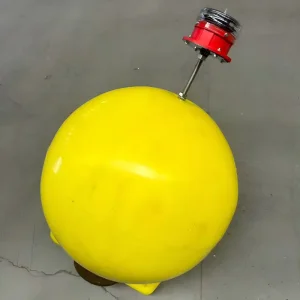
ODM High-Visibility Floating LED Ball for Marine and Freshwater Safety
Explore Specifications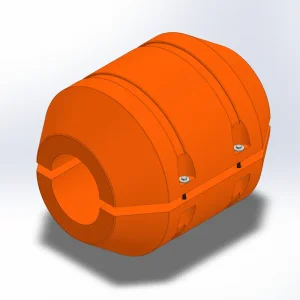
Custom Pipe Floats for Long-Distance Floating Pipelines & Water Transfer
Explore Specifications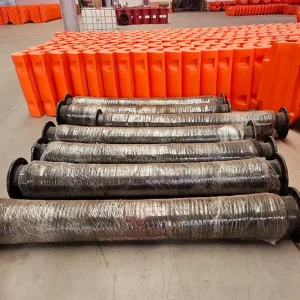
Custom Heavy-Duty Rubber Pipelines for Slurry & Dredge Transport
Explore Specifications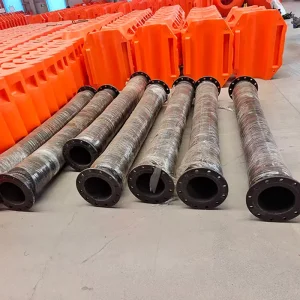
Custom Flexible Rubber Hoses for Advanced Sediment & Tailings Transport
Explore Specifications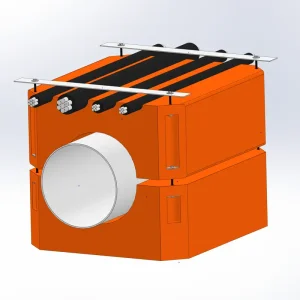
Best Advanced Pipe Floats with Cable Troughs for Industrial Lines
Explore Specifications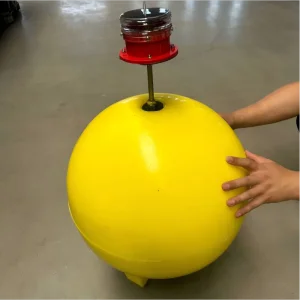
High-Quality LED-Equipped Floating Ball for Safe Water Operations
Explore Specifications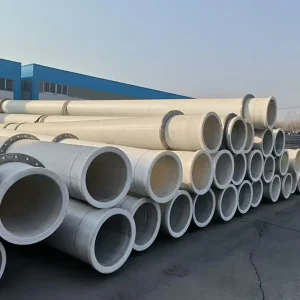
ODM Industrial-Strength Pipeline for Fluid & Slurry Transport
Explore Specifications
Best Custom Mooring Buoy for Boat Berths, Harbors & Offshore Stations
Explore SpecificationsMacro Procurement Realities in Large Mooring Buoy Engineering
Escalating Vessel Displacements & Berth Scarcity
Global shipping routes are witnessing record-breaking deadweight tonnages across Post-Panamax container vessels, Capesize bulk carriers, and VLCC (Very Large Crude Carrier) classes. Traditional quay walls and deep-draft finger piers demand billions in capital expenditure and years of environmental clearances. EPC contractors and marine terminal operators increasingly procure Conventional Buoy Mooring (CBM) and Single Point Mooring (SPM) clusters as scalable, cost-efficient alternatives to anchor vessels offshore during liquid cargo discharge, bunkering, and transshipment operations.
Corrosion Failure of Legacy Steel Buoys
Decades of marine operational records verify that traditional welded carbon-steel mooring buoys experience rapid galvanic deterioration, accelerated rust exfoliation, and high coating maintenance frequency in aggressive sub-tropical and saline seawater. Marine authorities are decisively shifting procurement specifications toward rotational-molded virgin polyethylene (PE) shells encapsulating high-density closed-cell polyurethane foam cores. The non-corrosive, marine-growth-resistant polymer matrix eliminates drydock grit blasting, reduces life-cycle dry maintenance costs by up to 68%, and delivers extended service lives exceeding 25 years.
Severe Dynamic Fatigue & Dynamic Positioning Loads
Modern offshore mooring facilities face elevated hydrodynamic sea-state complexities, exacerbated by shifting storm patterns, cyclonic swells, and macro-tidal currents. Large mooring buoys must endure cyclical dynamic tension ranging from 50 tonnes to over 250 tonnes proof load without experiencing shell cracking, shackle pull-through, or foam core delamination. Sourcing teams prioritize OEM manufacturers providing finite element analysis (FEA), verified central structural steel tension frameworks, and full traceabilities for all internal load-bearing hardware.
Engineering Metallurgy & Polymer Processing at Juhua
At Shandong Binzhou Juhua Rubber & Plastic Co., Ltd. (Giant Rubber), based in Lizhuang Town, Huimin County, Binzhou, Shandong, manufacturing large mooring buoys and dredging flotation infrastructure demands an exact balance of multi-axis rotational molding technology, closed-cell polyurea-polyurethane chemical synthesis, and heavy structural engineering. Every mooring buoy is engineered as an integrated energy-absorbing composite system capable of surviving direct vessel hull impacts, heavy hawser surges, and long-term marine weathering.
Unlike conventional roto-molders utilizing manual flame heating, our dedicated 1,000 m² rotational moulding facility operates variable-frequency speed control with automated real-time multi-point temperature telemetry. This guarantees uniform wall thickness throughout complex hollow buoy geometry, preventing thin-spot embrittlement along radius fillets. Our standardized tooling maintains precision mold parting lines, ensuring structural interchangeability across all modular buoyancy rings, half-shell dredge floats, and tie-in collars.
| Engineering Parameter | Standard Buoy Specification | Heavy-Duty Deepwater SPM |
|---|---|---|
| Polymer Outer Shell | Virgin LLDPE / HDPE (UV20+ Stabilized) | Cross-Linked / High-Density PE Shell (12–25mm) |
| Internal Core Matrix | Expanded Closed-Cell EPS / Polyurethane | High-Density Rigid PUR Foam (38–45 kg/m³) |
| Internal Load Structure | Hot-Dip Galvanized Central Steel Pipe | Heavy Forged Structural Steel Tension Member |
| Safe Working Load (SWL) | 15 Tonnes to 45 Tonnes | 60 Tonnes to 220+ Tonnes Proof Tested |
| Water Absorption Ratio | < 1% Volume under Extended Immersion | Zero Significant Permeation (100% Closed Cell) |
| Thermal Operating Range | -25°C to +55°C Ambient | -40°C to +65°C Extreme Maritime Climates |
Where B_net represents net positive reserve buoyancy, V_shell is the external submerged volume of the roto-molded shell, ρ_seawater is ambient seawater density (~1.025 t/m³), W_buoy is the combined deadweight of the polymer body and internal steel spine, W_tackle is mooring bridle and shackle weight, W_catenary is the suspended wet weight of the anchor chain hanging from the bottom pad-eye, and F_surge incorporates dynamic vertical wave displacement.
Tension Bar vs. Through-Chain
We manufacture both cruciform central-tie tension members (transmitting mooring hawser pull directly through forged steel pad-eyes) and cylindrical through-chain hawse pipes allowing anchor chain pass-through secured via top deck stopper plates.
Resilience to Breaching
Even in the catastrophic event of a vessel collision rupturing the outer rotationally molded polyethylene skin, the inner high-density polyurethane core resists water penetration, preventing hull flooding or loss of buoyancy.
Technology Roadmap & Next-Generation Buoyancy Horizons
Anticipating maritime industry decarbonization, autonomous shipping lanes, and deepwater renewable infrastructure through progressive composite and digital innovations.
IoT Telemetry & Tension Load Monitoring
Integration of load-cell pins within mooring shackles and hawser hook assemblies. Embedded sensors capture dynamic tensile loads, tidal swell impacts, and GPS geofencing drift, relaying continuous wireless telemetry to harbor control stations via LoRaWAN and satellite constellations to enable proactive preventative maintenance.
Floating Wind & Dynamic Subsea Umbilicals
Transitioning large mooring buoy technologies toward holding floating offshore wind turbines (FOWT) in deepwater basins. Specialized tether support buoys and distributed buoyancy modules (DBMs) engineer custom wave lazy-S curve profiles into dynamic electrical subsea export cables, shielding fragile copper cores from fatigue stress.
Circular Polymers & Eco-Safe Marine Additives
Pioneering closed-loop recyclable rotomolding resins with non-leaching, non-toxic anti-fouling compound additives. These advanced materials inhibit heavy barnacle and algae encrustation without shedding harmful biocides into marine ecosystems, satisfying strict international environmental marine stewardship guidelines.
Macro-Industry Solutions & Offshore Applications
Juhua flotation products perform across harsh marine environments, critical shipping bottlenecks, and large-scale industrial hydraulic circuits around the globe.
Port Mooring & Vessel Transshipment
Multi-buoy mooring (MBM) spreads designed for commercial harbors where quay space is limited. Ensures secure vessel positioning for lightering, bunkering, and safe standby during rough swell conditions without berth impact.
Slurry Discharge & Tailings Transport
Matched sets of rotational-molded pipe floats, heavy-duty suction/discharge rubber hoses, and pipeline float tie-ins engineered to float continuous discharge lines conveying abrasive mine tailings and dredged slurry.
Waterway Marking & Channel Delineation
IALA-compliant navigation buoys equipped with radar reflectors, topmarks, and solar-powered marine LED lanterns. Engineered to maintain vertical stability and exceptional visibility through dense ocean sea-fog.
Floating Trash Barriers & Silt Curtains
Modular floating barriers connected with heavy-duty galvanized chain networks to intercept marine debris, plastics, floating timber, and sediment plumes prior to entering hydropower intakes and pristine coastal preserves.
Deepwater Subsea Tie-Ins & Cable Support
Engineered modular pipeline floats designed to hold submerged risers, mid-water flowlines, and subsea umbilical tie-in bends at precise neutral or staged buoyancy elevations throughout operational lifetimes.
High-Energy Open-Ocean Fish Farming
Large-capacity mooring buoys anchoring offshore fish farming pens in deep sea locations. Sustains high cyclic wave loads while keeping surface perimeter pens accurately pretensioned in stormy waters.
Global Compliance & Localized Operational Support
Sourcing critical marine equipment demands rigorous third-party auditing and adherence to global maritime authorities. Juhua designs, manufactures, and inspects its large mooring buoys and flotation modules in strict conformance with international engineering codes:
- IALA Guideline E-108: Conformance on navigation buoy chromaticity coordinates, daylight visibility, radar reflectivity, and topmark mechanical stability.
- OCIMF MEG4 Compliance: Mooring Equipment Guidelines verification ensuring pad-eyes and quick-release hooks endure vessel break-away dynamic thresholds.
- ASTM D1693 & ISO 1461: Environmental Stress-Crack Resistance (ESCR) raw material validation and hot-dip galvanization thickness exceeding 85 microns.
- Class Society Witnessing: Verification availability under DNV-GL, ABS, Bureau Veritas (BV), and CCS (China Classification Society).
OEM Sourcing & Warranty Framework
International marine engineering projects operate under rigid commissioning deadlines where unexpected equipment downtime incurs astronomical demurrage costs. We operate an integrated engineering service workflow:
Our warranty begins when the buyer formally hands over the goods to the project owner/investor and terminates 18 months post-handover or 12 months after active field installation, whichever threshold matures first.
Precision-machined CNC split molds ensure replacement buoy shells, pipe float halves, and tie-in collars match existing operational assets without site modification.
Optimized nesting packaging strategies maximize 40ft High Cube container volumetric capacity, dramatically reducing ocean freight costs to major ports across Europe, the Middle East, Southeast Asia, and the Americas.
Industrial Flotation Modules, Buoys & Marine Barriers
Engineered for long-distance dredge pipelines, environmental water protection, and subsea pipeline stability under harsh hydrodynamic conditions.
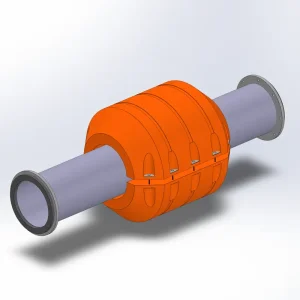
Pipeline Float With Modular Buoyancy for Subsea Installation
Explore Specifications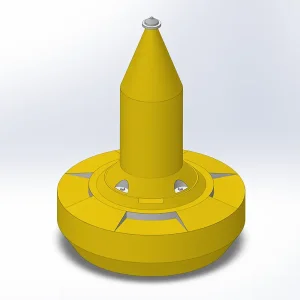
Reliable Floating Buoys for Coastal Navigation & Offshore Projects
Explore Specifications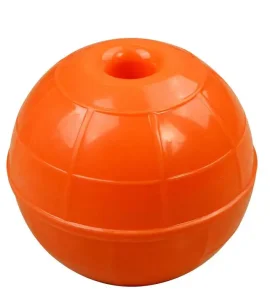
OEM ABS Float Ball – Durable Buoyancy Support for Water Projects
Explore Specifications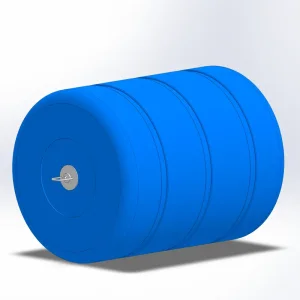
Floating Barriers for Water Safety & Pollution Debris Control
Explore Specifications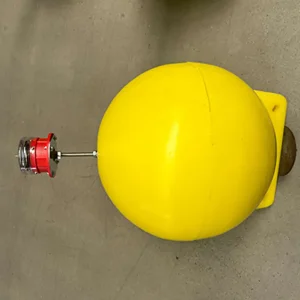
ODM Floating Ball with LED Light – Reliable Marine Navigation
Explore Specifications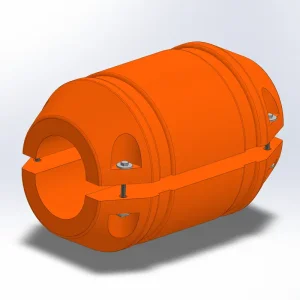
Custom Pipe Floats for Pipeline Stability in Industrial Water Projects
Explore Specifications
OEM Innovative Pipeline Float System for Reliable Deepwater Support
Explore Specifications
ODM Pipe Floats for Water Pipelines & Marine Support Systems
Explore SpecificationsEngineering Whitepaper: Large Mooring Buoy Q&A
Authoritative insights addressing dynamic hawser loads, structural steel spines, rotational-molded polymer behavior, and field commissioning procedures.
What structural distinction exists between a Tension Bar Buoy and a Hawse Pipe (Through-Chain) Mooring Buoy?
A Tension Bar Mooring Buoy features a rigid central fabricated steel member terminated by forged steel pad-eyes at both top and bottom. Mooring loads from the vessel's hawser are transmitted directly through the internal spine to the bottom anchor chain bridle, meaning the buoy body itself experiences zero tensile strain. In contrast, a Through-Chain (Hawse Pipe) Buoy possesses an open central hollow shaft allowing the main anchor chain to pass entirely through the buoy, terminating on a top-deck chain stopper plate. Hawse-pipe buoys simplify bottom tension adjustments but require heavier handling gear during site positioning.
Why do rotational-molded polyethylene shells outperform fabricated structural steel in modern mooring applications?
Rotomolded virgin LLDPE/HDPE shells are naturally immune to saltwater galvanic corrosion and marine chemical attack, entirely eliminating sandblasting and protective recoating cycles required by steel hulls every 3 to 5 years. Furthermore, PE provides high elasticity; impacts from workboats and vessel hulls result in localized elastic deformation without cracking or breaching the hull. Combined with closed-cell polyurethane foam cores that reject water uptake even if pierced, PE buoys offer dramatically lowered lifetime operating expenditure (OPEX) and 20+ year life expectancies.
What is the standard formula for calculating Dredging Pipe Float quantities and reserve buoyancy margins?
Total float buoyancy must decisively exceed the combined weight of the steel or HDPE pipe, flanged couplings, electrical cables, and the conveying fluid under peak slurry conditions. The rule of thumb formula applied by Juhua marine engineers is: Total Buoyancy ≥ (Dry Pipe Weight + Saturated Slurry Weight + Hardware Accessories) × 1.20 to 1.30. This mandatory 20% to 30% safety reserve ensures that approximately one-quarter to one-third of the pipe diameter stays safely above the water surface, stabilizing the floating discharge line against capsizing caused by side currents and surface chop.
How does Juhua guarantee consistent wall thickness and stress-crack resistance across large rotomolded parts?
Our Binzhou factory utilizes computerized multi-axis rotational molding machines with automated variable-frequency speed control and continuous electronic multi-zone temperature logging. By managing the oven heating curves and bi-axial rotation ratios according to resin melt-flow indexes (MFI), polymer powder melts symmetrically across the aluminum and steel mold cavities. We exclusively process virgin polyethylene grades formulated with advanced UV20+ stabilizers complying with ASTM D1693 Environmental Stress Crack Resistance standards exceeding 1,000 failure-free testing hours under aggressive chemical immersion.
What critical technical specifications are required by our procurement team to issue a precise mooring buoy quote?
To provide an accurate technical bid and engineering proposal, please provide: (1) Required Safe Working Load (SWL) or Proof Load in metric tonnes; (2) Net Reserve Buoyancy requirement (in kg or m³); (3) Mooring design preference: Tension Bar or Central Through-Chain type; (4) Maximum sea-state parameters: wave height (Hs), current velocity (knots), and water depth; (5) Mooring accessories required: quick-release hooks, navigation beacon, radar reflector, or topmark; (6) Quantity and destination commercial seaport for containerized packaging analysis.
What are the official warranty parameters provided for international project handovers?
The standard Juhua factory warranty officially commences on the date the procurement contractor hands over the operational marine installation to the end-user or project investor. The warranty coverage remains valid for 18 months following this certified handover date, or 12 months after the initial project installation date, whichever limit is reached first. This warranty guarantees against rotomolded shell rupture, weld failure of structural tension bars, and internal polyurethane foam degradation under rated operating sea conditions.
Can pipeline floats and mooring buoys be customized to unconventional pipeline outer diameters (OD)?
Yes. While we maintain standardized interchangeable split-molds for universal outer diameters (ranging from 110mm up to 1200mm+ pipelines), our dedicated tooling workshop designs and casts custom rotomolding tooling tailored to customer drawings. Customizations include integrated longitudinal cable troughs for power/control conduits, anti-slip internal rib profiles to lock onto HDPE or steel discharge pipes without slippage, and bespoke high-visibility pigment formulations matched to project specifications.