
High-Integrity Dredging & Marine Solutions
Immediate procurement options engineered to sustain rough seas, heavy slurries, and prolonged offshore deployment.
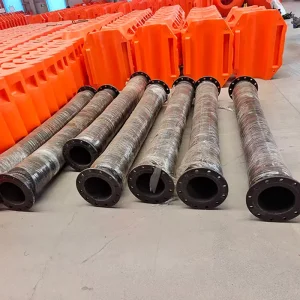
Custom Flexible Rubber Hoses for Advanced Fluid and Sediment Transport Products
View Specifications
ODM Ocean-Grade Navigation Buoys for Safe Maritime Operations Products
View Specifications
Best Polyethylene Mooring Buoy – Reliable Floating Solutions for Modern Marine Projects
View Specifications
ODM Floating Barriers for Water Protection and Environmental Management
View Specifications
Custom Custom Pipe Floats for Floating Pipeline Buoyancy and Water Transfer Systems
View Specifications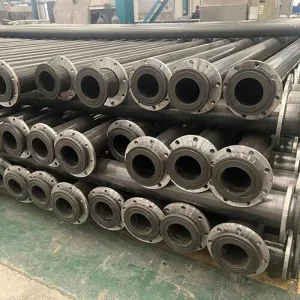
Best Durable Pipeline for Efficient Fluid Transport Supplier, Products
View Specifications
OEM Heavy-Duty Pipeline Float for Stable Floating Pipeline Systems Company
View Specifications
Best Reliable Floating Buoys for Coastal Navigation and Offshore Projects
View SpecificationsPrecision Structural Dynamics of Modern Marine Pipe Floats
A rigorous examination of hydrostatic stability, material fatigue life, and high-impact hydrodynamic resistance in commercial dredging operations.
In modern offshore land reclamation, dredging operations, and cross-estuary pipeline logistics, marine pipe floats (commonly known as dredge collar floats) serve as critical infrastructure rather than simple passive buoyancy elements. Operating in severe hydro-meteorological zones, floating discharge lines undergo relentless cyclic dynamic loads driven by sea currents, high-frequency swell actions, vortex-induced vibrations (VIV), and internal multi-phase slurry surges. Shandong Binzhou Juhua Rubber & Plastic Co., Ltd. pioneers an engineered rotational moulding approach utilizing virgin Linear Low-Density Polyethylene (LLDPE) enhanced with carbon-black stabilization complexes and advanced cross-linked closed-cell polyurethane (PU) foaming matrices.
Engineering precision dictates that float selection cannot adhere to static single-variable catalog calculations. Accurate buoyancy engineering mandates assessing total dynamic operational displacement, accounting for pipeline tare mass, fluctuating slurry specific gravities (ρ up to 1.85 t/m³ in dense iron tailings or coral rock dredging), hydrodynamic drag factors (Cd), marine biofouling growth accretion, and hydrodynamic slam pressures during breaking waves.
Macro-Industry Deployment Architectures
Engineered to mitigate catastrophic stress risers across massive industrial operations.
Capital Port & Harbor Deepening
Ultra-large trailing suction hopper dredgers (TSHD) discharging dense seabed materials require continuous pipeline integrity. Our modular shells prevent catastrophic pipe kinks while maintaining 25-30% dry freeboard reserve to safeguard against tidal fluctuations and sudden wave setups.
Mining Tailings Dewatering Lines
Transporting tailings slurry with extreme density variations creates significant hydrostatic shifts. Our floats incorporate reinforced internal ribs and non-slip collar locks to prevent axial creep along HDPE pipelines under intense vibration and constant abrasive multi-phase flow.
Offshore Energy & Cable Routing
Specially engineered with recessed top/bottom troughs, our cable-integrated pipe floats securely channel power, telemetry, and pneumatic umbilicals alongside subsea discharge lines, preventing entanglement, marine chafing, and bending stresses.
China Factory 4.0: Supply Chain Resilience & Lean Efficiency
How our Binzhou, Shandong facility achieves microscopic wall tolerance and scale economies.
Operating from Huimin County, Binzhou City, Shandong Province, Juhua leverages an advanced Industry 4.0 rotational molding infrastructure designed to eliminate the inherent defect profiles of traditional rotational molding methods (such as uneven wall thinning, micro-porosity, and localized thermal degradation). Our fully automated production lines feature multi-axis computerized shuttles with closed-loop variable-frequency drives and real-time infrared inner-mold thermal monitoring.
Electronic Temp Regulation
Closed-loop PID algorithms adjust oven thermals within ±1.5°C, ensuring uniform macromolecular crosslinking and consistent wall thickness along complex corners and stress planes.
High-Density Core Foaming
In-situ multi-point injection of marine-grade polyurethane foam (35–45 kg/m³) with hydrophobic closed-cell structures prevents water ingress even after puncture.
Interchangeability
CNC precision steel tooling ensures float halves fit seamlessly across different production batches, reducing on-site installation labor and aligning field replacements.
Raw Material Purity
We use 100% prime virgin polyethylene from global tier-1 suppliers, integrated with UV8-UV20 stabilizers for long-term resistance to ultraviolet embrittlement.
Buoyancy Physics & Engineering Selection Matrices
Standardizing float dimensioning against hydrodynamic factors and dense slurry flow conditions.
A frequent error in marine pipeline deployment is sizing buoyancy units exclusively against empty pipe weights. Under dynamic slurry pumping conditions, the specific gravity of the internal fluid increases structural displacement substantially. The total effective load comprises the mass of the empty pipeline, the mass of the full internal slurry volume, connected joint hardware, and external hydrodynamic drag moments.
| Pipeline Outer Diameter (OD) | Standard Shell OD | Nominal Length (Pair) | Effective Net Buoyancy | Recommended Slurry Density |
|---|---|---|---|---|
| 250 mm – 280 mm | 800 mm | 1000 mm | 380 kg | Up to 1.35 t/m³ |
| 315 mm – 355 mm | 950 mm | 1100 mm | 560 kg | Up to 1.45 t/m³ |
| 400 mm – 450 mm | 1100 mm | 1200 mm | 820 kg | Up to 1.60 t/m³ |
| 500 mm – 560 mm | 1300 mm | 1400 mm | 1,350 kg | Up to 1.70 t/m³ |
| 630 mm – 710 mm | 1500 mm | 1600 mm | 2,100 kg | Up to 1.85 t/m³ (Heavy Slurry) |
Rigorous Hydrostatic Buoyancy Equation
Breq = [Σ(Wpipe + Wslurry + Wfittings) / (1 - α)] × Sf
Where α represents the required visible safety freeboard ratio (typically 0.25 to 0.30) and Sf represents the dynamic sea-state safety coefficient (ranging from 1.25 for sheltered inner harbors to 1.50 for unsheltered open waters subject to long-period swell actions).
Enterprise Sourcing: Compliance, Verification & On-Site Support
Eliminating operational risk for international marine contractors and port engineering groups.
ISO 9001 & Environmental Compliance
Every batch undergo hydrostatic compression testing, cold-temperature drop impact tests at -20°C, and raw resin Melt Flow Rate (MFR) validation. Comprehensive mill test certificates (MTC) accompany all export documentation.
Optimized High-Cube Containerization
Engineered nesting ratios allow our cylindrical float shells to pack efficiently into 40ft High Cube (HC) shipping containers, reducing dead freight volume and ocean shipping tariffs for long-haul maritime routes.
Field Installation Engineering
We provide hot-dip galvanized and marine-grade AISI 316 stainless steel fastening sets, torque specs, anti-chafing neoprene rubber pads, and comprehensive pipeline deployment layout drawings.
High-Performance Flotation Hardware
Complete your deployment array with heavy-duty mooring units, modular pontoons, and slurry transfer systems.

Best Heavy-Duty Pipeline Float System for Subsea Installations Manufacturer, Products
View Specifications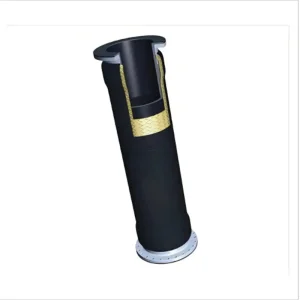
Custom Premium Rubber Hoses for Reliable Water and Slurry Transport Supplier, Products
View Specifications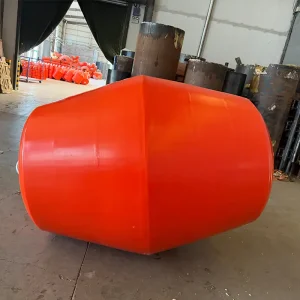
High-Quality Mooring Buoy with Reinforced Connections for Marine Projects Product
View Specifications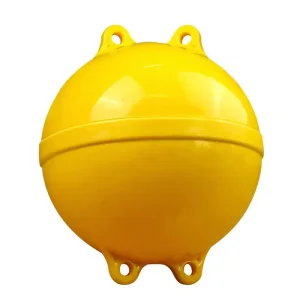
ODM ABS Float Ball for Reliable Marine and Freshwater Buoyancy Manufacturers
View Specifications
High-Quality Durable Floats for Safe and Efficient Pipeline Support Manufacturers
View Specifications
ODM Durable Cable-Integrated Pipe Floats for Submerged Infrastructure Supplier
View Specifications
ODM Pipe Floats for Floating Water Pipelines and Marine Support Systems Manufacturers
View Specifications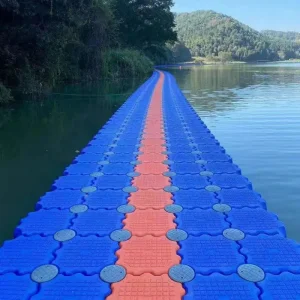
Custom Innovative Floating Boat Pontoon for Versatile Water Platforms Products
View SpecificationsFrequently Asked Questions on Marine Pipeline Flotation
Direct answers from our senior rotational molding engineers and marine deployment specialists.
What are pipeline floats and how do they function?
Pipeline floats (frequently termed dredging floats or buoyancy collars) are two-piece clamp-on shells rotationally molded from durable polyethylene. Filled with closed-cell polyurethane foam, they securely encase steel, HDPE, or rubber discharge hoses to keep heavy pipelines buoyant, visible, and stable in dynamic sea conditions.
How do you accurately calculate required float buoyancy?
Accurate buoyancy sizing requires combining the weight of the empty pipe, internal fluid or heavy slurry (calculated using working slurry density, often 1.3 to 1.8 t/m³), and all coupling hardware. Floats must supply 25% to 30% reserve buoyancy above this sum to maintain proper freeboard and prevent submergence under wave loads.
Why is rotomolded polyethylene preferred over welded steel floats?
Polyethylene is completely immune to marine saltwater oxidation and chemical corrosion, eliminating expensive protective recoating schedules. Our resilient LLDPE shells absorb vessel impacts and resist puncture damage without deformation or loss of buoyancy.
What is the standard warranty coverage on Juhua flotation products?
Our comprehensive marine warranty begins upon verified commercial handover to the project investor and extends for 18 months, or 12 months after completed on-site commissioning, whichever milestone occurs first.
What baseline project specifications are needed for a formal quote?
To provide an accurate technical assessment, please share the outer diameter of your pipeline, pipe material, wall thickness, slurry density (t/m³), overall line length, environmental deployment conditions (river, harbor, or exposed offshore), and destination sea port.
Can you provide custom inner diameter profiles and specialized troughs?
Yes. Our in-house engineering and tooling design departments create custom internal rib patterns, cable and hose troughs, tailored high-visibility colors, and bespoke rotomolded parts based directly on your project CAD files.