
Primary Heavy-Duty Buoyancy Solutions & Harbor Hardware
Industrial rotomolded polyethylene navigation aids, heavy mooring units, and pipeline buoyancy accessories manufactured to strict marine tolerances.




The Engineering Dynamics of Modern Rotomolded Navigation Buoys
Comprehensive analysis of hydrodynamic stability, chromatic durability under extreme UV exposure, and lifecycle cost economics comparing virgin PE vs. conventional marine steel.
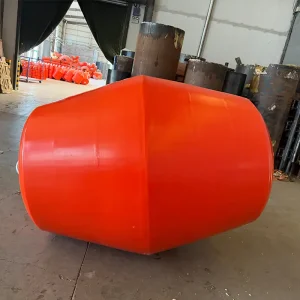
In offshore marine civil engineering, fairway demarcations, and port logistics, OEM navigation buoys serve as the first line of navigational safety and maritime asset boundary protection. For decades, international maritime authorities relied heavily upon welded steel buoy hulls. However, operational field data collected across major commercial channels in Europe, the Middle East, Southeast Asia, and the Americas demonstrates a definitive paradigm shift toward rotational-molded high-density and linear low-density virgin polyethylene (HDPE / LLDPE) hollow structures pressure-infused with high-density polyurethane (PU) or closed-cell expanded polystyrene (EPS) matrices.
Navigational channel marks are subject to continuous cyclical wave action, high hydraulic drag from varying current profiles, abrasive biological fouling, saline corrosion, and accidental kinetic collisions from support tugs, barges, and service vessels. As an industrial OEM/ODM supplier operating out of Lizhuang Town, Huimin County, Binzhou, Shandong—China’s primary industrial rotational moulding and specialized polymer base—Shandong Binzhou Juhua Rubber & Plastic Co., Ltd. (Giant Rubber / Juhua) delivers engineered floating aids to navigation (AtoN) that eliminate cathodic rust, reduce deployment displacement weight by up to 60%, and provide guaranteed chromacity compliance adhering strictly to the International Association of Marine Aids to Navigation and Lighthouse Authorities (IALA) recommendations.
Chinese Supply Chain Advantages in Rotational Moulding & Marine Fabrication
Why Tier-1 dredging conglomerates, port authorities, and offshore EPC contractors secure competitive margins and engineering agility via direct OEM sourcing in Shandong.
Tooling Scale & Fast Mold Iteration
Unlike Western fabrication centers constrained by multi-month aluminum casting lead times, our Binzhou tooling facility executes custom CNC mold designs and steel fabrication matrices within 14–21 business days.
- In-house CNC mold sculpting for custom skirt shapes
- Wall thickness adjustability from 9mm up to 22mm
- Variable-frequency speed-controlled rotational ovens
- Uniform radial thermal profile via electronic monitoring
Polymer Raw Material Cluster
Located in Shandong, our plants benefit from hyper-localized petrochemical supply chains, procuring virgin LLDPE/HDPE polymer resin with compound-level UV stabilizers (UV15–UV20 rating) at direct refinery pricing.
- ASTM D1505 density compliance: 0.935 to 0.945 g/cm³
- Color compounding (RAL/Pantone) at high shear melt
- Zero filler or re-ground scrap in primary marine hulls
- Superior environmental stress cracking resistance (ESCR)
Turnkey OEM Port System Assemblies
We deliver beyond bare PE shells: complete AtoN systems including hot-dip galvanized mooring central steel cores, self-contained solar LED lanterns, radar reflectors, and sacrificial zinc anodes.
- Q235 / Q355B structural steel internal load-bearing frames
- ISO 1461 certified hot-dip galvanizing (>85 µm coating)
- Solar autonomous lanterns with integrated GPS/AIS sync
- Direct containerized flat-pack packing optimization
IALA Maritime Buoyage System Regional Compliance & Technical Matrix
Full adherence to International Association of Marine Aids to Navigation and Lighthouse Authorities (IALA) Recommendations E-108, E-110, and US Coast Guard structural mandates.
Procuring navigation buoys for international waterways requires strict geographic harmonization. Maritime safety is universally divided between IALA Region A (Europe, Africa, Australasia, India, Middle East, and parts of Asia—where port hand marks are red and starboard hand marks are green) and IALA Region B (The Americas, Japan, Korea, and the Philippines—where port hand marks are green and starboard hand marks are red). Juhua moulds navigation hulls in exact colorfast pigments embedded homogeneously throughout the wall cross-section, ensuring no color shift occurs even following aggressive saltwater scouring or superficial hull abrasions.
| Buoy Hull Diameter | Total Height | Net Weight | Reserve Buoyancy | Focal Plane Height | Recommended Deployment Depth | IALA Class Alignment |
|---|---|---|---|---|---|---|
| Ø 1,200 mm (Compact) | 2,450 mm | 160 – 210 kg | 450 kg | 1,600 mm | 2.0 m – 12.0 m (River / Marina) | Lateral / Special Mark |
| Ø 1,500 mm (Standard Fairway) | 3,200 mm | 320 – 380 kg | 900 kg | 2,100 mm | 5.0 m – 25.0 m (Inland / Harbor Basin) | Lateral / Cardinal |
| Ø 1,800 mm (Coastal Heavy) | 3,850 mm | 580 – 680 kg | 1,650 kg | 2,600 mm | 8.0 m – 45.0 m (Open Harbor Approach) | Coastal Approach AtoN |
| Ø 2,200 mm (Offshore Sea Buoy) | 4,600 mm | 980 – 1,150 kg | 2,800 kg | 3,200 mm | 15.0 m – 70.0 m (Exposed Coastal Waters) | Offshore Safe Water / Hazard |
| Ø 2,600 mm – 3,000 mm (Deep Ocean) | 5,800 mm+ | 1,800 – 2,600 kg | 5,500 kg+ | 4,000 mm+ | Up to 150.0 m (Outer Fairway / Traffic) | Major Ocean AtoN / MetOcean |
Hydrodynamic Stability, Ballast Center of Gravity & Roll Equilibrium
A critical engineering failure in low-grade buoy construction is dynamic listing (excessive tilting) induced by rapid ebb and flood currents or high surface wind gusts. When a buoy lists beyond 8 to 10 degrees, the luminous divergence of the marine LED lantern is misaligned with the mariner’s line of sight, drastically reducing night visibility.
Juhua OEM Navigation Buoys integrate an engineered low center of gravity (LCG) achieved through cast iron counterweights or encapsulated concrete counter-ballast secured at the keel base plate of the central steel core. Combined with a wide hydroconical skirt and vortex-shedding chine ridges, our hulls maintain a roll dampening period that keeps the lantern mast within ±3° of vertical orientation under steady 3.5-knot surface currents.
Global Enterprise Procurement Framework & OEM Pricelist Factors
Understanding the component breakdown, volume cost brackets, and turnkey customization tiers that shape international pricing.
1. Hull Diameter & Polymer Tonnage
Rotomolding cycle energy and polymer consumption (virgin LLDPE at 9.5mm–18mm thickness) govern the base shell quotation. Price scales proportionately with resin gross weight and mold chamber cycle time.
2. Internal Core & Foam Density
Hollow shells vs. closed-cell foam filling. Marine grade water-blown polyurethane foam (35–45 kg/m³) provides complete unsinkability even if breached, adding 15–22% to structural material costs.
3. Central Mooring Core Metallurgy
Options range from hot-dip galvanized structural Q355B steel central tubes to marine-grade 316L stainless steel rods or non-magnetic titanium alloys for naval/demagnetized sensor requirements.
4. Photovoltaic & AtoN Lantern Package
From visual unlit daymarks to fully automated solar lanterns with 3 to 7 nautical mile range, GPS flash synchronization, and Type 1/Type 3 AIS transponders broadcasting MMSI coordinates to vessel ECDIS.
5. Containerized Logistics & Packing
Engineered modular architectures allow superstructures, topmarks, and skirts to dismantle for nesting inside standard 40ft High Cube (40HC) containers, cutting oceanic freight costs by up to 55% per deployed unit.
| Equipment Type / Model | Configuration Scope | Indicative OEM Unit Cost Range (FOB Qingdao/Tianjin) | Minimum Order Quantity (MOQ) | Production Lead-Time |
|---|---|---|---|---|
| Ø1.2m River/Harbor Marker | PE Hull + Core + 1-2 NM Solar Light | $850 – $1,450 USD | 4 Units | 10 – 14 Days |
| Ø1.5m Fairway Channel Buoy | Foam-Filled PE + IALA Topmark + 3-4 NM Lantern | $1,800 – $2,950 USD | 2 Units | 14 – 20 Days |
| Ø1.8m Coastal Navigation Buoy | PU Foam + HDG Core + Radar Reflector + 5 NM Lantern | $3,400 – $5,200 USD | 1 Unit | 18 – 25 Days |
| Ø2.2m – Ø2.4m Offshore AtoN | Modular Skirt + AIS Transponder + Bird Spikes + 6 NM LED | $6,200 – $9,800 USD | 1 Unit | 20 – 30 Days |
| Ø3.0m Ocean MetOcean / Traffic | Multi-sensor bay + Solar array + Full Telemetry / SCADA | $14,500 – $28,000+ USD | 1 Unit | 35 – 45 Days |
*Note: Final B2B contractual pricing depends on quantity tiers, raw polymer indexation, lantern specifications (Carmanah, Sealite, or domestic high-lumen OEM), and destination freight incoterms (FOB, CIF, CFR, DDP).
Next-Generation Industry Trends: Smart Buoys, IoT Telemetry & Circularity
How edge sensing, automated satellite reporting, and closed-loop recyclable polymers are modernizing marine fairway management.
AIS AtoN Transponders & VDES
Modern navigation buoys are no longer passive visual floating objects. The integration of Autonomous Identification System (AIS) Type 1 and Type 3 AtoN units allows buoys to broadcast live GPS location, synthetic buoy statuses, and local meteorological alerts directly into nearby vessel RADAR and Electronic Chart Display and Information Systems (ECDIS).
- Immediate off-station adrift warnings transmitted via satellite/GSM
- Synthetic virtual buoy broadcasting during extreme storm damage
- Integration with VDES (VHF Data Exchange System) networks
Ocean MetOcean Sensor Integration
Harbor authorities and offshore wind farms utilize our enlarged Ø2.4m and Ø3.0m modular buoy chambers to deploy oceanographic telemetry packages. Equipped with multi-parameter water quality probes, acoustic doppler current profilers (ADCP), wave height motion sensors, and weather anemometers, buoys become permanent floating laboratory nodes.
- Real-time tidal height and current speed vector telemetry
- Turbidity monitoring around active dredging discharge pipes
- Continuous water temperature and salinity transmission
100% Recyclable Marine Polymers
Environmental stewardship policies (such as EU Green Deal and global port decarbonization mandates) increasingly penalize rusted steel scrap and hazardous lead-based marine paints. Virgin rotational-molded polyethylene requires zero toxic antifouling recoatings, generates no microplastic peeling, and can be fully mechanically ground and recycled at the end of its 15-year marine lifecycle.
- Lower carbon footprint across extraction, transport, and recycling
- Bio-fouling easily removed with high-pressure water wash
- Zero chemical leachates in vulnerable coral/coastal ecosystems
Localized Marine Application Scenarios & Field Deployment Cases
Targeted engineering solutions configured for the exact wave kinetics, vessel traffic risks, and hydrodynamic drag of distinct marine zones.
1. Deepwater Port Approaches & Outer Anchorages
Outer harbor fairways experience unrestricted ocean swell and commercial traffic consisting of Ultra Large Container Vessels (ULCVs) and Capesize bulk carriers. We configure Ø2.4m and Ø3.0m buoys with high focal-plane masts (3.5m–4.2m above waterline) and high-gain radar reflectors ensuring continuous blip return on S-band and X-band marine radars during dense fog and sea state 5 conditions.
2. Capital Dredging Channels & Spoil Basins
Dredging operations present violent operational conditions where cutter suction dredgers (CSDs) and trailing suction hopper dredgers (TSHDs) deploy submerged and floating discharge pipelines. Our dredging aid buoys delineate active cutter corridors, anchor wires, and temporary spoil drop zones, resiliently surviving repetitive vessel bumper impacts without hull rupture.
3. Offshore Wind Farm (OWF) & Subsea Cable Fairways
Renewable offshore construction requires strict cardinal marking around wind turbine generator (WTG) jacket installations, offshore substation platforms (OSS), and live dynamic high-voltage subsea export cables. Juhua supplies bespoke yellow special mark and cardinal buoys with synchronized rhythmic yellow flashing lanterns to deter unauthorized trawlers and anchoring vessels.
4. Inland River Fairways & Shallow Estuaries
Navigating commercial rivers like the Yangtze, Mississippi, Danube, or Mekong involves rapid seasonal current fluctuations, sediment scouring, and floating debris collision (logs, vegetation). Our compact Ø1.2m and Ø1.5m shallow-draft buoys feature specialized hydrodynamic chine skirts that reduce drag, preventing the buoy from being pulled submarine during sudden river discharge peaks.
5. Aquaculture Concession Demarcation
Offshore fish farming cages and deep-sea mussel longline concessions represent legal navigation hazards for night transit boats. We engineer cost-effective, long-life yellow demarcation buoys equipped with tamper-proof solar lanterns that comply with marine fisheries authority regulations and prevent costly vessel entanglements.
6. Industrial Water Intakes & Dam Spillways
Nuclear cooling water intake zones, hydroelectric dam spillways, and desalinization plant pump basins require impenetrable security and safety demarcation. Paired with our heavy-duty modular floating barriers, Juhua safety navigation buoys prohibit civilian watercraft and floating debris from reaching turbine intakes.
Navigational Buoys & Marine Flotation Technical FAQ
In-depth responses covering mooring tension calculations, reserve buoyancy rules, rotomolding tolerances, and oceanographic longevity.
What is the standard formula for calculating reserve buoyancy for navigation buoys?
Reserve buoyancy is calculated by subtracting the total operational deadweight (buoy hull, internal steel core, counterweight ballast, solar lantern, topmark, and the submerged catenary weight of the anchor chain) from the total displaced water volume of the buoy hull when fully submerged. For open coastal waters, Juhua engineers require a minimum reserve buoyancy of 150% to 200% of the deadweight to ensure sufficient freeboard, lantern focal plane clearance, and anti-submergence protection under high tidal current pull.
Why is rotomolded polyethylene superior to steel buoys in marine installations?
Rotomolded polyethylene hulls never rust, corrode, or suffer electrolytic degradation in seawater, completely eliminating sandblasting, recoating, and sacrificial anode replacements required by steel hulls every 24–36 months. Furthermore, PE possess high elastic memory: upon vessel impact, a PE hull elastically deforms and rebounds, whereas steel buckles and dents permanently, potentially breaching internal compartments.
How does Juhua guarantee color stability against extreme solar radiation (UV degradation)?
We compound virgin LLDPE/HDPE polymer resin with high-grade hindered amine light stabilizers (HALS) rated at UV15 to UV20 standards. The color pigments (conforming strictly to IALA E-108 chromaticity coordinates) are melt-blended into the molecular matrix rather than sprayed as surface coatings. This protects against chalking, fading, or embrittlement for over 12–15 years in high-UV equatorial environments (such as the Arabian Gulf, Australia, and Central America).
What type of foam filling is used, and what happens if the outer hull is punctured?
Our navigation buoys are pressure-filled with rigid, closed-cell polyurethane (PU) foam with a core density of 38 to 45 kg/m³, or closed-cell expanded polystyrene (EPS). Because the foam features a >95% closed-cell structure, water cannot penetrate the matrix even if the outer polyethylene wall is deeply grooved or punctured by a sharp collision. The buoy retains 100% of its designed buoyancy and remains on station without sinking.
What parameters must clients provide to obtain an exact technical quote & mooring calculation?
To deliver an accurate specification and pricelist, provide: (1) Geographic deployment coordinates and IALA region (A or B), (2) Water depth at Chart Datum (lowest astronomical tide) and maximum tidal range, (3) Peak current velocity (knots) and maximum wave height (Hs), (4) Seabed composition (sand, mud, coral, rock) for sinker anchor block selection, and (5) Lantern optical range (nautical miles) and AIS telemetry requirements.
What is the standard warranty coverage and expected maintenance cycle?
Our industrial warranty period extends 18 months from the date of handover to the project investor or 12 months from the completed marine commissioning date, whichever arrives first. Maintenance is minimal: routine visual checks on the solar lantern battery status, inspection of mooring chain shackle wear pins, and periodic water jetting of accumulated marine biofouling on the skirt.
Specialized Marine Flotation, Pipeline Systems & Mooring Equipment
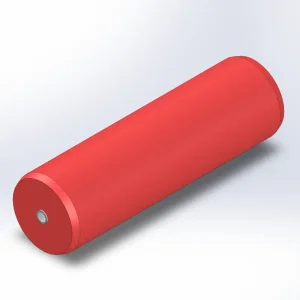
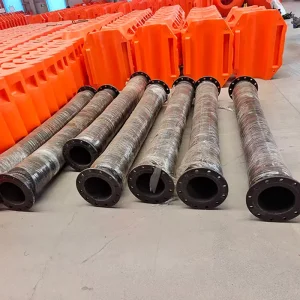
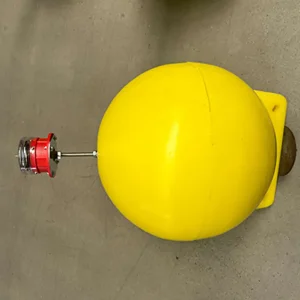
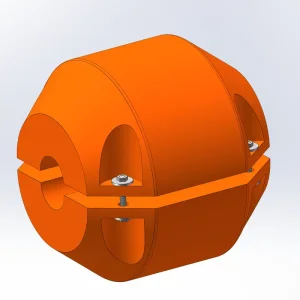
Explore complementary OEM dredging pipe floats, industrial rubber transport hoses, floating barrier booms, and specialized illuminated navigation balls.


Request Official OEM Navigation Buoy CAD Drawings & Pricelist
Connect immediately with our primary engineering office in Binzhou, Shandong. We prepare full hydro-buoyancy stability calculations, mooring catenary tension simulations, and firm containerized export quotes within 24 hours.