Heavy-Duty OEM Polyethylene Flotation Assemblies
Explore industrial rotomolded buoyancy solutions, engineered with dimensional interchangeability, high environmental stress-crack resistance (ESCR), and anti-corrosion properties.
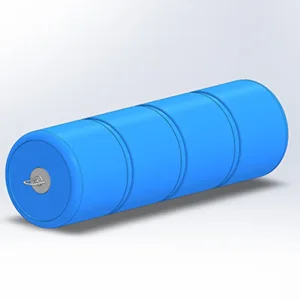
OEM Reliable Floating Barriers for Pollution Control and Water Safety Supplier, Manufacturers
Technical Specifications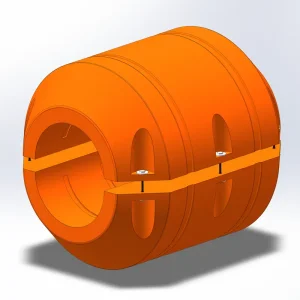
OEM Pipeline Float for Floating Pipeline Systems and Water Transfer Projects Manufacturers, Factories
Technical Specifications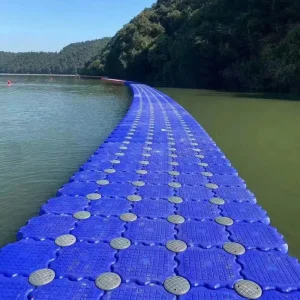
OEM Advanced Floating Boat Pontoon for Custom Water Platforms Supplier, Factory
Technical Specifications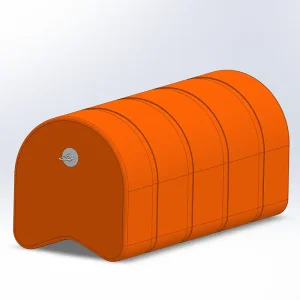
Best Heavy-Duty Pipeline Float System for Subsea Installations Manufacturer, Products
Technical Specifications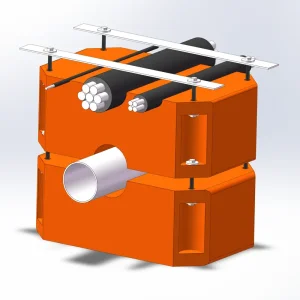
ODM Pipe Floats With Cable Troughs - Reliable Buoyancy and Cable Protection Products, Factory
Technical Specifications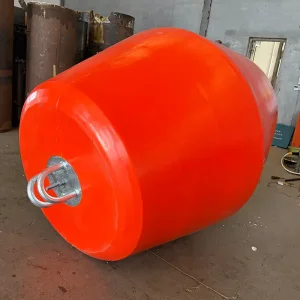
Best Offshore Mooring Buoy for Secure Vessel Anchoring and Marine Floating Systems Manufacturer, Companies
Technical Specifications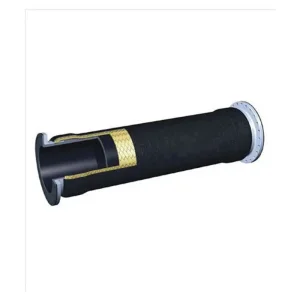
Best Reliable Pipelines for Sediment and Slurry Transport Product, Pricelist
Technical Specifications
OEM Advanced Modular Pipe Floats with Integrated Cable Channels Manufacturer, Company
Technical SpecificationsEngineering Paradigm: Rotomolded Polyethylene vs Legacy Steel
A comprehensive examination of why heavy civil marine works and mining dredging contractors have systematically transitioned from coated carbon steel to cross-stabilized rotomolded polymer buoyancy modules.
Virgin LLDPE/MDPE Shell Matrix
Fabricated using computerized rotational moulding with variable-frequency rotational velocity controls. Virgin linear low-density and medium-density polyethylene (LLDPE/MDPE) resins provide tensile yield strengths exceeding 18 MPa. Formulated with UV-20 stabilization packages, these shells withstand extreme ultraviolet radiometry in high-salinity equatorial and arctic waters without undergoing polymer embrittlement.
Closed-Cell Polyurethane Foam Core
The interior cavity of each flotation section is injected under pressure with high-density, closed-cell polyurethane foam ($\ge 35\text{ kg/m}^3$). This prevents water ingestion even in catastrophic events where the outer skin suffers mechanical puncture from high-energy vessel impacts, jagged rock outcroppings, or continuous abrasive cavitation along rocky shoals.
Corrosion Immunity & Fatigue Life
Steel pontoon buoys require sacrificial anodes, toxic marine anti-fouling coatings, and routine sandblasting to avoid hull breaches. Polyethylene flotation products exhibit absolute electrolytic inertness, completely eliminating galvanic corrosion caused by stray currents from ship hulls, port grounding grids, or acidic tailings ponds with extreme pH variations (pH 1.5 to 13.0).
Global EPC Sizing Matrix & Hydrodynamic Loading
Sizing dredging pipe floats requires precision calculations that consider internal slurry dynamic mass, wave slammed loading, and current-induced dragging forces rather than static dry-pipe weights.
When selecting OEM pipe floats, the minimum net reserve buoyancy must satisfy dynamic working conditions:
Where ρ_slurry denotes the dry sand/gravel slurry density (typically 1.30 to 1.85 t/m³), L is the modular span, and K_safety represents the hydrodynamic freeboard safety index (minimum 1.20 to 1.35 for calm inland waters; 1.40 to 1.60 for offshore coastal swell zones).
| Nominal Pipe Outer Diameter (OD) | Typical Shell Length (mm) | Standard Outer Diameter (mm) | Net Buoyancy Per Pair (kg) | Supported Slurry Specific Gravity | Primary Industrial Applications |
|---|---|---|---|---|---|
| 110 mm – 160 mm | 800 – 1000 | 500 – 650 | 120 – 230 | ≤ 1.45 t/m³ | Tailings Dewatering, Agricultural Bypass |
| 200 mm – 280 mm | 1000 – 1200 | 700 – 900 | 350 – 620 | ≤ 1.55 t/m³ | Harbor Maintenance, Sand Extraction Pumping |
| 315 mm – 450 mm | 1200 – 1600 | 1000 – 1300 | 850 – 1650 | ≤ 1.65 t/m³ | Municipal Desilting, Capital Channel Dredging |
| 500 mm – 630 mm | 1500 – 2200 | 1300 – 1600 | 1800 – 3400 | ≤ 1.75 t/m³ | Coastal Land Reclamation, Marine Sand Replenishment |
| 710 mm – 1200 mm | 2000 – 3000 | 1800 – 2400 | 4200 – 9800 | ≤ 1.85 t/m³ | Mega-Port Expansion, Deep-Sea Mining Tailings |
Turnkey Marine Flotation Engineered for Macro Industries
Targeted hydrodynamic designs addressing the unique operational stresses of heavy dredging, offshore energy platforms, municipal water intakes, and civil marine construction.
Port & Harbor Dredging
Maintaining clear shipping navigation fairways demands non-stop trailing suction hopper dredge (TSHD) discharge operations. Our modular pipe floats feature inter-locking fasteners and anti-slip pipeline ribs, eliminating float displacement during pipe pulsing and wave surges.
Offshore Mining & Tailings
Tailings discharge slurries often transport heavy mineral sediments and abrasive particulate loads. Our heavy-duty polyethylene pontoons and integrated cable-trough floats isolate control cables and hydraulic hoses from dangerous underwater pinch zones.
Floating Barriers & Water Safety
Engineered for reservoirs, hydroelectric dams, and river mouths. Rotomolded debris booms prevent aquatic weeds, trash, and industrial pollutants from choking turbine gates and municipal water pump stations, reducing maintenance-induced downtime.
Modular Marinas & Pontoons
Rotomolded boat dock pontoons provide predictable buoyancy distributions for commercial walkways, floating solar (FPV) substructures, and marine service stations. Engineered for wave-damping performance with anti-skid textured surfaces.
Strict Quality Verification & International Standards
Ensuring end-to-end component traceability, material compliance, and non-destructive testing for multi-year harsh marine exposures.
ASTM D1693 ESCR Testing
Polyethylene test specimens undergo rigorous environmental stress-crack resistance verification in concentrated Igepal CO-630 surfactants at elevated temperatures. All product batches guarantee zero crack initiation at 1,000+ continuous hours, preventing early catastrophic fractures in cyclic wave fatigue zones.
Ultrasonic Wall-Thickness Mapping
Using variable-frequency biaxial rotational control, mould heating profiles are fine-tuned across complex curves. Multi-point ultrasonic thickness gauges verify that corner radiuses and high-stress bolt flanges maintain consistent structural thickness, meeting or exceeding engineer specifications.
Drop-Dart & Puncture Resistance
Cryogenic cold-impact tests performed at -40°C confirm ductile impact behavior, ensuring that floating pipes bumping against service vessels, rock groynes, or harbor quay walls will absorb the energy without brittle shell rupture or rapid internal flooding.
Advanced Marine, Navigation & Fluid Handling Units
Complete your dredging and marine operations infrastructure with specialized rotomolded water storage, navigation warning spheres, and multi-tier subsea line floats.
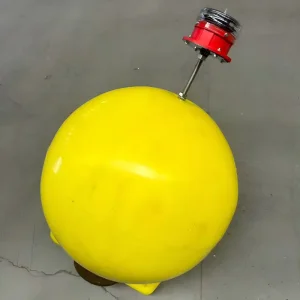
ODM High-Visibility Floating LED Ball for Marine and Freshwater Safety Manufacturers, Pricelist
Technical Specifications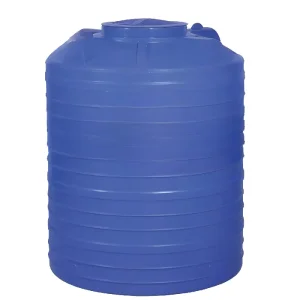
Custom Polyethylene Rotomolded Water Storage Tank – Durable and Safe Liquid Storage Solution Supplier, Factories
Technical Specifications
High-Quality Advanced Pipeline Float System for Secure Subsea Installations Supplier, Factories
Technical Specifications
ODM Pipe Floats for Floating Water Pipelines and Marine Support Systems Manufacturers, Manufacturer
Technical Specifications
Custom Custom Pipe Floats for Floating Water Pipeline and Marine Support Projects Suppliers, Manufacturers
Technical Specifications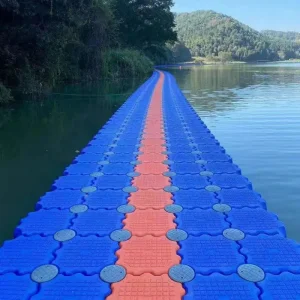
Custom Innovative Floating Boat Pontoon for Versatile Water Platforms Products, Pricelist
Technical Specifications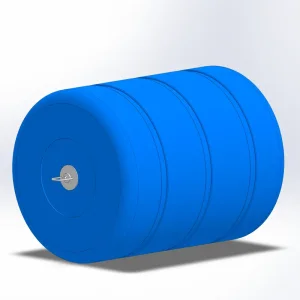
ODM Floating Barriers for Water Protection and Environmental Management Supplier, Factories
Technical Specifications
High-Quality Water Boat Pontoon Floating – Stable and Modular Floating Platforms Supplier, Products
Technical SpecificationsFrom Pipeline Specification to Site Commissioning
Our OEM/ODM manufacturing workflow guarantees technical precision at every phase, minimizing turnaround time and optimizing container freight utilization.
Hydrodynamic Parametric Sizing
We review your pipe outer diameter (OD), wall thickness (SDR rating), slurry specific gravity, flow velocity, and wave action parameters to determine the ideal buoyancy volume.
CAD/FEA Structural Modeling
Custom mould tooling development using CNC-machined aluminium or cast alloy tooling to incorporate bespoke cable channels, anchor points, or dynamic mooring eyelets.
Automated Rotomolding
Microprocessor-controlled oven cycle management ensures uniform wall thickness and thorough polymer melt cohesion across all module corners and structural ribs.
PU Core High-Pressure Injection
Closed-cell polyurethane foaming under temperature-controlled conditions prevents thermal shrinkage, ensuring continuous internal bonding and preventing air voids.
Nested Shipping & Logistics
Semicircular float bodies are compactly nested for freight efficiency, maximizing 40HQ container cube space and lowering international shipping costs per buoyancy unit.
Technology Roadmap: Smart IoT Flotation & Circular Polymers
Anticipating next-generation marine demands with embedded telemetry, digital twin buoy tracking, and environmentally sustainable biopolymer compounds.
IoT Mooring & Integrity Telemetry
Next-generation navigation buoys and anchor units incorporate embedded NB-IoT and satellite transmitters. Real-time accelerometers and GPS tracking alert port control operators to dragging anchors, unexpected listing angles, or sudden physical impacts from adrift craft.
Circular Bio-Polyethylene Blends
Working alongside petrochemical partners, we are developing circular maritime-grade polyethylene formulations using certified mass-balanced bio-based feedstocks. This reduces net embodied carbon footprint by up to 40% while preserving ESCR and ductile impact performance.
Hydrodynamic CFD Drag Reduction
High-resolution Computational Fluid Dynamics (CFD) modeling has yielded our newest elliptical and tapered pipeline float geometries. These profiles cut current drag coefficients ($C_d$) by up to 18%, reducing lateral tension on anchor cables in high-velocity river currents.
Frequently Asked Questions for Sourcing Directors
Clear, engineering-focused answers covering material science, field installations, dynamic loads, and customization options.
What are pipeline floats, and what is their operational function?
Pipeline floats (dredge floats or buoyancy collars) are clamp-on modular polyethylene bodies filled with closed-cell polyurethane foam. Installed in pairs around discharge pipes, they maintain the floating discharge line at an engineered water elevation, ensuring steady slurry transit without seabed dragging or excessive flex stress on pipe joints.
How is required float buoyancy calculated for heavy mining slurries?
Total buoyancy must equal the sum of pipe dry weight, coupling hardware, external cable infrastructure, and the internal slurry mass—multiplied by a reserve safety factor of 1.25 to 1.35. For dense tailings mixtures (e.g., specific gravity ≥ 1.6), buoyancy module diameters and volume must be sized using the slurry density rather than fresh water.
Are rotomolded polyethylene floats safe for high-salinity seawater?
Yes. Virgin polyethylene is chemically inert and completely resistant to saltwater galvanic corrosion, biological fouling attachment, and chemical leaching. Unlike steel pontoon floats that require routine sandblasting and cathodic anode replacements, rotomolded PE floats eliminate ongoing hull maintenance costs.
What is the standard warranty period for your industrial flotation units?
Our standard manufacturing warranty takes effect upon formal handover of goods to the engineering investor, running for 18 months from the confirmed handover date or 12 months from on-site commissioning, whichever milestone arrives first, with extended warranty options available for multi-year EPC projects.
What technical data is needed for an accurate engineering specification?
Please provide the pipe outer diameter (OD), pipe substrate material and SDR wall rating, conveying slurry specific gravity, operational water type (river, estuary, open ocean), required freeboard percentage, tidal and current velocities, and target destination discharge port for container packing plans.
Can float geometry, bolt channels, and visual branding be fully customized?
Yes. In addition to our extensive standard tooling catalog, our in-house engineering team designs and casts custom rotomolding tooling tailored to your pipe OD, high-voltage power cable channels, warning light assemblies, molded corporate logos, and high-visibility IALA color codes.
What fasteners and hardware are supplied with our pipe floats?
Floats are fastened with high-tensile hot-dip galvanized (Grade 8.8) or marine-grade AISI 316 stainless steel bolts, lock nuts, and oversized load-distributing flat washers. These distribute clamping pressure evenly along the molded flange without causing localized poly shell deformation.
What steps should be taken during first pump start-up on a new installation?
Check the line as slurry begins to fill the system. Confirm that the pipeline stabilizes at the planned freeboard height without rolling or submerging flanges. Verify that the clamp assemblies remain tight, and ensure transitions to floating ball joints or rubber discharge hoses flex freely without binding.