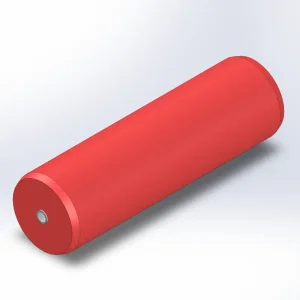
Heavy-Duty Pump Buoyancy Platforms & Pipeline Floats
Field-proven rotational-molded LLDPE buoyancy modules engineered to sustain dynamic submersible pumping loads, slurry pipeline conduits, and heavy maritime anchoring configurations.
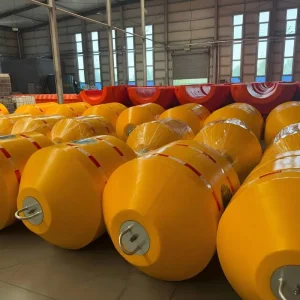





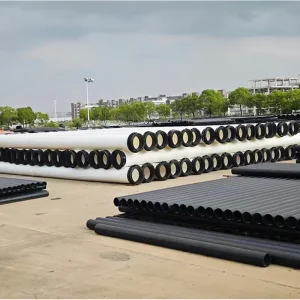
Global Commercial Dynamics of Submersible Pump Flotation Systems
Analyzing structural transitions across mining tailings management, marine land reclamation, and critical water security initiatives fueling demand for high-integrity rotomolded PE pump platforms.
Severe Environment Dewatering
Global open-pit mining operations in Western Australia, the Atacama trench, and the Canadian subarctic demand corrosion-immune flotation stations. Steel pontoons suffer accelerated wall loss from acidic mine drainage (pH 2.0 to 4.5). Rotomolded high-density polyethylene shells provide an inert barrier that resists chemical degradation, abrasives, and pitting indefinitely.
Total Lifecycle CAPEX/OPEX Parity
Project procurement directors are pivoting from fabricated carbon steel barges toward modular rotomolded pontoon skids. Modular assemblies reduce mobilization costs by 45%, eradicate biennial drydock sandblasting and repainting, and eliminate catastrophic sinking risks via solid closed-cell polyurethane foam cores that maintain buoyancy even if punctured.
Dynamic Water Level Fluctuation
Hydraulic tailing ponds and impoundment dams experience rapid water level fluctuations exceeding 15 meters per season. Submersible pump floating pontoon assemblies equipped with articulated shore-discharge swivels and winch guide wire anchors adjust automatically to water level deltas without human intervention or pump cavitation.
Engineering Formulation: Buoyancy Sizing & Metacentric Stability
A rigorous naval engineering calculation methodology for submersible pump flotation pontoons supporting high-tonnage cantilevered pumps, wet slurry loads, and crosswind windage forces.
Metacentric Height (GM) & Self-Righting Safety
Submersible pumps impart high point-mass loads situated below or within the central well of the pontoon platform. To prevent rolling or catastrophic overturning under heavy side winds or sudden discharge backpressure surges, pontoons are modeled with an expanded catamaran or trimaran footprint. This structural configuration lowers the center of gravity (KG) while maximizing the waterplane area moment of inertia ($I_w$). The design preserves a positive Transverse Metacentric Height ($GM_t > 1.25\text{ m}$) across all operating scenarios—from an empty conduit through full-load dense slurry transit (specific gravity $\rho > 1.45$).
Reserve Buoyancy Safety Sizing Formula
Underestimating hydrodynamic mass leads to submerged freeboards, debris overtopping, and structural capsizing. Juhua adheres to an uncompromising engineering standard:
Where the safety factor (SF) is calibrated between 1.30 and 1.50 (yielding 30% to 50% reserve buoyancy). This guarantees that at maximum slurry velocity and pipe clogging, at least 25% to 35% of the pontoon hull draft remains exposed as safe operational freeboard.
| Performance Criterion | Rotomolded LLDPE Pump Pontoon (Juhua) | Traditional Welded Steel Barge | Fiberglass Reinforced Plastic (FRP) |
|---|---|---|---|
| Corrosion Resistance (pH 1.5–13) | Immune (No Coating Needed) | Rapid Oxidation / Pitting Risk | Moderate (Resin Degradation) |
| Impact Mechanics & Resilience | High Elasticity (Absorbs Collisions) | Permanent Deformation / Cracking | Brittle Failure / Gelcoat Cracking |
| Internal Core Integrity | Closed-Cell Polyurethane Foam (EPS/PUR) | Hollow Void (Flooding Risk) | Partial Foam or Hollow Compartments |
| Handling & Site Logistics | Modular Sub-assemblies, Lightweight | Heavy Cranes Required (>50T) | Delicate Rigging Required |
| Expected Service Life (UV Exposure) | > 25 Years (UV20+ Stabilized) | 8–12 Years (Requires Repainting) | 10–15 Years (Fiber Blooming Risk) |
Localized Application Scenarios & Turnkey Installations
Engineered for complex hydrological conditions across open-pit mines, land reclamation projects, and major infrastructure sites around the globe.
Hard-Rock Open Pit Mine Dewatering
Environment: Super-pit copper and gold developments in South America and Australia.
Application: Heavy slurry submersible pumps (up to 350 kW) suspended inside a high-buoyancy modular center well. Pontoons sustain continuous vibrations from high-head pumps, abrasive tailing waters, and thermal cycles from -10°C to +48°C without stress fractures.
Port & Maritime Harbor Dredging
Environment: Coastal shipping channels, river estuaries, and mega-berth maintenance operations.
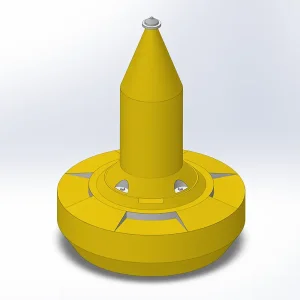
Application: Supporting booster pumps, booster barges, and discharge pipeline floats. Equipped with navigation lighting brackets, solar buoy markers, and heavy mooring eyes that handle tidal currents and multi-directional chop.
Municipal Reservoirs & Desalination
Environment: Potable water reservoirs, desalination plant raw-seawater intake lines, and emergency bypasses.
Application: Non-toxic, food-grade LLDPE shells certified to ANSI/NSF standards prevent volatile chemical leaching. Silt curtain floats and floating security barriers preserve pristine raw water supply quality.
Turnkey Solutions: From Bare Floatation to Fully Rigged Pump Stations
Providing EPC contractors with fully integrated floating pumping systems, comprehensive cable pathways, access catwalks, and automated ballasting controls.
Integrated Structural Steel Skid
Engineered structural frames fabricated from hot-dip galvanized steel (ISO 1461) or marine-grade 316L stainless steel secure directly to the polyethylene pontoon bodies. The platform includes certified overhead monorails, manual or electric hoists for pump deployment and retrieval, slip-resistant FRP grating, and full peripheral safety handrails.
Electrical Cable & Pipe Management
High-voltage submersible cables running parallel to high-pressure discharge pipelines risk snagging or bending damage under wave action. Juhua produces specialized modular pipe floats with dedicated, integrated cable channels. This isolates medium-voltage pump feeds from abrasive hose manifolds, maintaining line separation and electrical safety.
Dynamic Shore Articulation Systems
Transitioning from floating pumping pontoons to terrestrial ground pipes is a frequent source of pipeline shear and flange failure. Our macro solutions incorporate articulating floating discharge transitions, heavy-duty ball-and-socket rubber dredging sleeves, and telescoping spreader bars that accommodate water elevation deltas up to 30 meters.
Technology Roadmap: Smart Buoyancy & Next-Gen Materials (2025–2035)
Pioneering the convergence of IoT telemetry, hydro-acoustic sensors, and circular polyolefin polymers for intelligent, connected dewatering operations.
IoT Telemetry & Draft Sensors
Integrating wireless draft transceivers, ultrasonic hull-immersion probes, and load cells directly into pontoon chassis structures. Real-time telemetry streams freeboard clearance, listing angles, and vibration harmonics back to the SCADA control room, preemptively flagging pump clogging or uncontained water ingress.
Cross-Linked HDPE & Graphene Blends
Advanced material compounding utilizing ultra-high molecular weight cross-linked polymers fortified with nano-graphene platelets. This proprietary mix elevates skin flexural modulus by 40%, increases puncture resistance across sharp mine tailings, and extends UV resistance past 30 years under extreme tropical irradiance.
Zero-Landfill Circular Economy Recyclability
Eliminating conventional non-recyclable spray polyurethane fills. The next generation of Juhua pontoons incorporates closed-cell expanded polyethylene (EPE) micro-bead matrices. This allows the structural shell and buoyancy core to be reground, extruded, and reused at end-of-life without hazardous waste handling.
Frequently Asked Questions on Pontoon Platforms & Pipe Floats
In-depth technical answers addressing sizing, hydrodynamics, raw material integrity, and warranty policies for mining engineers, maritime contractors, and procurement professionals.
What are submersible pump floating pontoons and pipeline floats?
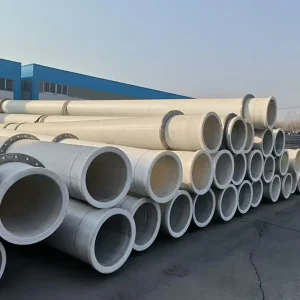
Submersible pump floating pontoons are modular or custom-fabricated buoyant structures engineered to suspend high-capacity dewatering or slurry pumps above the floor of rivers, tailing dams, or oceans. They keep the pump intake elevated above settled mud and silt beds, avoiding clogging while allowing safe surface maintenance. Pipeline floats (dredge floats) are paired clamp-on cylindrical polyethylene bodies clamped around discharge pipes to keep water-transfer lines stable, aligned, and visible on the surface.
How is the required buoyancy calculated for a pumping pontoon system?
Total buoyancy must substantially exceed the cumulative dry and wet weight of the installation. Engineers calculate the dry weight of the pump, steel support skid, electrical panels, cables, pipe manifolds, and valves, adding the wet weight of the dense slurry inside the pipe. A safety factor of 1.30 to 1.50 (30% to 50% reserve buoyancy) is applied to ensure that approximately one-third of the pontoon hull remains elevated above the waterline, preserving lateral stability in winds and swell.
Are rotomolded polyethylene floats resistant to aggressive chemicals and seawater?
Yes. Juhua utilizes premium virgin Linear Low-Density Polyethylene (LLDPE) and High-Density Polyethylene (HDPE) compounded with UV-20+ stabilizers and anti-aging agents. Unlike welded mild steel, polyethylene does not oxidize, peel, or suffer galvanic corrosion in marine environments. It is chemically inert across pH ranges from 1.5 to 13.0, making it well-suited for acidic mine drainage, gold cyanide tailings, and high-salinity marine desalination intake ponds.
What happens if the pontoon hull is punctured by sharp debris or rock impact?
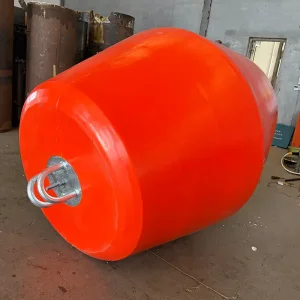
Our industrial pontoons and mooring buoys are pressure-filled with high-density, closed-cell polyurethane foam (density 35–45 kg/m³). The closed-cell microscopic pore architecture prevents moisture absorption (water uptake < 0.5% by volume). Even if the outer PE wall is breached by an impact with mining machinery or sharp quarry rock, the pontoon retains over 98% of its buoyant capacity, preventing the platform or pump from sinking.
What engineering parameters must be supplied for an accurate OEM quotation?
To deliver an optimized engineering blueprint and price schedule, please furnish: 1) Pump make, model, total dry weight, and dimensional outline; 2) Discharge pipe outer diameter (OD), wall thickness, and material (HDPE or steel); 3) Slurry density or specific gravity (SG); 4) Pumping discharge pressure; 5) Water chemistry (pH and salinity); 6) Water elevation swing range; and 7) Site wind, wave, and current velocities.
What is the standard warranty coverage and operational service life expectancy?
The standard equipment warranty period commences on the date the client hands over the installation to the project operator and extends for 18 months post-handover, or 12 months after active commissioning, whichever occurs first. Due to automated rotational mold temperature controls that guarantee consistent wall thickness without thermal residual stress, our LLDPE floats carry a projected design lifespan in excess of 20 to 25 years under continuous outdoor exposure.
Specialized Offshore Flotation, Floats & Safety Enclosures
Explore our extended catalog of marine-grade subsea pipeline floats, high-buoyancy float balls, marine safety booms, and offshore mooring buoys engineered for complex marine deployments.