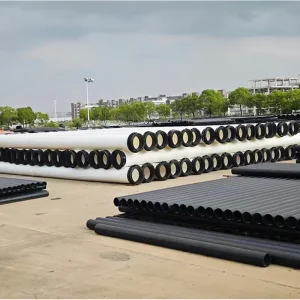
OEM Industrial-Grade Pipeline for Reliable Fluid Transport Companies, Factory
Request Tech Specs
Direct manufacturer pipeline buoyancy shells, containment modules, and heavy-duty mooring accessories engineered for harsh open water, mining ponds, and port works.
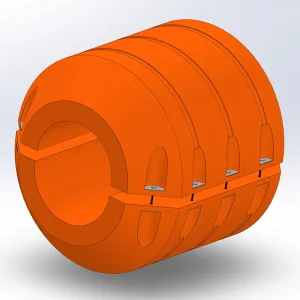

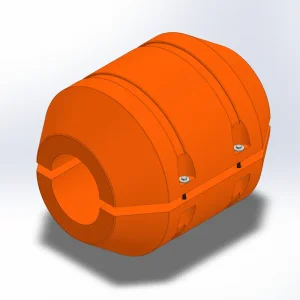
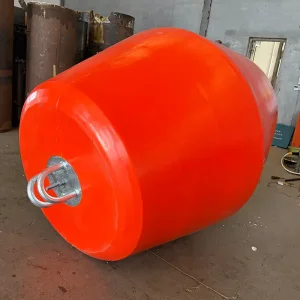
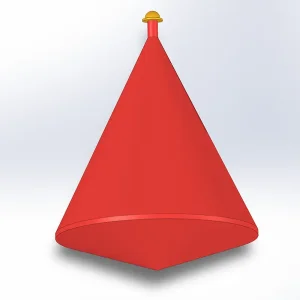
Global infrastructure procurement teams, maritime municipal contractors, and tier-1 dredging operators face complex criteria when selecting OEM barrier factories.
Industrial trash barriers are engineered to withstand continuous hydrodynamic drag, storm surge transients, and concentrated point-loads from heavy floating timber or urban debris accumulation.
Long-term marine survival requires uncompromising UV stabilisation and molecular cross-linking to counteract environmental stress cracking (ESCR) in hyper-saline and tropical zones.
Auditable supply chain transparency is a baseline prerequisite for major utility providers, hydropower authorities, and EPC engineering firms issuing international tenders.
A rigorous engineering comparison between rotomolded polyethylene containment systems and conventional fabricated steel or EPS-filled marine barriers.
| Performance Criterion | Juhua OEM Rotomolded PE Boom | Fabricated Structural Steel Boom | Standard Unfilled Poly Float |
|---|---|---|---|
| Corrosion Resistance | Inert to salinity, hydrocarbons, acids (pH 2-12) | Requires regular sacrificial anodes & anti-fouling coatings | Inert, but vulnerable to micro-punctures |
| Impact Kinetic Absorption | Elastic deformation recovers shape; absorbs collision kinetic | Dents, plastic deformations, seam welds crack | Brittle crack risk under cold-temperature wave shock |
| Sub-Surface Safety Foam | Closed-cell PU foam core (water absorption < 1% vol) | Hollow chambers prone to progressive flooding | Hollow; total loss of buoyancy upon puncture |
| Maintenance Overhead | Zero recoating; power-washing periodic biofilm only | Dry-dock sandblasting & structural recoat every 3-5 yrs | Frequent replacement of punctured units |
| Interchangeability & Spares | CNC precision moulds allow drop-in section replacement | Custom welding and site adjustments required | Inconsistent dimensions between production batches |
How Shandong Binzhou Juhua Rubber & Plastic Co., Ltd. leverages regional clustering to deliver technical superiority and commercial competitiveness.
Binzhou is strategically situated near major petrochemical and metallurgical clusters in Shandong province. This proximity secures direct allocations of premier linear low-density polyethylene powders and high-grade mooring steel without intermediary markups.
Our rotomolding cells feature variable-frequency electronic speed modulation and automated real-time pyrometric sensors, guaranteeing continuous wall thickness across 1,000 m² of specialized production space.
With an active export footprint spanning more than 80 countries, we hold standardized, interchangeable tooling for a comprehensive array of diameters and barrier cross-sections. This dramatically compresses initial OEM lead times.
Whether responding to sudden flood remediation projects or scheduled port developments, our continuous manufacturing cycles reduce turn-around schedules by 35% compared to Western regional workshops.
Binzhou's direct access to Qingdao and Tianjin shipping hubs affords rapid container loading, reduced inland drayage expenses, and streamlined customs clearance procedures under automated export documentation channels.
We provide comprehensive nesting layouts, load optimization computations, and specialized cradle packing to maximize ocean freight container cubic efficiency.
Floating trash booms must adapt to complex regulatory landscapes—from US Army Corps of Engineers mandates to European Water Framework Directives.
Water intakes demand trash booms capable of trapping debris mats weighing tens of tons while resisting the aggressive downward drawdown forces created by turbine penstocks.
Engineering Integration: Extended sub-surface skirts, quick-release shear pins for severe flood release, and high-visibility navigability marks (IALA compliant) to ensure surface craft diversion.
High macro-plastic and domestic waste loads necessitate continuous retention with minimal disruption to local aquatic fauna and recreational water navigation.
Engineering Integration: Bi-directional debris diverters routing waste toward automated skimmer vessels, alongside flexible articulating hinges that track extreme tidal and stormwater height variances.
Aggressive tailings storage facilities (TSF) feature chemically altered suspension matrices and fluctuating chemical concentrations requiring specialized inert polymers.
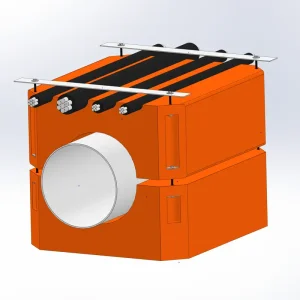
Engineering Integration: Flotation sizing adjusted for elevated slurry specific gravity (>1.3 t/m³), integrated cable troughs for monitoring sensors, and specialized fluoropolymer exterior treatments.
The convergence of satellite environmental monitoring, automated debris extraction, and low-carbon materials across global waterways.
Next-generation OEM trash booms are integrating strain gauge transponders and solar-powered tilt sensors into the rotomolded structural ribs. These telemetry systems beam tension overload warnings directly to reservoir control rooms via LoRaWAN or satellite uplink before catastrophic anchor failure occurs during flood events.
Driven by strict European green taxonomy and maritime ESG directives, major OEMs are refining rotomolding protocols for chemical-grade post-consumer ocean plastics and bio-circular HDPE feedstocks without compromising critical tensile elongation or UV structural lifespan.
Recent CFD advances prioritize self-deflection curved modular hulls. Rather than acting as a static perpendicular wall that traps massive debris masses, modern configurations redirect kinetic current vectors to automatically slide debris along the barrier face into shoreline consolidation bays.
Technical answers to critical mechanical, logistical, and hydraulic questions asked by consulting engineers and tender boards.
The total working buoyancy must exceed the dry weight of the floating assembly, the maximum submerged trash load, hydrodynamic drag under peak flow velocity, and any attached ballast or ballast chain. Standard engineering requires a minimum 20% to 30% reserve buoyancy (or a 1.25x to 1.30x safety multiplier) so roughly one-quarter of the boom diameter remains above the water plane under design loading.
The warranty starts on the date the buyer hands over the goods to the end-investor and concludes 18 months after that handover date, or 12 months after the completed installation date—whichever comes first. It covers material manufacturing faults, environmental stress degradation under UV, and structural weld/molding anomalies.
Polyethylene is chemically inert and completely impervious to saltwater corrosion, UV degradation, and chemical attacks across broad pH levels. Unlike steel, it requires no toxic anti-fouling paints or periodic sacrificial anode replacement, eliminating expensive slipway maintenance over decades of operation.
Please provide: (1) Total barrier span length, (2) Peak surface current velocity (m/s) and wave conditions, (3) Expected debris typology (e.g., floating logs, light plastics, or chemical flocs), (4) Desired freeboard and draft depth, (5) Site type (reservoir, tidal river, open coast), and (6) Target destination sea port.
Yes. Float bodies are custom pigmented (safety yellow, orange, marine green, or black) using UV8+ compound masterbatches. Custom molds can integrate topside cable troughs for instrumentation cables, reflective IALA-grade decals, solar beacon mounts, or client brand insignia.
Every Juhua barrier float is pressure-filled with rigid, closed-cell polyurethane foam with a density between 35 and 45 kg/m³. Because the cells are non-communicating, a direct puncture or tear in the outer polyethylene shell prevents water penetration, ensuring the barrier preserves positive reserve buoyancy.
Explore our high-performance line of offshore mooring buoys, dredging pipelines, and deepwater tie-in flotation systems engineered to ISO manufacturing protocols.