Standard & Custom Offshore Buoyancy Solutions
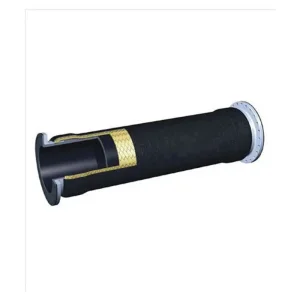
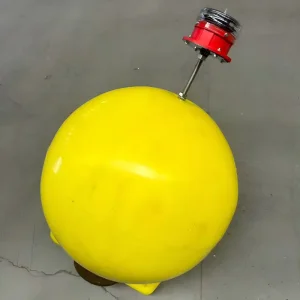
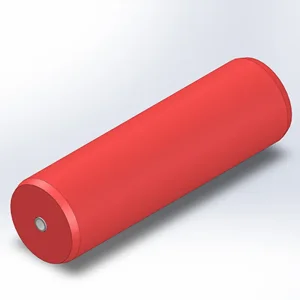
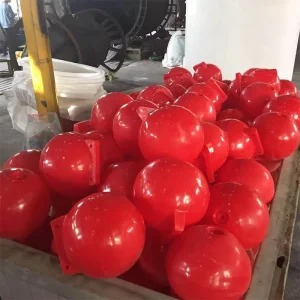
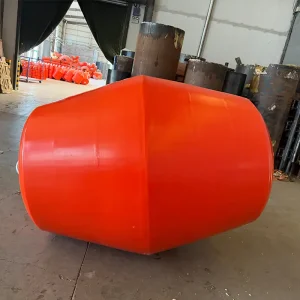
Explore our primary precision-molded flotation units, including navigation green buoys, tie-in pipeline buoyancy blocks, and high-density mooring systems.



Commercial Status & Global Dynamics of Lateral Buoy Green Systems
Understanding marine fairway demarcation, safety standards, and sustainable material transitions under IALA maritime recommendations.
Global Maritime Demarcation (IALA A & B)
The lateral green buoy (port or starboard mark depending on region) serves as an indispensable navigational visual aid for international shipping channels. In IALA Region A (Europe, Australia, parts of Asia and Africa), green buoys designate the starboard side of the channel when entering from seaward. In Region B (Americas, Japan, Korea, and Philippines), green indicates the port side. Precise chromatic coordinates, UV durability, and radar reflectivity are non-negotiable compliance parameters.
The Steel-to-Polyethylene Paradigm Shift
Traditional maritime infrastructure heavily relied on welded marine steel for buoy manufacture. However, steel buoys suffer from severe bio-fouling, persistent galvanic corrosion, extensive repaint intervals, and catastrophic collision hazards. The international market has decisively transitioned toward roto-molded linear low-density polyethylene (LLDPE) filled with closed-cell polyurethane foam, which yields maintenance-free service lives exceeding 15 to 20 years.
Macroeconomic Infrastructure Demand
Global waterway deepening, offshore wind turbine installation corridors, and the expansion of mega-vessel container ports require massive deployments of high-visibility navigational buoys. Dredging contractors and port authorities demand rotomolded green lateral buoys that withstand dynamic tidal shears, high current velocities, and extreme wave impact while supporting telemetry and low-draw marine lantern packages.
Precision Rotomolding & Buoyancy Physics
At Shandong Binzhou Juhua Rubber & Plastic Co., Ltd., rotational molding combines variable-frequency temperature regulation with computer-monitored cycle times. This delivers continuous seamless bodies without seam-failure vulnerabilities.
Virgin High-Grade Polymer Matrices
Our buoys utilize pure LLDPE blended with UV15 stabilizer pigments, preventing embrittlement, color degradation, or cracking even in high-salinity and high-UV equatorial environments.
Closed-Cell EPS / PU Structural Core
Floats and buoys are pressure-injected with high-density polyurethane foam. Even if catastrophic puncture occurs due to commercial vessel impact, the zero-water-absorption core guarantees 100% unsinkable buoyancy.
Internal Galvanized Ballast & Moorings
Equipped with hot-dip galvanized steel tie rods, integrated mooring eyes, and modular counterweights, our green lateral buoys maintain optimal vertical stability and visual freeboard in strong marine tidal currents.
Accurate sizing prevents pipeline sinking or buoy capsizing. For floating discharge lines and lateral channel buoys, effective buoyancy must be calculated using working conditions rather than dry conditions:
- Maintains approx. 25% reserve freeboard above water.
- Slurry specific gravity calculated from 1.3 to 1.8 t/m³.
- Designed for wind, chop, and drag coefficient compensation.
Localized Engineering Applications of Green Buoys & Floaters
From port fairways to mining tailings management, our modular polymer systems deliver reliable flotation across real operational environments.
Port & Harbor Navigational Channels
Installed at harbor approach corridors to designate clear water margins. Built with high-visibility daylight chromatic green shells, retro-reflective banding, and optional solar LED topmarks to guide commercial container vessels safely past shoal hazards.
Dredging Discharge & Land Reclamation
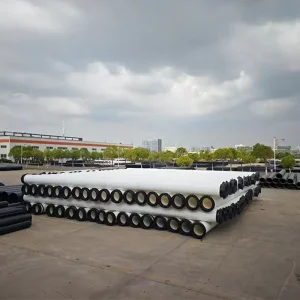
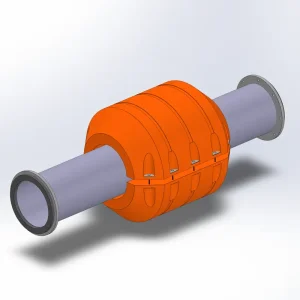
Supporting high-density discharge pipelines carrying abrasive slurries from cutter suction dredgers to shore reclamation areas. Interlocking clamp-halves resist wave roll and prevent fatigue stress on pipe joints.
Offshore Energy & Mooring Arrays
Providing offshore wind installations, oil-and-gas support vessels, and private marinas with heavy-duty mooring buoys capable of absorbing repeated vessel berthing shock loads without hull denting or rupture.
River Hydrology & Flood Desilting
Deployed in inland waterways and dam reservoirs to manage river silt levels while keeping floating pipelines and maintenance vessels aligned amidst sudden seasonal current surges.
Mining Tailings & Corrosive Ponds
In acidic or alkaline mining tailings pipelines, standard metal floats degrade in months. Our chemical-resistant polyethylene bodies resist chemical degradation, keeping floating slurry lines operational without corrosion.
Aquaculture & Hydro-Safety Zones
Delivering visible demarcation barriers for water reservoirs, intake protection zones, recreational safety perimeters, and modern open-ocean aquaculture pen mooring systems.
Macro Industry Solutions: Integrated Flotation Packages
Minimizing procurement fragmentation and interface friction through unified marine supply.
Matched Buoyancy Assemblies
Rather than sourcing pipelines, float bodies, and rubber hoses from separate suppliers, Juhua supplies factory-matched sets. Sizing tolerance matches pipe OD precisely, eliminating loose-clamp slippage, concentrated pipe shear, and localized wear during heavy wave movement.
Standardized Interchangeability
Precision CNC-machined steel molds produce identical clamp halves and modular buoy sections. Damaged units in active service can be swapped out immediately using identical spares without taking entire dredging strings or navigation channels offline.
Custom Hydrodynamic Fabrication
We supply custom buoy tops, telemetry housing towers, ballast configurations, and specialized pipe slots with cable troughs to meet bespoke EPC engineering specifications and regulatory waterway certifications.
Technological Roadmap for Marine Buoyancy (2025–2035)
Anticipating structural, digital, and circular economy developments in next-generation marine flotation devices.
AIoT & Smart Telemetry Integration
Embedding low-power AIS transmitters, water quality sensors, tilt monitoring gyroscopes, and BeiDou/GPS geolocation beacons directly into buoy topmarks for real-time fleet fairway management.
Bio-Circular Polymers
Introducing ocean-bound recycled plastic and bio-derived polyethylenes into non-critical layers without sacrificing tensile strength, UV stabilization, or structural integrity.
Low-Drag Geometries
Computational fluid dynamic (CFD) modeling of buoy hull profiles to reduce drag coefficients in high-velocity estuary conditions, minimizing anchor chain scouring and mooring tension.
Autonomous Service Life Diagnostics
Embedding ultrasonic structural health transducers inside foam matrices to predict core aging, water intrusion, or bolt tension fatigue before catastrophic hardware failures occur.
Frequently Asked Questions About Buoy Green & Flotation Systems
Clear, direct answers for maritime procurement managers, port engineers, and marine contractors.
What is the specific maritime significance of a Buoy Green?
Under international IALA rules, green lateral buoys mark the navigable channel margins. In Region A, green marks the starboard (right) side of the channel when entering harbor. In Region B, green marks the port (left) side. These buoys feature defined chromatic green pigment specifications, cylindrical or pillar silhouettes, and synchronized green flashing marine lights.
Why is rotomolded polyethylene preferred over traditional steel?
Polyethylene never rusts, eliminating periodic dry-dock repainting and sandblasting. PE shells are color-impregnated throughout the full wall thickness, making scrapes invisible. Additionally, their elasticity absorbs vessel impact energies without crumpling or damaging ship hulls.
How do you accurately calculate the required number of pipeline floats?
The total buoyancy of the system must exceed the gross working weight (dry pipe weight + slurry medium weight + steel bolts, flanges, and hoses) by a reserve margin of 20% to 30%. Sizing floats for clean water rather than high-density slurry is a common mistake that causes pipeline submersion during dredging starts.
What is the standard warranty and life expectancy of Juhua products?
The warranty period begins when the buyer hands over the equipment to the investor and lasts 18 months post-handover, or 12 months after active installation (whichever occurs first). Our UV15-stabilized polyethylene shells and closed-cell polyurethane cores provide operational lifespans exceeding 15 to 20 years in seawater.
What project parameters are required for a customized flotation quote?
Please provide the pipe outer diameter (OD), material and wall thickness, conveyed medium type and specific density, operating environment (river, enclosed basin, or offshore open ocean), required freeboard percentage, and destination seaport for optimized container nesting calculations.
Can internal mooring tie-rods and hardware withstand heavy ocean currents?
Yes. Juhua mooring buoys and navigation buoys incorporate heavy-duty hot-dip galvanized or stainless steel tie-rods running through the buoy core. Towing, mooring, and counterweight stresses transfer directly through the steel structure rather than loading the plastic skin.
Advanced Marine Navigation, Pipeline & Mooring Fleet
Explore our complete range of rotomolded maritime solutions engineered to meet international port, dredging, and marine safety standards.