Primary Pipe Flotation & Marine Infrastructure Units
Engineered for high buoyancy reserve, severe slurry transport, and hydrodynamic stability in volatile waterways.



Global Industrial Status & Macro-Engineering Landscape
Analyzing the paradigm shift from obsolete steel pontoons to advanced rotationally molded polyethylene systems across marine engineering, port expansion, and dredging operations.
Material Decoupling & PE Transition
Over the past two decades, the global marine dredging and pipeline sector has undergone an aggressive migration away from heavy steel buoys to virgin LLDPE/HDPE rotationally molded shells. Steel floats suffer from galvanic corrosion, heavy lifting logistics, and catastrophic sink risks upon rupture. Polyethylene float balls and modules provide non-reactive longevity, elastic impact resilience, and total imperviousness to high-salinity marine environments.
Hydrodynamic Optimization
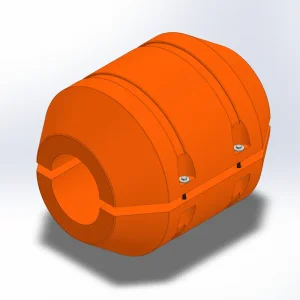
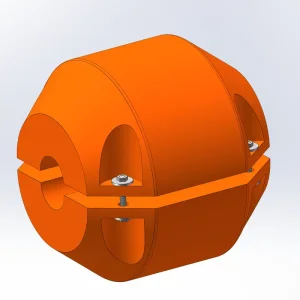
Modern coastal protection and port maintenance demand pipelines that stay stable under volatile current loads, crosswinds, and rolling swells. Computer-modeled spherical float balls and dual-half pipeline clamping floats reduce hydrodynamic drag coefficients by up to 34% compared to angular structures, significantly mitigating mechanical strain on pipe flanges and flexible dredging hoses.
Rising Capital Expenditure in Tailings & Mining
With tightening environmental oversight worldwide, industrial mining processing facilities, ash ponds, and mineral extraction sites are mandated to maintain zero-discharge tailings systems. PE float balls and slurry pipeline floats serve as the baseline containment and slurry transport infrastructure across major copper, lithium, and iron ore extraction arteries worldwide.
Factory Rigor: Rotational Molding & Polyurethane Fusion
State-of-the-art variable-frequency thermal molding cycles ensure uniform wall thickness and zero internal stress points.
Closed-Cell Polyurethane Infilling
Our rotational shells are filled with high-density, closed-cell polyurethane foam (≥32-38 kg/m³). Even in the extreme event of outer shell perforation by sharp debris or marine collisions, water absorption is limited to less than 1%, ensuring perpetual buoyancy and zero risk of catastrophic sinking.
Polyethylene Resins & UV Stabilization
Utilizing prime virgin LLDPE/HDPE compounded with UV-8 stabilizers and non-fading pigments, each shell resists extreme ultraviolet radiation degradation, aggressive temperature swings (-40°C to +60°C), and chemical attacks from acidic or alkaline process slurries.
Precision Hardware & Anti-Loosening
Equipped with grade 304 or 316 stainless steel bolts, hot-dip galvanized reinforcing bands, and nylon-locking vibration nuts, our clamping assemblies withstand constant wave turbulence and hydraulic pipeline vibration without bolt fatigue or structural slippage.
Localized Applications & Site-Specific Engineering Scenarios
From river desilting channels to offshore land reclamation terminals, PE float balls and modular pipeline floats perform in high-stress aquatic sectors.
1. Capital & Maintenance Dredging
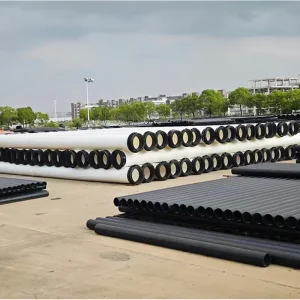
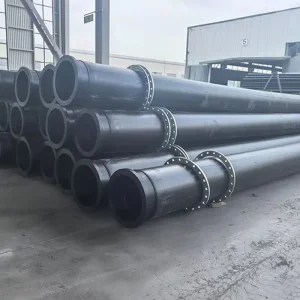
Deployed extensively across port authority channels, harbor deepening zones, and riverbeds. Floats clamp firmly to steel or HDPE discharge pipes carrying high-viscosity silt and gravel, keeping one-quarter of the pipe diameter above water to minimize friction and prevent seabed dragging.
2. Reservoir Intake & Hydro Projects
In hydroelectric dam reservoirs, water utilities use modular floating balls and safety barriers to intercept drift debris, trees, and floating trash before they reach the penstock intake grates, preventing emergency turbine shut-downs and costly deep-water diving maintenance.
3. Tailings Slurry Management
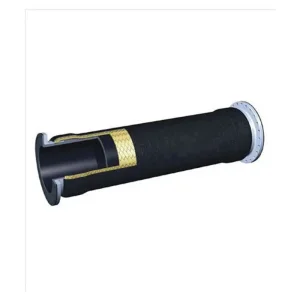
For chemical and mineral mining ponds, PE float balls support flexible pump discharge hoses and instrument cables. Resisting corrosive reagents and high slurry densities (up to 1.6 t/m³), they maintain continuous fluid transport during operational decanting.
Global Compliance, Quality Assurance & Localized Support
Fulfilling international maritime standards with localized engineering consultation and export protection across 80+ countries.
Tailored Buoyancy Calculations
We provide comprehensive hydrodynamic verification prior to manufacturing. By assessing outer diameter (OD), wall thickness (SDR), transported medium density, wave-action spectrums, and auxiliary weight, we ensure that projects achieve a 20% to 30% buoyancy safety reserve.
ISO 9001 & Maritime Standards
Every batch undergoes drop impact testing, raw resin tensile validation, and hydrostatic core inspection. Standardized production guarantees batch-to-batch interchangeability, allowing replacement half-rings to mate seamlessly with pipelines installed years prior.
Export Logistics & Extended Warranty
Backed by an 18-month handover / 12-month post-installation warranty. Floats are nested and container-optimized for ocean freight from Qingdao/Tianjin ports, accompanied by installation guides, torque tolerances, and on-site engineering advisory.
Technical Roadmap & Next-Gen Flotation Architecture
Bridging traditional marine polymer molding with IoT tracking, circular economy materials, and harsh-environment offshore engineering.
IoT-Enabled Buoyancy Modules
Integrating embedded RFID chips and solar-powered GPS beacon nodes within rotationally molded shells. This allows port authorities and offshore operators to monitor pipeline alignment, structural strain, and localized drift in real time via cloud platforms.
Recycled High-Performance Polymers
Developing verified multi-layer co-rotomolding processes that integrate post-industrial recycled polymers into the structural core while preserving a virgin UV-stabilized exterior, reducing the embodied carbon footprint by up to 45% without sacrificing tensile strength.
Deep-Water Hybrid Syntactic Core
Researching syntactic glass-microsphere foam fills capable of sustaining hydrostatic pressures in depths exceeding 50 meters for offshore subsea tie-ins and oceanographic data telemetry floats.
Frequently Asked Questions: Engineering & Procurement
Essential answers regarding hydrodynamic sizing, polyurethane core integrity, salt-spray corrosion resistance, and delivery protocols.
What is the standard buoyancy formula for dredging pipelines?
The total net buoyancy must equal or exceed: (Total Weight of Pipe + Total Weight of Conveyed Slurry/Fluid + Auxiliary Weight) × 1.2 to 1.3. This 20% to 30% safety factor guarantees that roughly one quarter of the pipe diameter remains visible above the waterline, preventing submergence under turbulent wave action.
Why is rotomolded polyethylene superior to steel pontoons?
Polyethylene never corrodes, scales, or oxidizes in saltwater or acidic tailings ponds. Unlike hollow steel floats that can take on water and sink upon puncture, our floats are filled with closed-cell PU foam, eliminating total buoyancy loss even if the outer shell is mechanically compromised.
How do you guarantee batch interchangeability for spare parts?
Our manufacturing plant uses CNC-machined aluminum and heavy steel rotational molds with automated variable-frequency cycle control. Every pair of float halves conforms to strict dimensional tolerances, ensuring exact fit over matching outer diameter (OD) pipes, even years after original deployment.
Can PE float balls and floats be customized for power/cable lines?
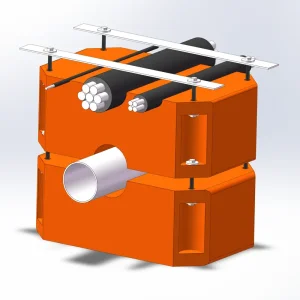
Yes. We produce specialized floats featuring molded integral cable troughs and tie-in recesses. These channels permit electric power lines, discharge monitoring cables, or anchor hawsers to run alongside the main pipeline without risking abrasion, pinching, or snagging.
What documentation is required to receive a formal quotation?
Please provide the pipe outer diameter (OD), pipeline material (HDPE, steel, or flexible rubber hose), internal medium and working slurry density (e.g. 1.05 to 1.6 t/m³), environmental parameters (wave height, river velocity), and destination port for container loading calculations.
What is the official warranty coverage?
Our standard international warranty initiates on the date the buyer hands over the goods to the investor/project site and terminates 18 months from that handover date or 12 months from the active installation date, whichever milestone is reached first.
Specialized Flotation, Pipelines & Marine Accessories
Complete your aquatic installation with matched slurry transport lines, marine buoys, and modular floating platforms.