

ODM Mooring Buoy For River Terminals And Workboat Berths Product, Quotes
Request Sizing & SpecsEngineered via computer-controlled rotational molding for marine durability, high reserve buoyancy, and operational security in demanding marine environments.
ODM Mooring Buoy For River Terminals And Workboat Berths Product, Quotes
Request Sizing & Specs
High-Quality Offshore Polyethylene Mooring Buoy – Safe, Durable and Maintenance-Free Floating Mooring System Companies, Factories
Request Sizing & Specs
High-Quality Durable Floating Barriers for Water Protection Projects Product, Pricelist
Request Sizing & Specs
High-Quality Pipe Floats for Water Transfer, Mining and Marine Pipeline Systems Manufacturer, Pricelist
Request Sizing & Specs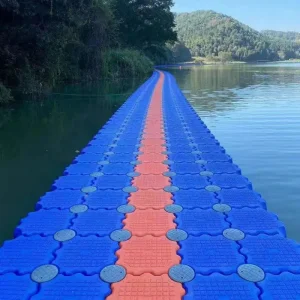
High-Quality Robust Floating Boat Pontoon for Safe and Flexible Water Platforms Product, Factories
Request Sizing & Specs
ODM Ocean-Grade Navigation Buoys for Safe Maritime Operations Products, Factory
Request Sizing & Specs
ODM Mooring Buoy for Marina Berths, Vessel Anchorage and Offshore Mooring Systems Suppliers, Manufacturers
Request Sizing & Specs
ODM Custom Mooring Buoy for Vessel Berthing, Marina Use and Offshore Anchorage Companies, Pricelist
Request Sizing & SpecsThe transition from traditional fixed concrete docks and corroding steel pontoons toward high-molecular-weight polymer floatation systems represents a fundamental paradigm shift in coastal, harbor, and industrial hydraulic engineering.
Traditional maritime installations utilizing reinforced concrete piles and structural steel pontoons incur heavy life-cycle costs due to continuous marine bio-fouling, chloride ion penetration, and galvanic corrosion. Industrial operators are rapidly converting to rotational-molded high-density polyethylene (HDPE) pontoons that yield zero oxidation in aggressive saline settings.
Global port authorities and dredging operators face budget constraints. Advanced floating boat pontoons offer a self-buoyant, low-maintenance matrix. With zero cathodic protection requirements and elimination of recoating cycles, polymer flotation systems yield up to 62% operational savings over a 25-year structural service horizon.
Modern maritime logistics require rapid reconfiguration. Advanced interlocking pontoon modules adapt immediately to varying tidal fluctuations, shifting bathymetry, and seasonal ice pressures, offering scalable load distributions that rigid concrete quays cannot safely accommodate.
Operating from Huimin County, Binzhou City, Shandong Binzhou Juhua Rubber & Plastic Co., Ltd. (Juhua / Giant Rubber) bridges raw polymer science with computerized rotational molding execution.
Our rotomolding infrastructure features multi-axis rotational carriages equipped with electronic automatic temperature measurement and variable-frequency speed control. This eliminates common structural risks such as thermal oxidation, excessive residual internal stresses, and localized thin walls, ensuring an isotropic shell thickness across corners.
We use virgin high-grade polyethylene resins compound-blended with high-performance UV stabilizers (UV8 to UV12 classification) and carbon-black/pigment dispersions. The pontoon shell demonstrates tensile yield strengths exceeding 21 MPa and environmental stress crack resistance (ESCR) rated beyond 1,000 hours under ASTM D1693 conditions.
For high-impact workboat berths and critical ocean installations, the hollow hull sections are filled via pressurized high-density polyurethane (PU) injection. Even in the unlikely event of high-impact puncture from vessel contact or sharp debris, water ingress remains zero, preserving structural stability.
*Our engineering guidelines require an operational reserve buoyancy buffer of at least 30% for all pontoon platforms to maintain a stable freeboard during turbulent hydrodynamic loading and equipment transits.
Integrated port access in Shandong Province allows seamless delivery of tooling, aluminum casting molds, and bulk PE materials, reducing custom mold-to-container lead times down to under 20 working days.
Precision CNC-machined steel and aluminum molds guarantee that modular pontoons produced today fit docking grids deployed five years ago with sub-millimeter pin-hole alignment.
We provide full structural CAD/FEA simulation services to modify buoyancy profiles, integrated cable conduits, cleat mounts, and anti-slip deck patterns for client-specific platforms.
Every batch undergoes drop impact tests at sub-zero temperatures, hydrostatic leakage checks, and wall-thickness ultrasonic testing prior to export packing.
From shallow interior river channels to high-salinity offshore zones, advanced floating boat pontoons serve critical maritime, industrial, and municipal infrastructure projects.
Engineered for high vessel berthing frequencies. Pontoons deliver reliable anti-impact dissipation when workboats, patrol vessels, and tenders moor alongside. Integrated non-skid surface patterns protect crew in wet conditions.
Acting as synchronized floating support arrays alongside dredging pipelines. Our pontoons support auxiliary power cables, service walkways, and booster pump stations across mining tailing ponds and desilting basins.
Offshore fish farming operations utilize modular pontoon pathways to connect cages and feed sheds. In floating photovoltaics (FPV), pontoon bases provide long-term UV-resistant buoyancy for inverters and electrical maintenance bridges.
In regions susceptible to seasonal monsoons or water surge events, modular pontoon interlocking blocks can be transported rapidly via standard trucks and hand-assembled into temporary pedestrian walkways and vehicle bridges.
Power generation and municipal water supply intakes deploy floating pontoon systems to anchor debris containment booms, silt curtains, and water-quality surveillance instrumentation securely ahead of intake filters.
Eco-resorts, national water parks, and recreational lakes require floating platforms that do not leach toxic chemicals, plasticizers, or rust into clean water reserves, maintaining environmental compliance.
Key technical priorities evaluated by port engineers, EPC contractors, and dredging procurement managers when choosing polymer flotation suppliers.
Global regulators demand that marine structures minimize abrasive breakdown. Advanced rotomolded polyethylene utilizes high-molecular-weight density polymers that prevent particulate shedding and microplastic contamination in delicate marine zones.
Modern tenders routinely specify buoys and pontoon modules with pre-engineered recesses for autonomous GPS beacons, environmental telemetry sensors, solar light fixtures, and mooring tension-load monitors.
Given international freight rates, procurement teams seek pontoon designs engineered around standardized ocean container footprints (40ft High Cube). Units nest and stack efficiently to optimize shipping volume per metric ton.
Direct technical answers addressing structural integrity, anchoring, hydrodynamic calculations, and marine life cycle performance.
Single-layer standard modular HDPE pontoons generally provide roughly 350 kg/m² to 400 kg/m² of buoyant support at maximum displacement. By deploying double-layer or specialized deep-draft pontoon designs filled with closed-cell polyurethane foam, load capacities can be increased to over 800 kg/m² to support heavy work vehicles, small excavators, and passenger landing docks.
Anchoring configurations are determined based on water depth, geotechnical floor condition, and local tidal ranges. Common options include structural pile guide brackets (allowing pontoons to slide vertically along fixed steel or concrete piles during tides), deadweight concrete sinkers with marine-grade studless mooring chains, or specialized elastomeric mooring systems (such as Seaflex or Hazelett) that maintain constant tension through dynamic waves.
Our raw high-density polyethylene resins are compound-extruded with hindered amine light stabilizers (HALS) and antioxidant additives. This protects the polymer chains from molecular degradation caused by intense UV exposure. Furthermore, the material remains crack-resistant across ambient operating temperatures from -35°C to +65°C.
Calculation begins by evaluating the dry dead-weight of the pipe and couplings plus the total volumetric weight of the conveyed medium (accounting for high-density mining slurries up to 1.6 t/m³, not merely clean water). The total float buoyancy must deliver a safety margin of at least 20% to 30% above this combined weight, ensuring the pipeline maintains a visible freeboard (roughly 25% of the pipe diameter above the water level).
The standard warranty coverage initiates on the date the equipment is formally handed over to the end-client or project investor, remaining valid for 18 months from the handover date or 12 months following practical installation, whichever comes first. Full technical support and spare interchangeability are guaranteed over the system's lifetime.
Matched floatation units, subsea positioning supports, and navigation systems designed for heavy discharge and industrial reclamation lines.
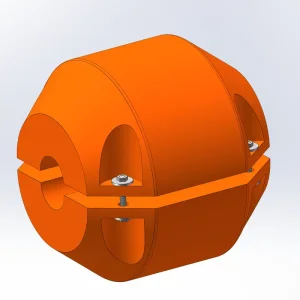
High-Quality Durable Pipe Floats for Safe Operations Products, Company
Request Sizing & Specs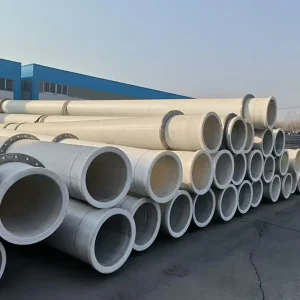
ODM Industrial-Strength Pipeline for Efficient Fluid and Material Transport Supplier, Quotes
Request Sizing & Specs
Custom Reliable Marine Buoys for Safe Waterway Operations Suppliers, Products
Request Sizing & Specs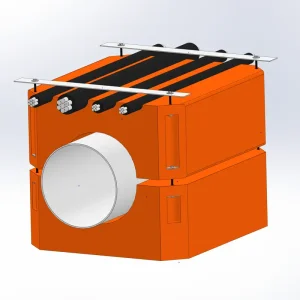
Custom Customizable Floating Pipe Supports with Cable Troughs Company, Pricelist
Request Sizing & Specs
Best Precision Marine Buoys for Safe and Efficient Navigation Manufacturer, Factories
Request Sizing & Specs
ODM Floating Barrier Systems for Water Safety and Project Efficiency Manufacturer, Company
Request Sizing & Specs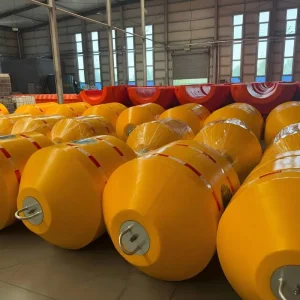
High-Quality Mooring Buoy for Commercial Berths, Marinas and Offshore Holding Areas Manufacturers, Products
Request Sizing & Specs
High-Quality Pipe Floats for Floating Pipeline Support and Water Transfer Product, Company
Request Sizing & Specs