
Specialized Flotation Solutions & Marine Modules
High-buoyancy, UV-stabilized, impact-resistant PE floats and offshore buoys fabricated to precise hydraulic parameters.



Global Commercial Status & Marine Dredging Landscape
The offshore marine dredging and tailings transport sector requires robust buoyancy modules capable of handling dynamic hydrodynamic stresses without structural fatigue.
Material Science Shift
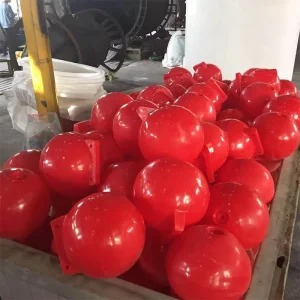
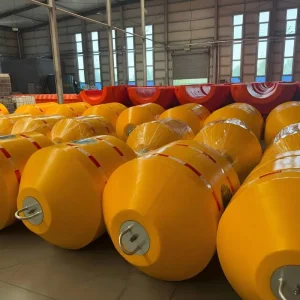
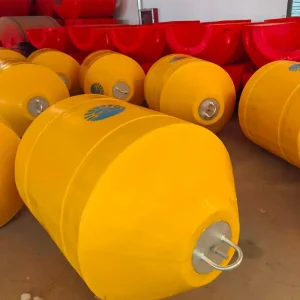
Global dredging operations have shifted irreversibly from traditional welded steel drums toward rotomolded linear low-density polyethylene (LLDPE). Rotomolded hollow shells infused with closed-cell polyurethane foam guarantee 0% moisture penetration even if punctured by oceanic debris.
Hydrodynamic Stability
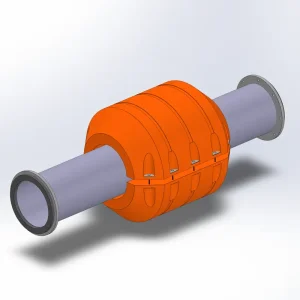
Naval architects and offshore EPC contractors mandate high-buoyancy modular floats engineered with recessed bolt recesses and built-in anti-slip ribs. This prevents torsional sliding along HDPE, steel, or flexible rubber discharge pipelines subjected to violent cross-currents.
Environmental Compliance
Modern ecological frameworks demand zero chemical leaching. Juhua's virgin grade food-contact compatible polyethylene complies with maritime safety regulations, avoiding marine ecotoxicity in coastal harbors, agricultural waterways, and municipal water catchments.
Factory Process Rigor & Chinese Supply Chain Advantage
Shandong Binzhou Juhua Rubber & Plastic Co., Ltd. combines precision automation with large-scale rotomolding molds for high dimensional accuracy.
Variable-Frequency Molding
Multi-axis rotational machines leverage automated thermal sensors, achieving uniform outer shell wall thickness across compound radii without localized thinning or stress notches.
Rigid Polyurethane Infill
Factory-controlled in-situ foam injection delivers density-stabilized PU core filling (≥35-45 kg/m³), ensuring permanent buoyancy reserve even under prolonged physical abrasion.
Interchangeability & Spares
CNC-machined aluminum casting molds create standardized two-half shell geometries. Maintenance crews swap out single replacement modules on existing operational strings without rework.
Integrated Coastal Hub
Situated in Lizhuang Town, Huimin County, Binzhou, Shandong, our facility integrates raw polyethylene feedstock, mold fabrication, polyurethane synthesis, and nearby container port logistics.
Application Scenarios & Hydrodynamic Sizing Formula
Accurate buoyancy calculation ensures steady working trim without submerged pipe drag or wave-induced pitching.
Standard Pipe Buoyancy Reserve Engineering
Under-sizing buoyancy modules causes submerged pipeline drag, excessive joint stress, and accelerated abrasion against shallow reefs. Engineering protocol requires sizing based on peak slurry specific gravity, not static water weight.
• Target Freeboard: Maintain ~25% (1/4) of pipeline outer diameter visible above water surface level.
• Slurry Density Factor: Compute for working discharge slurry (1.3–1.8 t/m³) rather than clean freshwater.
Global Field Deployment Matrices:
- Port & Navigation Channel Dredging: Suction hopper discharge pipelines.
- Tailings Discharge & Mine Dewatering: Dense tailings pumping across retention ponds.
- Reservoir Intake & Deep Well Desalination: Suspended municipal water lines.
- Power Station Cooling Lines: High-temperature seawater cooling discharge.
Trends Shaping Global Enterprise Float Procurement
Marine contractors prioritize full-lifecycle resilience, lower freight overhead, and customized cable routing integrations.
Integrated Cable & Line Troughs
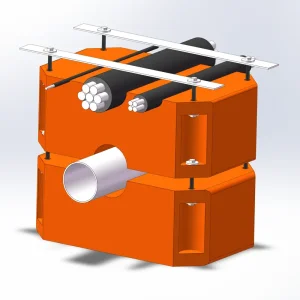
Modern cutter suction dredgers use electro-hydraulic power networks. Procurement contracts favor floats with molded cable channels along the spine, running telemetry and power conduits safely without separate line floats.
Container Nesting Geometries
International shipping costs impact large-volume buoy orders. Modular floats are designed with nesting tapers and matched bolt profiles to maximize container load densities for 40ft High Cube containers.
Fast Sizing & Spec Compliance
Buyers need exact pipe OD matches, wall thickness verification, and freeboard calculations on short notice. Our engineering team provides buoyancy analysis within 24 hours to keep bid timelines on schedule.
Frequently Asked Questions (FAQ)
Answers to common sizing, installation, and procurement questions for engineering teams.
Heavy-Duty Pipeline Support & Mooring Infrastructure
High-strength pontoons, heavy-duty pipeline floats, navigation buoys, and perimeter protection barriers.


Request Buoyancy Calculations & Factory Quotes
Connect with our flotation engineers for buoyancy checks, custom mold CAD designs, and container nesting plans.
Have a Project Tender?
Send us your pipeline OD, slurry parameters, and site conditions for a buoyancy verification report.
Request Technical Catalog & Sizing Sheet