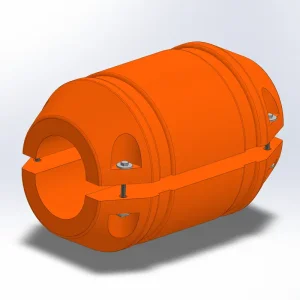
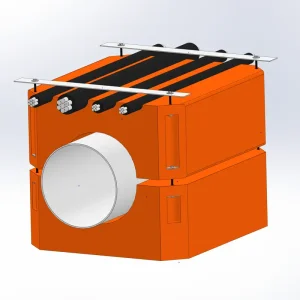
Precision Flotation Systems & Engineered Buoyancy Products
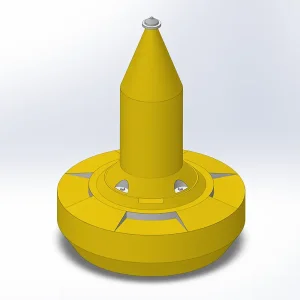
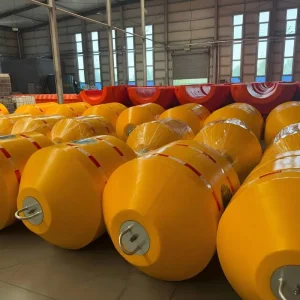
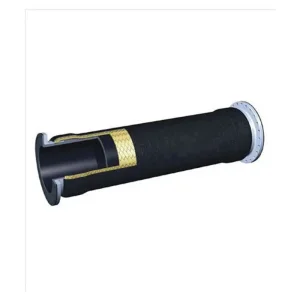
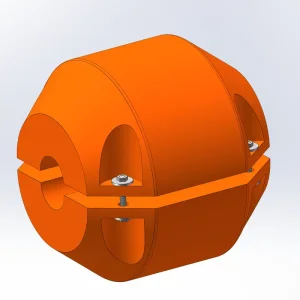
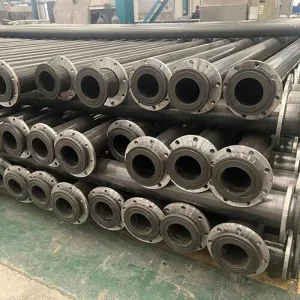
Discover our primary lineup of rotomolded polyethylene mooring buoys, high-buoyancy pipeline floats, LED navigation spheres, and heavy-duty slurry conduits designed for extreme oceanic and industrial operational environments.

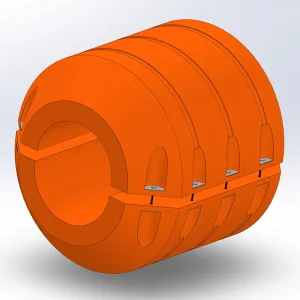

Small Floating Balls: Global Industrial Status & Advanced Engineering
An analytical overview of spherical polymer flotation components, shade ball dynamics, fluid level telemetry sensors, and evaporation control matrices across municipal and industrial ecosystems.
1. The Evolution of Small Floating Balls in Modern Fluid Management
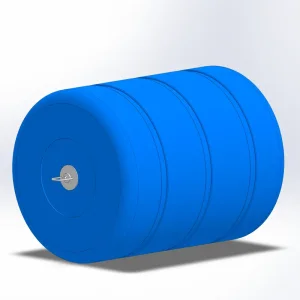
In contemporary fluid engineering, industrial hydrology, and process containment, small floating balls (spherical floats ranging from 50 mm to 600 mm in diameter) have transitioned from simple passive buoyancy markers to highly engineered thermodynamic and mechanical barrier units. Originally utilized primarily as fluid shut-off mechanisms in valves and basic reservoir markers, spherical polyethylene floats now serve as primary defense systems against surface evaporative losses, volatile organic compound (VOC) fugitive emissions, thermal dissipation in chemical treatment baths, and light-induced algae proliferation in municipal water bodies.
Global demand for spherical flotation solutions has surged dramatically due to accelerating water scarcity in arid mining districts (such as the Atacama Basin, Western Australia, and the American Southwest), stringent environmental legislation regarding open-surface wastewater containment, and the expansion of sensory IoT arrays across smart water networks. Small floating balls provide an inherently stable geometrical solution: unlike flat floating covers, a blanket of thousands or millions of self-orienting spherical units automatically adjusts to dynamic liquid fluctuations, withstands aggressive shear winds by nesting into interlocking hexagonal configurations, and permits the uninhibited operation of submersible pumps, aerators, and intake screens.
Critical Engineering Metric: A comprehensive monolayer cover of UV-stabilized, high-density polyethylene small floating balls reduces surface evaporation by up to 85% to 90%, suppresses solar UV penetration by 95% to arrest bromate formation in chlorinated water, and conserves up to 75% of heating energy in industrial pickling and plating vats.
2. Material Science: Polyethylene Formulation & Environmental Longevity
The operational environment for small floating balls is notoriously unforgiving. Modules deployed in open tailings ponds, municipal reservoirs, or offshore sea installations are subjected to intense solar radiation (up to UV20 exposure indexes), severe thermal cycling between -40°C and +70°C, abrasive sand slurries, and chemically aggressive leachates containing sulfuric acid, cyanides, or heavy hydrocarbons.
At Shandong Binzhou Juhua Rubber & Plastic Co., Ltd. (Juhua / Giant Rubber), material formulation is anchored in linear low-density polyethylene (LLDPE) and high-density polyethylene (HDPE) resins compounded with proprietary hindered amine light stabilizers (HALS), carbon black (Class 1 weatherproofing at 2.0% to 2.5% loading), or non-toxic UV-reflective pigments. This specialized compounding prevents polymer photo-oxidation, chain scission, and environmental stress cracking (ESCR) as evaluated under ASTM D1693 benchmarks. For projects requiring permanent ballast, each sphere can be precision-metered with treated water, non-freezing saline solution, or inert non-swelling ballast to ensure that 50% to 55% of the spherical volume remains submerged, rendering the blanket impervious to wind uplift exceeding 100 km/h.
China Factory Efficiency & Shandong Industrial Cluster Advantages
How Juhua leverages computerized rotational moulding, integrated tooling centers, and supply-chain proximity in Binzhou, Shandong to deliver superior buoyancy hardware with rapid turnarounds.
Automated Variable-Frequency Rotomoulding
Our facility utilizes state-of-the-art bi-axial rock-and-roll and carousel rotomolding systems featuring multi-zone electronic temperature sensors and variable-frequency drives. This guarantees homogeneous wall thickness distribution without thin spots or seam vulnerabilities.
- Wall thickness tolerances held to ±0.3 mm
- Fully seamless single-piece monocoque mouldings
- Zero residual molding stress for impact resilience
Rapid In-House CNC Tooling & Prototyping
Situated in the heart of Shandong's precision polymer fabrication belt, Juhua maintains internal CNC aluminum mould-making facilities. We transform customer CAD profiles into functional cast or machined aluminum moulds within 10 to 14 days, minimizing time-to-market.
- Custom diameters, external ribs, and internal chambers
- Threaded brass/stainless inserts embedded in situ
- Bespoke branding, logos, and traceability indexing
Economies of Scale & Raw Material Security
Leveraging high-volume procurement partnerships with Sinopec and international petrochemical majors, our facility ensures consistent resin melt index (MFI) and continuous mass-production output capability, insulating overseas EPC contractors from supply disruptions.
- Over 500,000 spherical units monthly capacity
- Pre-compounded virgin resins with batch certs
- Direct container loading at Qingdao Port (2.5 hrs transit)
Multi-Sector Industrial Application Scenarios
From municipal water conservation to hazardous chemical plating tanks and smart offshore telemetry, our small floating spheres adapt seamlessly to challenging hydrologic regimes.
Tailings Ponds & Mining Leach Pads
Mining operations in Australia, Chile, and Central Asia employ ball blankets to mitigate toxic cyanide and acid evaporation while deterring migratory waterfowl from settling in hazardous chemical containment basins.
- Eliminates wildlife mortality in pregnant leach solutions
- Dramatically cuts acid mist and toxic vapor discharge
- Resistant to abrasive slurry and mineral crystallization
Chemical Plating & Surface Finishing Tanks
Metal finishing facilities cover open electroplating, anodizing, and phosphating baths with hollow polypropylene or polyethylene balls to generate a flexible thermal insulator blanket without impeding rack access.
- Reduces electrical/steam heating expenditures by up to 75%
- Captures 95% of corrosive vapors, protecting superstructure
- Automated parts insertion pushes spheres aside smoothly
IoT-Enabled Sensor & Telemetry Spheres
Modern maritime authorities and environmental contractors incorporate electronic sensing nodes, battery packs, and LoRaWAN/Satellite transceivers directly into custom rotomolded hollow floating spheres.
- Hermetically sealed waterproof internal cavities
- High-visibility safety pigments with UV protection
- Real-time monitoring of pH, salinity, DO, and turbidity
Custom Small Floating Ball Technical Benchmarks
Standard parameters for industrial, reservoir, and marine-grade spherical flotation products. All dimensions can be custom-tooled to client engineering specifications.
| Outer Diameter (mm) | Wall Thickness (mm) | Material Formulation | Nominal Weight (g) | Coverage (Units / m²) | Primary Industrial Use Case |
|---|---|---|---|---|---|
| Ø 100 mm (4") | 1.8 – 2.5 mm | Pure Virgin HDPE / Carbon Stabilized | 40 – 65 g | 116 units/m² | Electroplating Tanks & Laboratory Baths |
| Ø 150 mm (6") | 2.2 – 3.2 mm | Food-Grade Virgin HDPE (NSF 61 Option) | 140 – 210 g | 51 units/m² | Municipal Reservoirs & Water Treatment |
| Ø 200 mm (8") | 2.8 – 4.0 mm | UV20 Resistant LLDPE (Ballasted/Hollow) | 350 – 580 g | 29 units/m² | Agricultural Lagoons & Odor Abatement |
| Ø 300 mm (12") | 3.5 – 5.5 mm | High-Impact PE Shell + Closed-Cell PU | 1,200 – 1,900 g | 13 units/m² | Dredging Demarcation & Slurry Barriers |
| Ø 400 mm (16") | 4.5 – 7.0 mm | Marine-Grade PE with Molded Center Holes | 2,800 – 4,200 g | 7.2 units/m² | Port Mooring & Navigational Safety Lines |
| Ø 500+ mm (20"+) | 6.0 – 9.0 mm | High-Density PE + Stainless Fasteners | 5,500 – 9,800 g | 4.6 units/m² | Offshore Cable Flotation & River Booms |
Emerging Industry Trends & Global Procurement Guidelines
How international EPC contractors, utility authorities, and mining consortia evaluate flotation hardware suppliers to ensure 15+ year operational lifespans.
1. The Transition Toward Circular Polymers & Fluorocarbon-Free Foam
A notable trajectory across global water-infrastructure tenders is the requirement for environmental compliance and non-leaching certifications. Older flotation components fabricated with uncertified regrind plastics or expanded polystyrene (EPS) cores frequently deteriorated into microplastics when subjected to mechanical abrasion and wave chop. Current engineering guidelines dictate the use of closed-cell polyurethane (PU) formulations free of ozone-depleting hydrochlorofluorocarbons (HCFCs) or hollow spherical structures with adequate monocoque wall thickness to retain structural integrity without auxiliary internal fillers.
Furthermore, leading operators now specify 100% recyclable, high-purity linear polyethylene formulations compliant with international potable water contact standards (e.g., WRAS, NSF/ANSI 61, and FDA 21 CFR 177.1520), ensuring zero organic carbon migration into purified drinking water supplies.
2. Engineering Calculation: Sizing Floating Ball Blankets
When procuring small floating balls for surface coverage (evaporation control, heat retention, or algae prevention), project engineers must calculate required units based on optimal hexagonal nesting rather than square packing. The geometric formula for theoretical coverage is expressed as:
Nesting Calculation: N = Total Surface Area (m²) / (0.866 × D²), where D represents the nominal sphere diameter in meters, with an additional 5% allowance for shoreline contour irregularity, internal structure displacement, and perimeter compression.
For pipeline or barrier applications where individual small floating spheres act as localized line buoys, buoyancy sizing must factor in dynamic hydroloads. The aggregate gross buoyancy must equal at least 1.25 to 1.35 times the sum of the floating hardware, anchored lines, and dynamic wave drag to prevent line submersion during peak hydraulic events.
Frequently Asked Engineering Questions (FAQ)
Expert answers to common procurement, hydrodynamic, and material performance queries regarding small floating balls and modular buoys.
What is the difference between hollow and ballasted small floating balls?
Hollow floating balls are ultra-lightweight and naturally float with roughly 90% of their volume above the waterline, making them ideal for indoor chemical tanks or low-wind municipal ponds. Ballasted balls are pre-filled with a calibrated quantity of water or non-freezing liquid, shifting their center of gravity downward so that roughly 50% of the sphere is submerged. This ballast prevents wind-induced displacement, raft lifting, or sphere drift during severe coastal storms and high-wind open reservoir conditions.
How do small floating balls handle freezing water and ice expansion?
Because of their spherical curvature and smooth rotational polyethylene exterior, our floating balls easily deform the horizontal ice pressure vectors. As ice sheets freeze and expand inward, the spheres are simply pushed upward along their spherical contours rather than crushed. The LLDPE material maintains high notched Izod impact toughness even at temperatures as low as -40°C, eliminating brittle failure during winter cycles.
What is the expected operational lifespan in high-UV regions?
Our black spherical balls compounded with 2.5% premium furnace carbon black deliver a designed outdoor service life exceeding 20 to 25 years under high-UV equatorial conditions. For high-visibility yellow, orange, or custom colored floating balls, we incorporate UV8 to UV20 hindered amine light stabilizers (HALS) that provide 10 to 15 years of continuous structural integrity and color retention without environmental stress cracking.
Can floating balls be customized with internal LED lighting or sensors?
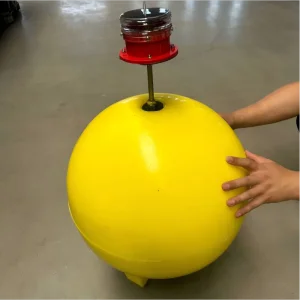
Yes. Juhua engineers custom rotomolded hollow spheres with built-in internal screw threads, internal mounting brackets, and watertight bayonet fittings. These units can accommodate solar-powered lithium cells, LED navigation markers, ultrasonic water level transmitters, or multi-parameter environmental sensing nodes for autonomous monitoring systems.
Commercial Maritime, Dredging & Fluid Infrastructure Range
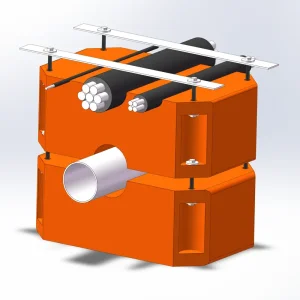
Explore our expanded hardware lines: heavy-duty rubber hoses, marine navigation buoys, pipeline floats with integrated cable troughs, and offshore containment barriers.