

Direct Factory Catalog
Standard Engineered Flotation Systems & Mooring Buoys


Industry Whitepaper Analysis
Engineering Paradigm: Buoy Barrier System Architecture & Manufacturing Intelligence
Demarcation, debris diversion, and hydrodynamic resilience require strict material science, precise rotational molding parameters, and stress-tested mechanical linkages.
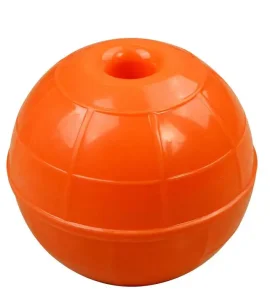
Seamless Rotomolding Shells
Traditional floating barriers welded from extruded sheets suffer high seam-rupture risks under wave fatigue. Juhua utilizes automated rotational molding featuring variable-frequency thermoregulation. The resulting closed-cell, seamless Linear Low-Density Polyethylene (LLDPE) shells deliver uniform wall thickness without residual internal molecular stresses.
Polyurethane Core Stabilization
Each floating barrier chamber is pressure-injected with high-density closed-cell polyurethane foam (≥35-40 kg/m³). Even in the catastrophic event of high-impact hull punctures caused by floating drift debris or marine collisions, zero water ingress occurs, preserving 100% of native operational buoyancy reserve margins.
Internal Continuous Tensile Spine
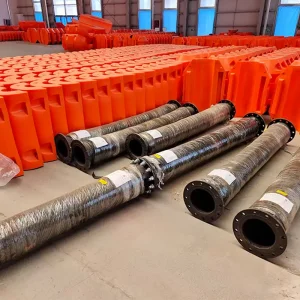
Rather than placing hydrodynamic and surge drag stress directly onto outer plastic shells, our barrier design incorporates heavy-duty hot-dip galvanized or AISI 316 stainless steel internal structural pass-through rods. Tension loads up to 450 kN are transferred longitudinally through load-bearing terminal hardware.
Strategic Sourcing Advantage
Why Tier-1 International EPCs Partner with Shandong Binzhou Juhua
Positioned within China's primary petrochemical and maritime equipment manufacturing corridors, our facility guarantees verifiable chemical composition, unmatched tooling scale, and compressed turnaround windows.
Raw Material Upstream Integration
Binzhou’s proximity to premier petrochemical refineries ensures consistent access to superior virgin polymers containing UV8-grade light-stabilizing additives. Bypassing commercial intermediaries ensures direct batch traceability, continuous melt flow index (MFI) control, and complete raw material price stability.
Large-Scale Tooling Capacity
Housing over 50 precision CNC-machined steel and aluminum rotomolding molds, Juhua executes synchronous production lines for modular floats spanning outer diameters from 200mm up to 2200mm. Contract lead times are halved relative to Western manufacturers reliant on outsourced molders.
Full Lifecycle Quality Validation
Every standard production run undergoes hydraulic pressure testing, hydrostatic displacement calculation, drop-impact testing at -20°C, and raw material tensile coupon elongation verifications in accordance with ASTM D638 standards prior to export shipping staging.
Procurement Reference Data
Buoy Barrier Technical Specifications & Baseline Pricelist Model
Indicative baseline reference FOB China prices for standard barrier and floating boom configurations. Final project invoicing varies based on internal steel spine gauge, ballast customization, and volume discounting.
| Model Series | Outer Diameter (mm) | Overall Length (mm) | Wall Thickness | Reserve Buoyancy (kg) | Tensile Core Rating | Indicative Price Range (USD/Unit) |
|---|---|---|---|---|---|---|
| BB-MINI-300 | 300 mm | 800 mm | 6.0 mm ± 0.5 | 52 kg | 12 mm SS304 / 45 kN | $45.00 - $68.00 |
| BB-STD-500 | 500 mm | 1000 mm | 8.0 mm ± 0.8 | 175 kg | 18 mm HDG / 110 kN | $95.00 - $140.00 |
| BB-HD-800 | 800 mm | 1200 mm | 9.5 mm ± 1.0 | 490 kg | 24 mm Alloy / 230 kN | $220.00 - $310.00 |
| BB-DEBRIS-1000 | 1000 mm | 1500 mm | 11.0 mm ± 1.0 | 980 kg | Internal Through-Chain / 350 kN | $430.00 - $590.00 |
| BB-SEC-1200 | 1200 mm | 2000 mm | 12.5 mm ± 1.2 | 1850 kg | High-Tensile Wire Mesh / 480 kN | $750.00 - $1,150.00 |
* All baseline pricing reflects standard virgin PE shell with closed-cell PU foam fill. Ex-works and CIF quotes provided on project request.
Engineered Field Environments
Macro Municipal & Marine Floating Barrier Solutions
From extreme ocean currents to sensitive reservoir intake gates, customized floating barrier configurations protect industrial and natural marine ecosystems.
Hydroelectric Dam Trash Racks
Submerged debris, driftwood, and macro-plastic waste directly threaten hydropower turbine runner blades and penstocks. Heavy-duty buoy barriers fitted with weighted stainless-steel drop screens block submerged debris down to 3 meters, reducing unbudgeted emergency plant shutdowns by over 75%.
Harbor Security & Demarcation
Naval defense facilities, commercial bulk-carrier berths, and cruise ship terminals require clear hydrodynamic stand-off perimeters. Visual high-visibility orange/yellow buoy barriers reinforced with high-strength mooring bridles prevent unauthorized watercraft entry and secure deepwater turning basins.
Mining Tailings Ponds & Water Treatment
Mining operational containment ponds demand chemical inertness against aggressive leachates, acidic waters, and suspended abrasive slurries. Virgin rotomolded polyethylene provides zero corrosion indices against aggressive pH 2-12 media, maintaining functional containment where steel pontoon systems fail rapidly.
Municipal Drinking Water Intakes
Drinking water reservoirs require strict food-contact grade certifications. Juhua barriers use certified non-toxic, non-leaching pigments and polymers that inhibit biofouling and algae colonization, providing zero taste, odor, or chemical migration into municipal drinking water reserves.
Enterprise Procurement Matrix
Addressing Global Contractor Supply Chain Risk
International EPC contractors face project risks when procuring marine flotation assets. Juhua's factory-direct delivery framework eliminates common structural pitfalls.
Standardized Fit & Replacement Interoperability
Global dredging and infrastructure fleets run across multiple hemispheres. Juhua's CNC-machined standardized molds yield fully interchangeable float halves and modular units. Spares delivered five years later maintain 100% bolt-hole and saddle alignment with existing fleets, preventing costly field modifications.
Optimized Ocean Container Packing Ergonomics
International ocean freight often equals the production cost of lightweight, hollow buoyancy products if nested poorly. Juhua engineers custom container packing plans for 40HQ configurations, utilizing dimensional nesting that cuts international ocean freight expenditures by up to 32% per cubic meter delivered.
Third-Party Inspection & Certification Readiness
Every shipment can be independently audited by SGS, Bureau Veritas, or Lloyd's Register prior to port loading. Material composition reports, tensile yield test logs, and buoyancy margin verification certificates are provided directly within the standard export documentation packet.
Comprehensive Flotation Catalog
High-Performance Subsea, Mining, and Flotation Infrastructure



Technical Clarifications
Frequently Asked Questions: Buoy Barriers & Marine Flotation Engineering
Explanations on hydraulic sizing, buoyancy safety margins, installation dynamics, and warranty provisions.
How do engineers calculate required buoy barrier buoyancy reserves?
Total buoyancy must calculate not only the dry weight of the barrier shell and internal steel rod, but must also incorporate dynamic wave-slap drag, river current velocity pressures, hydrodynamic skin friction, and the cumulative weight of anticipated wet debris accumulation. As an engineering benchmark, total barrier line buoyancy must exceed dry self-weight plus structural hardware by a reserve margin of at least 150% to 200% to guarantee stable continuous freeboard exposure under 3 m/s flood events.
Why is rotomolded polyethylene preferred over welded steel or hollow ABS?
Marine environments rapidly degrade carbon steel through galvanic corrosion and salt-spray pitting, requiring periodic sandblasting and toxic anti-fouling coatings. Injection-molded ABS plastics lack chemical resistance and become brittle under prolonged solar UV radiation. In contrast, rotomolded Linear Low-Density Polyethylene (LLDPE) enriched with UV8 carbon additives resists saline attacks, withstands high chemical pH variance, absorbs heavy vessel impact elastic deformation without permanent rupture, and delivers over 15 years of maintenance-free operational life.
What is the standard factory warranty coverage protocol?
Juhua guarantees all rotomolded polyethylene flotation structures under a standard warranty initiating on the date the buyer officially transfers project equipment to the asset owner or investor. Coverage extends up to 18 months post-handover date, or 12 continuous months following initial marine water deployment, whichever condition occurs first. Coverage protects completely against manufacturing material flaws, localized shell wall thinning defects, and internal closed-cell PU delamination.
Can buoy barrier systems be engineered with custom anti-intrusion screens?
Yes. Juhua engineers fully integrated subsurface skirts and drop curtains using galvanized marine-grade steel chain-link, heavy-duty stainless-steel wire rope grids, or UV-resistant nylon netting. Below-water drop depths typically range from 0.5 meters to 3.0 meters, engineered with counterweight sinkers and flexible bottom contours to prevent riverbed snags while blocking submerged trash, logs, and aquatic invasive weeds.
What core hydraulic parameters are required for accurate system quotation?
To deliver an optimized engineering proposal, our engineering team requires: (1) Waterway span length and bathymetric depth profile, (2) Peak surface flow velocity (m/s) and maximum historical water-level variance, (3) Type and volume of floating load (submerged timber, plastic waste, hyacinth, or vessel traffic), (4) Mooring shore connection geotechnical conditions, and (5) Regional maritime regulatory color/lighting specifications (IALA standards).
How are buoy barriers moored to handle extreme flood water fluctuations?
Fixed rigid moorings will fail during severe flood crests. Juhua barrier installations utilize custom articulated shore abutment sliding rails, radial tension swing arms, or automated gravity-counterweighted winch systems. These designs permit the floating boom line to rise and descend across multi-meter tidal or flood ranges without introducing destructive oblique shear forces across anchoring pins.