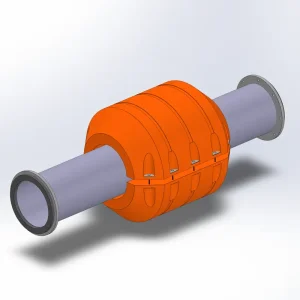
Integrated Flotation & Flexible Conduits
Explore our foundational range of marine-tested pipe floats, anchor points, and specialized marine buoy modules.
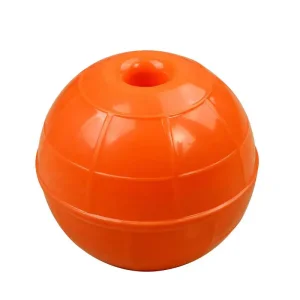
ODM Heavy-Duty ABS Float Ball for Water Engineering Projects
View Product Details
OEM Advanced Modular Pipe Floats with Integrated Cable Channels
View Product Details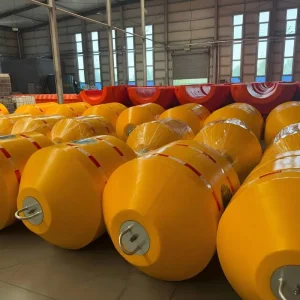
OEM Offshore Mooring Buoy for Safe Vessel Anchoring
View Product Details
Custom Pipeline Float For Subsea Tie-In & Controlled Positioning
View Product Details
High-Quality Reliable Marine Navigation Buoy for Safe Waterways
View Product Details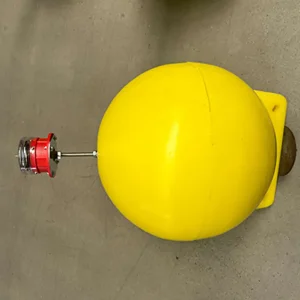
ODM Floating Ball with LED Light – Reliable Marine Navigation
View Product Details
ODM Mooring Buoy For River Terminals & Workboat Berths
View Product Details
ODM Rotomolded Surfboard – Durable, Safe Water Sports Solution
View Product DetailsEngineering Principles: Flexible Dredge Hose Dynamics
In heavy hydraulic dredging operations, flexible dredge hoses serve as the critical dynamic joints between floating pipelines, trailing suction hopper dredgers (TSHD), and fixed discharge installations.
Severe Abrasion Resistance
Fabricated using thick internal natural rubber liners combined with synthetic polybutadiene elastomer formulations. Engineered specifically to withstand abrasive continuous impingement from coarse sand, gravel, and sharp coral slurries without premature delamination.
Dynamic Multi-Axis Flexibility
High-tensile helical carbon steel wire reinforcement paired with spiraled multi-ply synthetic cord allows dredge conduits to maintain internal circular cross-sections while enduring high torsional strain, wave shock loads, and tidal swell deflections.
Integral Vulcanized Flanges
Flanged connections incorporate solid-cast or machined carbon steel rings integrated directly into the hose carcasses during vulcanization, eliminating galvanic weak spots and mitigating catastrophic blowouts under full discharge working pressures.
Localized Engineering Application Scenarios
Flexible dredging lines encounter distinctly variable operational stresses depending on local hydrodynamic energy, geological composition, and environmental restrictions.
Port & Deep-Water Channels
Navigational channel deepening demands armored flexible discharge lines capable of bending up to 90 degrees around busy ship traffic routes while resisting external surface collisions from support tugs.
Mega Land Reclamation
Pumping hundreds of thousands of cubic meters of ocean seabed requires ultra-wide inner diameter (up to 1200mm) hoses integrated with high-buoyancy polyethylene floats for continuous multi-kilometer operations.
Riverbed Desilting & Flood Control
Navigating winding inland waterways necessitates lightweight modular hoses with short bending radii, enabling high maneuverability over rapid elevation variations and irregular shore connections.
Mining Tailings Slurry Transfer
Extreme chemical resistance is combined with high mechanical puncture tolerance to handle acidic, highly viscous mine tailings discharge over sensitive retention reservoirs without leakage risk.
China Factory Integration & Global Procurement Logic
Global procurement teams must balance capital expenditure against catastrophic marine downtime costs. Modern Chinese manufacturing offers substantial structural advantages.
End-to-End Vertical Manufacturing
By producing both the high-durability elastomeric flexible hoses and the companion rotationally molded polyethylene floats in-house, system compatibility is secured, avoiding interface friction and mismatches.
Standardized Mold Accuracy & Spares
Modern CNC-machined rotation molds and microprocessor-governed heat profiles result in repeatable wall thicknesses, ensuring replacement parts match pipeline configurations out-of-the-box.
Export Packaging & Lead Time Agility
Standard containerized stowing plans and custom steel cradling protect vulcanized flange collars from transit deformation, arriving project-ready at global ports without logistical snags.
Material Performance Matrix: Flexible Hose vs HDPE Pipeline
A calculated overview guiding selection between dynamic elastomeric hoses and rigid floating polyethylene conduits.
| Evaluation Parameter | Flexible Reinforced Rubber Dredge Hose | HDPE Floating Pipeline Solution | Procurement Selection Criteria |
|---|---|---|---|
| Abrasion Index (Slurry) | Extreme (High-grade natural/synthetic rubber) | Moderate to High (PE100 Grade) | Rubber preferred for high coarse sand & gravel fractions. |
| Bend Radius Tolerance | Short radius (4 to 6 times nominal I.D.) | Rigid (Requires floating ball joints or hinges) | Dynamic vessel connections mandate flexible rubber hoses. |
| Buoyancy Integration | External PE float shells or integral buoyant foam | Direct clamp-on modular PE Pipe Floats | Floats must provide reserve buoyancy factor of 1.2 to 1.3. |
| Working Pressure Range | 10 Bar to 30 Bar (High burst rating) | 6 Bar to 16 Bar (SDR rating dependent) | High-pressure pump outlets require reinforced steel plies. |
| Corrosion & Saltwater | Immune (EPDM/Synthetic outer covers) | Completely non-reactive (Polyethylene) | Both eliminate costly cathodic maintenance in marine use. |
Emerging Industry Trends & Quality Assurance Standards
Compliance and material efficiency drive the modern dredging pipeline ecosystem.
Stringent Marine Compliance
Full conformance to ISO 28017 (Rubber hoses and hose assemblies, wire or textile reinforced, for dredging applications) and PIANC design principles ensure pipeline integrity under adverse marine swell stresses.
Embedded RFID & Wear Monitoring
Next-generation dredging conduits integrate thickness indicators and RFID chips within the inner liner, alerting predictive maintenance platforms to wall loss before structural breach occurs.
Eco-Optimized Rotomolding
Shifting away from toxic chemical stabilizers toward Virgin UV-8/UV-20 stabilization packages prevents microplastic shedding into sensitive coastal ecosystems, backed by non-polluting closed-cell PU cores.
Frequently Asked Technical & Procurement Questions
Expert answers addressing the practical realities of commissioning marine dredging and slurry flotation conduits.
What are pipeline floats, and how do they function with flexible dredge hoses?
Pipeline floats (buoyancy modules) are rotationally molded polyethylene bodies clamped symmetrically along discharge pipes. When matched with flexible dredge hoses, they absorb dynamic wave action, keep the line buoyant above the seabed, and ensure stable fluid conveyance without kinking.
How do you calculate necessary buoyancy for working slurry lines?
Total buoyancy must exceed the aggregate dry weight of the conduit, fittings, and conveyed medium under worst-case slurry density (not clean water). Engineering convention requires a 20% to 30% reserve buoyancy margin: Total Buoyancy ≥ (Pipe Weight + Slurry Weight + Accessories) × 1.2 to 1.3.
Are rotomolded polyethylene floats compatible with marine saltwater?
Yes. Premium virgin polyethylene (PE) is inherently resistant to saltwater electrolytic deterioration, UV radiation, and broad chemical attack. Unlike steel pontoons, PE floats require zero cathodic protection, no painting, and never rust.
What are the standard industrial warranty terms?
The standard warranty initiates when the buyer formally hands over the equipment to the investor and extends for 18 months post-handover, or 12 months after the completed installation date—whichever milestone occurs first.
What engineering parameters are required for an accurate price quote?
We require outer and inner pipe diameters, wall thickness, conveyed medium specifics and its maximum specific gravity, operating and surge pressures, minimum bending radius constraints, project site wave conditions, and the final port of delivery.
Can custom dimensional molds and wall thickness profiles be fabricated?
Yes. Float profiles are tailored to custom steel, HDPE, or elastomeric hose shells. High-visibility coloration, custom molded-in cable troughs, identification emblems, and interior closed-cell polyurethane foam fill densities are matched directly to client specification drawings.
Expanded Flotation, Rubber Hoses & Subsea Buoyancy
Complete your deployment package with our heavy-duty elastomeric slurry hoses, mooring systems, and offshore pipe floats.

Custom Mooring Buoy for Marinas, Harbors & Offshore Anchorage
View Product Details
Custom Pipe Floats for Floating Pipeline Buoyancy
View Product Details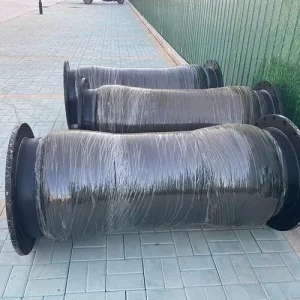
Best Durable Rubber Hoses for Efficient Fluid & Sediment Transport
View Product Details
High-Quality Pipe Floats for Floating Pipeline Support
View Product Details
High-Quality High-Visibility Marine Buoys for Offshore Operations
View Product Details
Custom Pipe Floats for Water Pipeline & Marine Support Projects
View Product Details
High-Quality Advanced Pipeline Float System for Subsea Installations
View Product Details