Engineering Grade Flotation & Containment Assets
Explore our certified rotomolded pontoons, slurry conduits, and offshore buoyancy assemblies built for heavy operational loads.


Enterprise Sourcing Demands for Marine & Pontoon Flotation
Strategic maritime operators require standardized, modular pontoon foundations capable of resisting high mechanical shear, UV degradation, and chemical oxidation.
Civil Maritime & Commercial Harbors
Global port developers demand modular water boat pontoons that integrate seamlessly with gangways, floating docks, and utility tie-ins. Durability against wave agitation and heavy impacts from workboats without hull cracking is non-negotiable.
Industrial Dredging & Slurry Transport
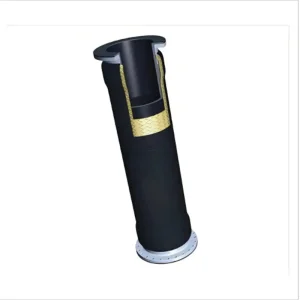
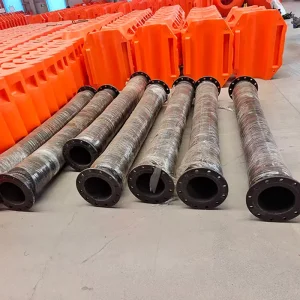
Contractors operating suction and cutter dredgers mandate high-displacement polyethylene float bodies. Pipeline units must support massive wet weights containing sand, gravel, and tailings, maintaining a safe freeboard across dynamic tidal zones.
Mining Tailings & Effluent Management
Processing plants require chemical-resistant floating intake pontoons and pump platforms. Virgin LLDPE construction ensures complete immunity to acid leachates, alkalis, and slurry abrasion where traditional steel or painted pontoons rapidly corrode.
Hydrodynamic Stability & Sizing Calculations
Our production line utilizes variable-frequency rotational molding, electronic automatic temperature measurement, and closed-cell polyurethane cores for guaranteed buoyancy margins.
| Application Vector | Primary Material Matrix | Core Density / Filling | Reserve Buoyancy Safety Factor | Operational Lifespan |
|---|---|---|---|---|
| Boat Pontoon Platforms | UV-Stabilized Virgin LLDPE Shell | EPS or High-Density PU Foam | 1.30 – 1.45 reserve capacity | 15 – 20 Years Maintenance-Free |
| Slurry Dredging Pipelines | Cross-Linked Polyethylene (XLPE) / HDPE | Closed-Cell PU (35–45 kg/m³) | 1.20 – 1.30 over working slurry weight | 10 – 15 Years Continuous Use |
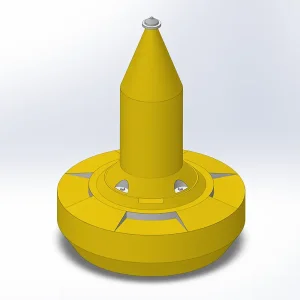
| Oceanic Navigation Buoys | Engineered PE Shell + Internal Steel Frame | Flexible PU Foam Infusion | 1.50+ offshore wave crest rating | 12 – 18 Years Marine Duty |
| Floating Trash & Silt Barriers | Impact-Modified High-Density PE | Solid Polyurethane Structural Fill | 1.25 kinetic impact rating | 8 – 12 Years Debris Resistance |
Buoyancy Sizing Formula for Floating Infrastructure:
To prevent marine sinking during high-density slurry transport or crowded platform operations, the total buoyancy calculation must be calculated using full load conditions:
*Note: Never size buoyancy based on an empty conduit or static boat unladen weight. Freeboard height must retain roughly 25% to 30% of total float body elevation above the waterline.
Technical Roadmap & Future Engineering Horizons
Addressing the shifting paradigm from welded steel floats to smart, recyclable rotomolded polymer systems equipped with IoT sensory arrays.
UV20+ Stabilized LLDPE
Development of ultra-high molecular weight compounding that mitigates long-term UV photo-oxidation in extreme equatorial maritime climates.
Monolithic Shells
Seamless one-piece rotational molding eliminating weak seam lines. Enhanced ribs distribute mechanical bolting tension evenly across hulls.
Smart Flotation Modules
Integration of internal draft sensors, accelerometers, and GPS beacon cavities directly molded into navigation pontoons and dredging floats.
100% Recyclable Polymers
Complete product lifecycle recyclability. Re-grinding obsolete floats into non-structural subsea buoyancy sleeves without environmental leakage.
Localized Support & Rigorous Compliance Framework
Engineered to meet stringent maritime regulatory covenants across North America, Europe, Australia, and Middle Eastern marine terminals.
Material Certification
Virgin polyethylene feedstocks tested strictly in accordance with ASTM D1693 for Environmental Stress Crack Resistance (ESCR > 1000 hours) and high-impact Izod energy ratings.
Comprehensive Warranty
Clear, verifiable protection: starts when the buyer hands over goods to the project developer and ends 18 months post-handover or 12 months after installation completion, whichever arrives first.
Global Export Ready
Turnkey ocean logistics handling standard dry van containers, open-top units, and flat racks. Pre-installed marine-grade 304/316 stainless or galvanized hardware ready for field assembly.
Frequently Asked Technical & Sourcing Questions
Comprehensive answers regarding pipeline flotation calculation, modular boat pontoon design, and factory custom capabilities.
Q: What are pipeline floats and how do they function?
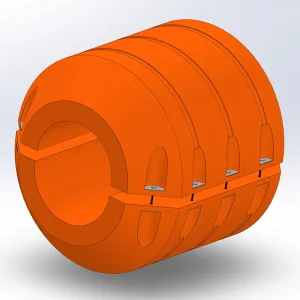
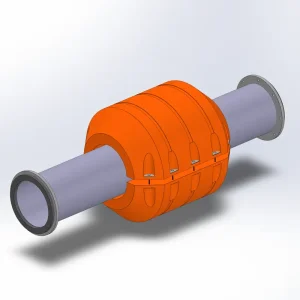
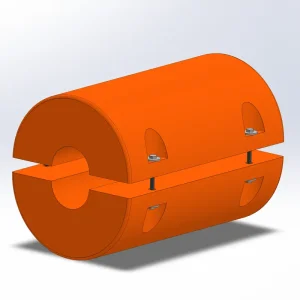
Pipeline floats, also recognized in industrial sectors as dredge floats or modular buoyancy shells, are clamp-on hollow or foam-filled polyethylene shells manufactured to secure directly around discharge pipes. They maintain dredge pipelines afloat, properly aligned, and clearly visible on waterways while avoiding excessive flex stress on flange joints.
Q: How is the required buoyancy calculated for a pipeline or pontoon?
Total buoyancy capacity must decisively exceed the combined weight of the pipe, structural framework, all couplings, and the inner medium (water, heavy slurry, or tailings). Flotation modules should guarantee at least 20% to 30% reserve buoyancy so that roughly a quarter of the pipe diameter remains visible above the water surface.
Q: Are polyethylene pontoon floats suitable for long-term seawater duty?
Yes. High-grade rotational molded polyethylene is naturally inert to salt spray, electrolytic corrosion, and marine bio-fouling. Unlike painted steel pontoon tanks that require cathodic anodes and recurring drydock maintenance, PE pontoons do not rust, chip, or leak, ensuring decades of continuous coastal service.
Q: What is the factory warranty coverage period?
Warranty coverage initiates upon handover from the purchasing contractor to the project asset owner and remains fully valid for 18 months following handover, or 12 months subsequent to physical site installation, whichever milestone occurs earliest.
Q: What specifications are required to receive an accurate quote?
To produce an optimized technical quotation, our engineers require: outer conduit diameter (OD), pipe wall thickness and raw material, slurry density, total line run length, environmental deployment conditions (calm river, open sea, industrial pond), needed freeboard height, hardware grade (Galvanized vs 316SS), and destination port.
Q: Can pontoon bodies and pipeline floats be fully customized?
Yes. Float bodies are custom-tooled to match precise pipe outside diameters, with options for molded cable channels, custom pigmentation (safety orange, international yellow), hazard signage, and mooring cleat cavities. We regularly design and CNC custom rotational molds per technical client drawings.
Specialized Marine Mooring, Barriers & Pontoon Systems
Review our specialized foam-filled navigation buoys, containment booms, and fluid transfer solutions engineered for maximum offshore uptime.