
Primary Industrial Marine Flotation & Buoy Units
Engineered from virgin UV8-grade virgin linear low-density polyethylene (LLDPE) reinforced with polyurethane/expanded polystyrene core matrix. Explore technical specifications below.
-
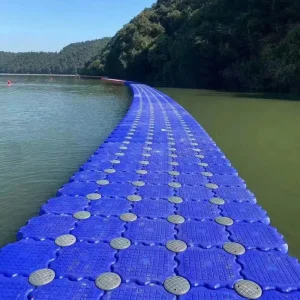
OEM Advanced Floating Boat Pontoon for Custom Water Platforms Supplier, Factory
View Product Specs -

High-Quality Robust Floating Boat Pontoon for Safe and Flexible Water Platforms Product, Factories
View Product Specs -
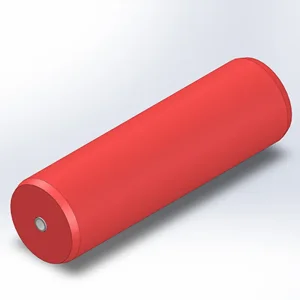
Custom Floating Barrier Systems for Effective Water Safety and Pollution Control Product, Factories
View Product Specs -

ODM Heavy-Duty Marine Buoys for Reliable Navigation & Offshore Safety Manufacturer, Companies
View Product Specs -
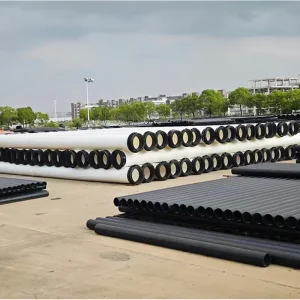
OEM Industrial-Grade Pipeline for Reliable Fluid Transport Companies, Factory
View Product Specs -

Custom Pipeline Float for Subsea Tie-In and Controlled Positioning Products, Quotes
View Product Specs -

High-Quality Pipe Floats for Water Transfer, Mining and Marine Pipeline Systems Manufacturer, Pricelist
View Product Specs -
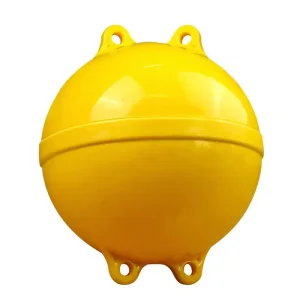
ODM ABS Float Ball for Reliable Marine and Freshwater Buoyancy Manufacturers, Factories
View Product Specs
Evolving Dynamics of Global Pipeline Flotation Procurement
Infrastructure contractors, marine port dredging operators, and deep-pit mining conglomerates are transitioning away from welded steel pontoons toward high-molecular rotomolded polyethylene buoyancy modules.
Total Cost of Ownership (TCO) Shift
Traditional steel pontoon floaters require regular cathodic corrosion monitoring, anti-fouling recoating, and frequent barge dry-docking. Modern rotomolded polyethylene pipe floats deliver an operational lifespan exceeding 15–20 years in hyper-saline and caustic slurry conditions with virtually zero ongoing maintenance, significantly slashing lifecycle expenditure.
Stringent EPC Environmental Compliance
Global dredging and environmental authorities (including PIANC, USACE, and EU Marine Strategies) strictly enforce non-toxic, anti-leaching regulations for offshore works. Virgin, closed-cell polyurethane or solid expandable polystyrene-filled PE bodies eliminate catastrophic fluid-fill pollution risks even upon dynamic collisions with marine vessels.
Demand for Modular Precision Geometry
Complex pipeline runs—ranging from subsea tie-in pulling lines to tailings pump discharge lines equipped with integrated electrical power or hydraulic control umbilicals—demand customized internal cavities, anti-slip ribbed contact profiles, and precision-cast cable trough channels molded directly into the buoyancy shell.
OEM Floating Pipe Buoys Cost Drivers & Indicative Pricelist Model
B2B procurement costs depend on resin chemistry, wall thickness, internal foam core density, hardware metallurgy, and shipping cube efficiency. Review our engineering pricing breakdown.
| Outer Pipe Diameter (OD) | Float Shell Length (mm) | Outer Float OD (mm) | Total Net Buoyancy (kg) | Hardware Grade | Indicative Price Range (USD/Pair) |
|---|---|---|---|---|---|
| DN 110 – 160 mm (4" - 6") | 800 mm | 400 – 500 mm | 50 – 110 kg | Galvanized / SS304 | $45.00 – $78.00 |
| DN 200 – 250 mm (8" - 10") | 1,000 – 1,100 mm | 580 – 650 mm | 160 – 260 kg | HDG Class 8.8 / SS316 | $85.00 – $145.00 |
| DN 280 – 355 mm (11" - 14") | 1,200 mm | 750 – 850 mm | 350 – 520 kg | HDG Class 8.8 / SS316 | $160.00 – $240.00 |
| DN 400 – 500 mm (16" - 20") | 1,300 – 1,500 mm | 900 – 1,100 mm | 650 – 1,100 kg | HDG / Dacromet / SS316 | $280.00 – $460.00 |
| DN 560 – 710 mm (22" - 28") | 1,800 – 2,200 mm | 1,200 – 1,450 mm | 1,400 – 2,300 kg | Hot-Dip Galv. Class 8.8 | $520.00 – $890.00 |
| DN 800 – 1,000 mm (32" - 40") | 2,200 – 2,500 mm | 1,600 – 1,900 mm | 2,800 – 4,800 kg | Heavy Dacromet / SS316 | $1,100.00 – $1,950.00 |
| DN 1,200 mm (48" Mega-Bore) | 2,500 – 3,000 mm | 2,100 – 2,300 mm | 5,500 – 8,000 kg | Engineered Fasteners M24+ | Custom Direct Quote |
Polymer Raw Material Index
Pricing correlates directly with international virgin petrochemical LLDPE/HDPE indexes. Virgin resins formulated with UV8–UV15 stabilizers prevent premature chain scission under high solar irradiance, outperforming cheaper recycled regrind blends.
Infill Foam Density (EPS/PU)
Solid-core PU closed-cell foam (~35-45 kg/m³) provides superior hydro-compressive resistance during tidal cycling compared to low-density EPS beads. Foam density directly dictates structural stability and long-term buoyancy retention.
Fastening Hardware Metallurgy
Bolts, nuts, flat washers, and locking spring rings dictate installation integrity. Grade choices include Hot-Dip Galvanized (HDG, zinc coat ≥85μm), Dacromet anti-corrosion coating, marine-grade SS304, or extreme subsea SS316.
Container Packing Density
Due to volumetric dimensions, hollow semicircular shells nested inside one another prior to bolting maximize 40ft High Cube (HC) container capacity, drastically reducing unit ocean freight surcharges to international ports.
Macro-Sector Engineered Flotation Solutions
Across hydraulic dredging operations, mineral tailings disposal, and coastal safety infrastructure, flotation dynamics change fundamentally depending on the specific gravity of the pumped fluid.
Cutter Suction Dredging (CSD) Discharge
Trailing suction hopper dredgers (TSHD) and CSD systems convey heavy abrasive mixtures of sharp sea sand, gravel, and sea mud. In these intense hydraulic environments, floating pipe buoys prevent HDPE or steel discharge pipes from sagging, minimizing pipe wall cavitation and keeping the entire discharge pipeline visible to passing vessels in congested ports.
Mining Tailings & Slurry Transport
In gold, copper, iron ore, and phosphate extraction processing plants, tailings decant lines convey dense slurries (densities ranging from 1.3 to 1.65 t/m³). Buoyancy calculations must accommodate this added mass to prevent submerged pipelines from dragging on tailing pond beds and snapping fragile flange connections.
Subsea Pipeline Pulling & Tie-In
During offshore gas and intake installations, long welded pipeline strings require gradual controlled submersion. Modular pipe buoys provide staged buoyancy, allowing precision engineering teams to position pipelines precisely above seabed anchors before controlled detachment or flooding.
Buoyancy Calculation Principles & Design Criteria
A frequent error in dredging procurement is calculating buoyancy requirements based on clean water. Industrial pipe buoys must be sized for slurry weight, wave dynamics, and marine bio-fouling build-up.
Certified Engineering Buoyancy Formula
To ensure a continuous 25% to 30% pipe diameter freeboard visibility above the waterline under harsh wind-wave actions, total buoy capacity is calculated via:
B_net = [ ( W_pipe + W_fluid + W_hardware ) / N ] × SF
Slurry Specific Gravity Adjustments
Clean river water measures ρ = 1.0 t/m³, while thick marine sand slurry reaches ρ = 1.3 to 1.5 t/m³. Ignoring slurry gravity causes pipelines to sit too deep, inducing excessive joint stress and risk of total line submersion.
Wave Dynamic & Cyclic Shear Forces
When pipelines float across coastal breaking zones, wave crests and troughs exert cyclic torque. Our patented internal locating ribs lock securely against pipe outer walls, preventing longitudinal slippage without crushing the underlying HDPE conduit.
Integrated Flotation Spacing Matrices
Spacing pairs edge-to-edge creates a continuous pontoon, whereas intermittent spacing (e.g., 1 pair every 3 to 6 meters) optimizes project budgets for mild inland river dredging and water transfer lines.
Worldwide Testing, Certifications & Quality Control
Operating in over 80 countries requires manufacturing to exacting international standards. Every Juhua float shell is tracked from incoming polymer lot to final packaging.
ASTM D1693 ESCR Testing
Environmental Stress Crack Resistance (ESCR) exceeds 1,000 hours in 10% Igepal solution, guaranteeing shells resist surface cracking even under high mechanical strain and chemical contact.
ISO 9001:2015 Process Control
Variable-frequency rotational molding machines with real-time internal mold temperature sensors maintain wall thickness uniformity across the radius within ±0.5 mm tolerances.
Hydrostatic Infill Testing
Closed-cell PU core samples undergo 72-hour continuous water immersion testing. Water absorption remains below 1.5% by volume, ensuring buoys maintain steady net buoyancy over years of service.
Custom Duty & CIF Port Support
Full commercial documentation, including Form E, CO, and third-party inspection reports (SGS/BV) expedite customs clearance at key global hubs across Southeast Asia, the Middle East, Europe, and the Americas.
Material Science Roadmap & Sustainable Manufacturing
We continue to pioneer smart marine buoy technologies and environmentally sustainable polymer circularity for next-generation coastal operations.
Bio-Based & Recyclable Thermopolymers
Our material science lab is qualifying cross-linked and chemically recyclable polyethylene feedstocks. Our closed-loop take-back initiatives enable decommissioned float shells to be ground and reprocessed into non-critical infrastructure components.
IoT-Enabled Smart Pipeline Telemetry
Advanced OEM models feature internal molded pockets designed for battery-powered IoT tilt and tension beacons. These modules relay real-time data regarding pipeline bend angles, dynamic wave shock loading, and GPS drift alerts directly to shore engineers.
Ultra-Dense Deep-Water Syntactic Foam
For subsea tie-in operations exceeding 50 meters depth, our engineering team supplies high-density syntactic foam cores containing glass microspheres that resist deep-water hydrostatic compaction without loss of buoyancy.
Frequently Asked Questions on Pipe Buoys & Quotes
Comprehensive engineering clarity addressing calculations, custom molds, operational warranties, and shipping logistics.
What is the standard manufacturing lead time for custom OEM floating pipe buoys?
Standard stock tooling for popular outer diameters (DN110 to DN1000) ships within 7 to 15 business days for full 40ft container loads. Custom mold designs—incorporating specialized cable grooves, non-standard outer diameters, or bespoke wall-thickness profiles—require 20 to 25 calendar days for CNC mold fabrication and initial prototype testing.
How do you calculate the exact number of floats required for a slurry dredging pipeline?
Net required buoyancy is calculated by combining total pipe dry weight, maximum slurry mass (pipe volume × slurry specific gravity, e.g., 1.3–1.6 t/m³), and connected flange hardware, multiplied by a safety margin of 1.25 to 1.3. Dividing total project buoyancy by individual pair net buoyancy yields the precise unit quantity, typically leaving about one-fourth of the pipe diameter above water.
Can polyethylene pipe floats withstand high-salinity seawater and tropical UV exposure?
Yes. Shells are rotationally molded using virgin high-density or linear low-density polyethylene compounded with UV8 to UV15 light stabilizers and anti-aging agents. Unlike traditional steel pontoons, our floats do not corrode, peel, or leach into seawater, and will not crack under prolonged solar exposure in equatorial marine environments.
What is the standard warranty coverage on Juhua flotation products?
Our warranty begins on the date the buyer formally delivers the project goods to the investor/operator, expiring 18 months from that handover milestone or 12 months after active water installation—whichever arrives first. Full warranty documentation accompanies every commercial export bill of lading.
What data must an EPC contractor supply to receive a definitive quotation?
To provide an exact FOB or CIF quote, our engineering team requires: (1) Pipe outer diameter (OD) and pipe material (HDPE, steel, or rubber hose); (2) Pipeline overall length and wall thickness; (3) Conveyed medium type and slurry specific gravity; (4) Water salinity and surface wave/current conditions; (5) Desired float color and bolt metallurgy; and (6) Target destination sea port.
How do you optimize container packing to reduce international shipping costs?
Float bodies consist of two complementary semicircular halves. Depending on the outer diameter, matching halves can be nested inside each other or stacked securely in paired sets. Unassembled nesting in 40ft High Cube containers minimizes dead air space, helping reduce per-unit freight charges.
Specialized Pipeline Floats, Mooring Buoys & Safety Booms
Complete your aquatic installation with our heavy-duty marine mooring buoys, subsea tie-in buoyancy modules, and floating pollution barrier components.
-
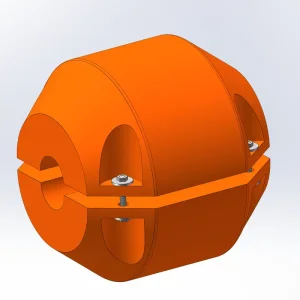
ODM Pipe Floats for Pump Discharge and Water Transfer Lines Manufacturers, Company
View Product Specs -
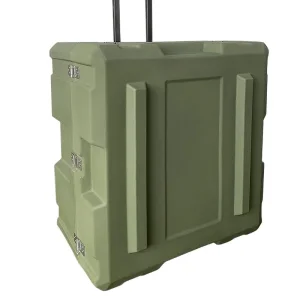
ODM Heavy-Duty Rotomolded Military Airdrop Storage Container Supplier, Factory
View Product Specs -

High-Quality Advanced Pipeline Float System for Secure Subsea Installations Supplier, Factories
View Product Specs -

Custom Mooring Buoy for Marinas, Harbors and Offshore Anchorage Systems Manufacturers, Quotes
View Product Specs -

ODM Floating Barrier Systems for Water Safety and Project Efficiency Manufacturer, Company
View Product Specs -
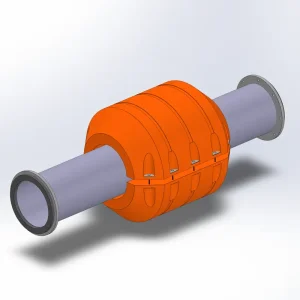
High-Quality Pipeline Float With Modular Buoyancy for Subsea Installation Manufacturers, Manufacturer
View Product Specs -

ODM Foam-Filled Mooring Buoy for Marinas and Offshore Anchorages Company, Factories
View Product Specs -
Custom Custom Mooring Buoy for Marina Berths and Offshore Supplier, Manufacturer
View Product Specs
Request an Engineering Buoyancy Calculation & Pricelist
Connect directly with our flotation engineering staff. Provide your pipe dimensions, slurry specific gravity, and target destination port to receive a tailored buoyancy profile, container-loading scheme, and firm quotation within 24 hours.