
Featured Marine Flotation Assemblies
Factory-direct rotomolded pipe floats, industrial conduit pontoons, and mooring buoys calibrated for variable specific gravity slurry transit.

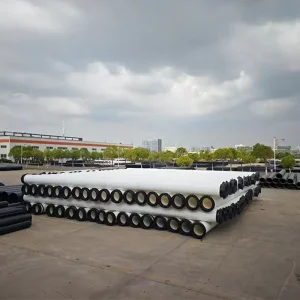
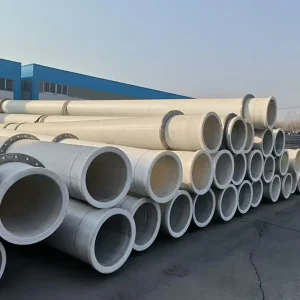

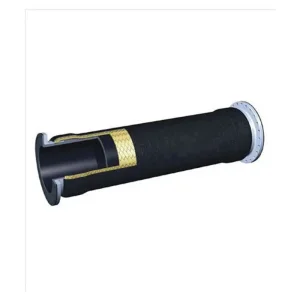


Strategic Hydrodynamic Float Engineering & Global Macro Industry Solutions
Navigating global maritime expansion, rigorous dredging logistics, and tailings management requires structural buoyancy units that mitigate catastrophic buckling, dynamic shear loads, and hyper-saline erosion.
Land Reclamation & Massive Dredging
Modern mega-ports demand high-volume hydraulic extraction where discharge lines experience continuous internal wear and external wave actions. Our rotational-moulded shells withstand up to 45 kJ/m² Charpy impact strength, preventing wall fractures during rough sea states.
Hyper-Dense Mineral Slurry Handling
Tailings conduits operate under specific gravity metrics surpassing 1.6 to 2.2 kg/L. Standard hollow shells buckle or list. Juhua closed-cell polyurethane cores (density 35–45 kg/m³) preserve 100% net buoyancy even in the event of peripheral puncture.
Civil Potable Water & Effluent Diversion
Reservoir bypass lines and desalination intakes mandate NSF/FDA-compliant polymeric contact surfaces. Our virgin linear low-density polyethylene (LLDPE) blends guarantee non-leaching operation across freshwater reservoirs and marine sanctuaries.
Comparative Analysis: Rotomolded PE vs. Traditional Steel Floats
Naval architects and EPC contractors are progressively decommissioning fabricated steel float assemblies due to electrochemical corrosion, field servicing dangers, and accelerated localized buckling.
| Performance Parameter | Juhua Rotomolded Polyethylene (LLDPE) | Conventional Fabricated Mild Steel | Engineering Strategic Advantage |
|---|---|---|---|
| Corrosion Resistance | Inert to saltwater, H2S, pH extremes (2-12) | High susceptibility to pitting & rust; needs recoating | Zero maintenance cycle costs across 15+ years |
| Impact Recovery | High elastic recovery, resists workboat collision | Permanent plastic deformation, seam rupture | Prevents pipeline displacement & catastrophic flooding |
| Internal Core Filling | In-situ polyurethane closed-cell foam (≥35kg/m³) | Typically hollow air-chambers (leak prone) | Maintains complete positive buoyancy if punctured |
| Assembly & Transport | Interlocking modular halves with galvanized hardware | Heavy crane handling, high transport payload | Reduces offshore assembly hours by up to 45% |
| Environmental Friction | Ultra-smooth hydrodynamic surface; bio-fouling inert | Surface scaling increases drag; bio-fouling prone | Low drag coef. reduces anchor line pull loads |
Field Scenarios: Built for Mission-Critical Marine Conditions
Our modular float collars are configured for exact hydrodynamic performance across challenging real-world industrial installations.
Subsea Pipeline Tie-In
Controlled ballasting during deepwater conduit lowerings. Staged buoyancy modules mitigate flexural stress on HDPE and carbon steel pipelines during offshore alignment.
Integrated Cable Troughs
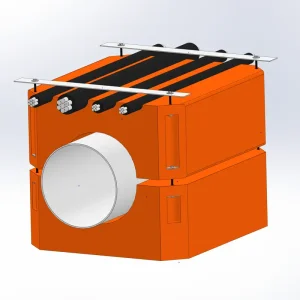
Dual-purpose flotation units featuring molded recessed troughs to carry continuous subsea telemetry, high-voltage power conduits, or hydraulic umbilical lines.
Debris & Turbidity Curtains
Heavy-duty floating barriers built to arrest silt run-off, plastic debris, and industrial flotsam around hydroelectric spillways, intakes, and pristine harbor basins.
Pontoons & Floating Workstations
Modular pontoon units delivering scalable payload capacity for floating generator stations, dredging pump barges, and aquaculture maintenance docks.
Standardized Quality Assurance & International Marine Compliance
Juhua production protocols are built to satisfy Tier-1 maritime engineering standards, ensuring reliable global delivery and strict site compliance.
Automated Process Control
Our rotomolding cells feature variable-frequency electronic multi-zone temperature logging to guarantee uniform wall thickness and avoid structural weak points.
UV Stabilized Polymers
Compounded with virgin UV8/UV16 stabilizers, our polymeric hulls resist solar degradation across tropical and equatorial offshore environments for 15+ years.
Certified Hydrodynamic Testing
Every production batch undergoes destructive tensile testing, hydrostatic load evaluation, and buoyancy freeboard assessments to verify design safety factors.
Technical Roadmap: The Next Era of Smart Flotation Infrastructure
Addressing future industry demands with smart monitoring systems, low-carbon bio-polymers, and advanced composite materials.
IoT-Enabled Smart Floats
Testing embedded LoRaWAN and satellite-enabled sensors within floating collars to report real-time freeboard loss, structural load stress, and line breach warnings directly to base stations.
Circular Low-Carbon Materials
Partnering with resin producers to engineer high-purity recycled circular polymers that retain up to 92% of virgin tensile impact strength while reducing product carbon footprints.
High-Pressure Composite Shells
Developing hybrid rotomolded-filament designs to support high-load subsea pipelines at extended deployment depths where traditional low-density polymers experience compressive creep.
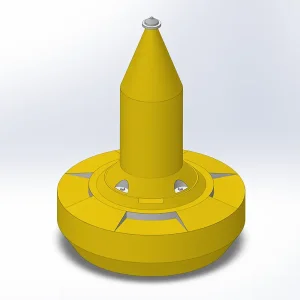
Advanced Marine Buoys & Deepwater Pipeline Infrastructure
High-integrity navigational markers, subsea tie-in modules, and specialized foam-filled mooring buoys for commercial harbor and offshore systems.



Frequently Asked Questions (FAQ) & Sizing Guidelines
Direct answers to core engineering questions regarding buoyancy margins, material longevity, and installation mechanics.
Total float buoyancy must exceed the aggregate weight of the pipe shell, internal conveying medium (slurry or water), and steel bolt hardware. Standard maritime practices require a safety reserve margin of 1.2 to 1.3 times the total weight (F = [Wpipe + Wmedium + Waccessories] × 1.25), ensuring roughly 25% to 30% of the pipe diameter sits visibly above the water line under dynamic wave action.
Polyethylene is non-polar and chemically inert, making it completely immune to galvanic reactions, marine pitting, and biological micro-foul growth. Unlike painted or galvanized steel drums that rust when surface coatings are scratched, virgin LLDPE compounded with UV8/UV16 stabilizers retains its mechanical tensile strength across prolonged saltwater and sunlight exposure.
To deliver an accurate hydrodynamic quotation and CAD mold setup, provide: nominal pipe outside diameter (OD) and wall thickness, pipeline base material (HDPE, steel, composite), specific gravity of conveyed fluid (e.g., 1.35 kg/L sand-water slurry), current and tidal wave velocity at deployment sites, and required cable channel dimensions if electrical or telemetry lines must be integrated.
Standard industrial warranty begins when the buyer hands over the equipment to the terminal project developer and terminates 18 months from the official bill-of-lading handover date, or 12 months after on-water commissioning, whichever milestone arrives first. Full traceable documentation, pressure batch certificates, and spare bolt sets are included with all export container shipments.