
Direct-from-Factory Deployment
Primary Hydro Flotation & Barrier Equipment
Precision-molded pipeline floats, navigational guidance buoys, and barrier modules engineered for offshore resilience, industrial water transfer, and sediment containment.
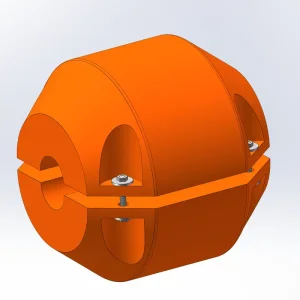
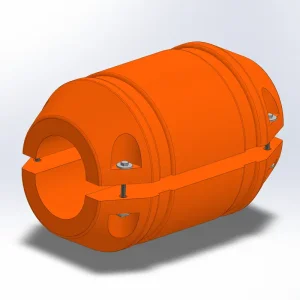
High-Quality Durable Pipe Floats for Safe Operations Products
Explore Specification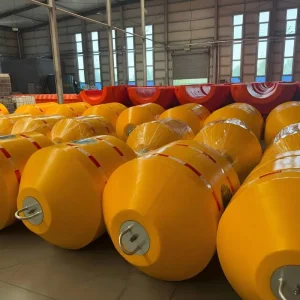
High-Quality Mooring Buoy for Commercial Berths, Marinas and Offshore Holding Areas
Explore Specification
OEM Heavy-Duty Pipeline Float for Stable Floating Pipeline Systems
Explore Specification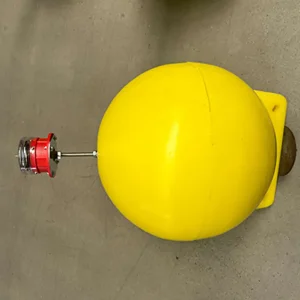
ODM Floating Ball with LED Light – Reliable Marine Navigation and Safety
Explore Specification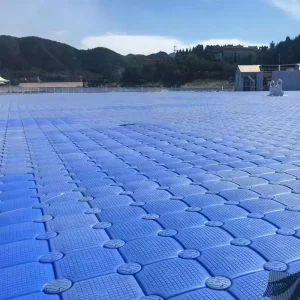
Best High-Performance Floating Boat Pontoon for Modular Water Platforms
Explore Specification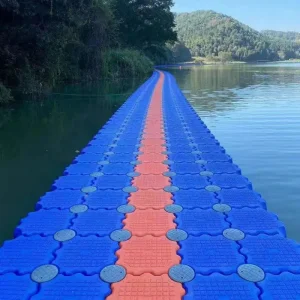
High-Quality Robust Floating Boat Pontoon for Safe and Flexible Water Platforms
Explore Specification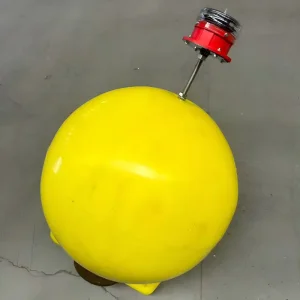
ODM High-Visibility Floating LED Ball for Marine and Freshwater Safety
Explore Specification
Industry Macro Overview
The Paradigm Shift in Aquatic Debris & Trash Containment
Analyzing structural transition from legacy steel-drum assemblies to monolithic rotomolded high-density polyethylene (HDPE) polymer barriers across international waterways.
Across global hydraulic architecture, the containment and extraction of anthropogenic debris, woody biomass, macro-plastics, and aquatic weeds have transformed from an incidental maintenance chore into a mission-critical operational requirement. Industrial hydro-electric turbines, municipal water intakes, commercial shipping canals, and estuarine conservation ecosystems suffer billions of dollars in downtime and mechanical failure annually due to inadequate surface debris barrier engineering. When evaluating the best floating trash boom companies and factories, civil procurement engineers must look far beyond standard catalog dimensions: modern debris containment demands sophisticated hydro-mechanical calculation, rigorous UV stabilization polymers, closed-cell buoyancy redundancy, and field-tested anchor mechanics.
For decades, conventional containment booms relied on painted carbon steel pontoons, welded oil drums, or lightweight fabric curtains. In hostile marine and riverine environments, these obsolete methods faced rapid catastrophic degradation. Steel oxidizes, suffers galvanic degradation in saltwater, and risks total sinking upon puncturing. Flexible PVC curtains stretch, tear under severe current velocities, and succumb to rapid ultraviolet embrittlement within 12 to 24 months. As an industry leader with over 20 years of manufacturing excellence, Shandong Binzhou Juhua Rubber & Plastic Co., Ltd. (Juhua / Giant Rubber) has spearheaded the engineering transition toward rotational-molded virgin polyethylene (PE) barrier shells integrated with high-density polyurethane (PU) closed-cell foam matrices.
20+
Years Manufacturing Experience
80+
Countries & Ports Supplied
1,000 m²
Precision Rotomolding Facility
100+
Specialized Marine Technicians
Technical Procurement Framework
Engineering Evaluation Criteria for International Buyers
Critical mechanical specifications, hydro-ballasting parameters, and material longevity metrics that EPC contractors must verify before factory contracting.
Monolithic Shell & Polyurethane Infill
Rotational molding ensures seamless, one-piece float bodies with zero stress welds. Filled with high-density closed-cell EPS or PU foam, the unit maintains full design buoyancy even in the catastrophic event of a localized puncture from high-velocity floating timber.
C4/C5 Maritime Corrosion Resistance
Every connecting hinge, swivel shackle, load-bearing through-rod, and ballast chain must utilize Grade 316 stainless steel or heavy hot-dip galvanization meeting ISO 1461, ensuring over 15 years of maintenance-free survival in aggressive tropical marine waters.
Hydrodynamic Freeboard & Draft Ratio
Calculated buoyancy curves guarantee optimal freeboard height above the water surface to block over-topping floating debris, while the submerged profile and optional underwater debris skirts arrest sub-surface plastics without inducing vortex-induced rollover.
Hydraulic Buoyancy Safety Rule:
Total Float Reserve Buoyancy ≥ (Boom Deadweight + Debris Hydrodynamic Drag + Mooring Load) × 1.25 to 1.35
Engineering standard requiring 25% to 35% surplus displacement to offset sudden current surges, turbulent crests, and maximum debris accumulation forces.
| Material Engineering Factor | Juhua Rotomolded PE / HDPE Booms | Conventional Welded Steel Booms | Lightweight Inflatable PVC Booms |
|---|---|---|---|
| Expected Service Life (Marine) | 15 – 25 Years (UV-Stabilized Class 8) | 5 – 8 Years (Severe Rust & Flaking) | 2 – 4 Years (Puncture & Seam Failures) |
| Puncture / Impact Behavior | Closed-Cell Foam Core Prevents Sinking | Air Chamber Floods; Instant Sinking | Deflates Completely Upon Log Impact |
| Maintenance & Re-Coating | Zero Maintenance; Non-Stick Polymer | Annual Anti-Corrosion Sandblasting | Frequent Patching & Valve Rebuilding |
| Hydraulic Current Capability | Rated Up to 3.5 m/s Continuous Velocity | Rigid Stress Fracture at Hinge Pins | Subsurface Skirt Rollover at > 1.0 m/s |
| Total Cost of Ownership (10 Yrs) | Lowest (Capex amortized over 20+ yrs) | High (Constant crane lifts & repainting) | Extreme (Repeated total line replacements) |
Macro Application Vectors
Specialized Field Solutions for Critical Water Infrastructure
How leading factories configure modular barrier lines across hydroelectric power plants, municipal catchments, ports, and ecological preservation programs.
Hydroelectric Dam Forebays
Heavy-duty floating trash booms positioned upstream of spillways and turbine intake pens deflect millions of tons of floating logs and debris, preventing intake clogging, cavitation damage, and catastrophic power station shutdowns.
Municipal Drainage & Outfalls
Urban storm runoff delivers massive concentrations of discarded packaging, plastics, and bottles into urban channels. Strategic angled boom barriers guide waste directly into automated skimmers or collection conveyor belts.
Commercial Ports & Harbors
Protecting busy navigation channels and berths from drift hazards. Our modular floating booms and marine buoys delineate vessel exclusion perimeters while trapping harbor trash before it fouls ship propulsion screws.
Desalination & Industrial Intakes
Coastal reverse osmosis desalination plants and thermal power cooling loops demand pristine seawater intake. Subsurface mesh curtains fitted to rotomolded booms halt jelly-plankton and floating marine grasses without choking flow volumes.
Factory Process Control
State-of-the-Art Rotomolding Engineering at Juhua
Inside our specialized production plant in Binzhou, Shandong: Where computer-controlled rotational casting ensures absolute wall-thickness integrity and batch interchangeability.
A persistent risk when sourcing from low-tier floating trash boom factories is wall-thickness variation. Inferior rotational ovens without computer-monitored variable frequency drives produce thin, brittle radii along float corners. When struck by a fast-moving drift log during a flood surge, these structurally compromised corners fracture instantly, allowing water ingress.
At Shandong Binzhou Juhua Rubber & Plastic Co., Ltd., every float shell is produced under strict closed-loop quality protocols. Our factory leverages variable-frequency speed regulation, automated multi-zone infrared temperature measurement, and premium virgin LLDPE raw polymers blended directly with UV-stabilizer Masterbatch. Every production cycle adheres to a zero-compromise principle: Quality First, Reputation First, Service First.
Automated Thermal Profiling
Continuous bi-axial rotational heating cycles guarantee completely uniform polymer melt flow, eliminating microscopic pinholes, internal voids, and uneven resin deposition across complex geometric contours.
Standardized Mold Interchangeability
High-tolerance CNC-machined aluminum casting tooling guarantees that replacement modules, connecting lugs, and pipeline floats manufactured today fit pipelines and barrier arrays deployed years prior with perfect zero-gap accuracy.
Sub-Zero Cryogenic Impact Testing
Random production samples undergo drop-dart and ball impact testing chilled to -30°C. Our high-grade virgin polymers retain ductile elasticity without shattering under severe freeze-thaw or ice breakup conditions.
Logistics & Installation Integrity
Compliance Framework, Hydrodynamic Anchoring & Logistics
How professional engineering teams design catenary anchor networks, accommodate seasonal tidal shifts, and minimize international container shipping costs.
Dynamic Catenary Anchor Design
A floating boom is only as resilient as its terminal bank anchors and seabed moorings. We provide full mooring calculations accounting for high-water flood levels, bottom scour, anchor drag, and deadman concrete block sizing to eliminate anchoring dislodgement.
International Quality Certification
Factory operations conform strictly to ISO 9001 quality management, ISO 14001 environmental safety, and maritime buoyage specifications set by IALA (International Association of Marine Aids to Navigation and Lighthouse Authorities).
Optimized High-Cube Containerization
Modular floats and cylindrical pipe pontoon halves are designed with precise stacking nesting geometry. This optimizes freight efficiency in 40ft High Cube (HQ) ocean containers, minimizing international logistics costs per linear meter of deployed barrier.
Engineering Roadmap
Technology Roadmap: Intelligent Aquatic Barriers (2025–2035)
Next-generation innovations bridging the gap between passive polymer flotation barriers and autonomous hydrological containment infrastructure.
Phase I: 2025 – 2027
IoT Tension & Load Sensing
Integrating wireless load-cell telemetry into terminal anchor bridles. Remote facility managers receive automated alerts when accumulated flood debris mass approaches tensile safety thresholds, enabling predictive dredging before boom failure.
Phase II: 2028 – 2031
Solar-Powered Active Guidance
Embedded low-draw solar modules paired with LED maritime flashers and ultrasonic acoustic transducers to harmlessly divert fish populations away from industrial intake channels while funneling debris into catch pockets.
Phase III: 2032 – 2035
Bio-Circular High-Modulus Polymers
Pioneering closed-loop recycled marine polymers compounded with organo-silane crosslinkers. Delivers identical tensile strength and UV-20 longevity while achieving Net-Zero cradle-to-gate certification for environmentally compliant tenders.
Technical Clarifications
Frequently Asked Engineering & Procurement Questions
Direct technical answers to the most common hydrological, structural, and contractual questions submitted by global EPC contractors.
What is the optimal angle for positioning a riverine trash boom?
Floating trash booms should never be installed perpendicular (90 degrees) to river currents. A 90-degree installation traps debris against the face, causing hydrodynamic drag to skyrocket and forcing trash beneath the skirt. Installing the barrier at an angle between 30 to 45 degrees utilizes the water's natural vector force to passively deflect debris toward an extraction pocket or riverbank collection conveyor.
How does polyurethane (PU) foam filling prevent boom submergence?
Unlike hollow drums that fill with water and sink when punctured by sharp rocks or timber, Juhua rotomolded float bodies are packed with closed-cell expanded polyurethane or polystyrene foam. Because each cell is sealed, water cannot migrate through the matrix. Even if a vessel collides with the float and fractures the outer PE shell, the unit retains over 95% of its original displacement.
Can your barrier systems endure seasonal winter freeze and ice breakup?
Yes. Virgin high-density polyethylene possesses exceptional cryogenic ductility down to -40°C. Additionally, the cylindrical tapered profile of our barrier modules encourages encroaching sheet ice to push the floats upward rather than crushing them laterally. For heavy frozen river breakup conditions, specialized internal steel load spines distribute shearing loads directly to heavy shoreline tension anchors.
What is the standard warranty period and replacement terms?
Our standard commercial warranty coverage begins on the date the client hands over the equipment to the end project owner and remains valid for 18 months from the handover date or 12 months after the completed installation date, whichever milestone is reached first. Standardized molds ensure identical replacement segments can be air- or sea-freighted quickly.
What engineering data must an engineer provide for an accurate quotation?
To deliver an exact technical proposal, please provide: waterway width, average and peak flood current velocities (m/s), maximum wave height, water depth and tidal range, dominant debris type (plastic bottles, weed mats, or large timber logs), required barrier length, and the destination discharge port for container optimization.
Are custom colors, LED solar beacons, and subsurface skirts available?
Yes. While high-visibility safety yellow and orange are standard, any RAL color specification can be cast. We regularly integrate heavy-duty stainless steel debris screens, weighted rubber turbidity skirts, and self-contained IALA-compliant solar LED flashers directly into the float bodies at the factory level.
Extended Fleet Catalog
Specialized Modular Barriers, Pipelines & Marine Buoys
Explore heavy-duty rotomolded pontoons, high-impact storage systems, foam-filled mooring buoys, and long-distance dredging pipeline floats ready for global deployment.

ODM Floating Barrier Systems for Water Safety and Project Efficiency
Explore Specification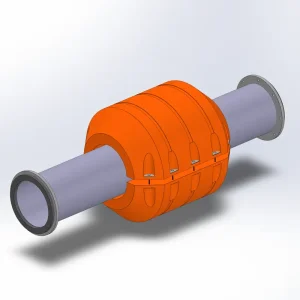
High-Quality Pipeline Float With Modular Buoyancy for Subsea Installation
Explore Specification
Best Polyethylene Mooring Buoy – Reliable Floating Solutions for Modern Marine Projects
Explore Specification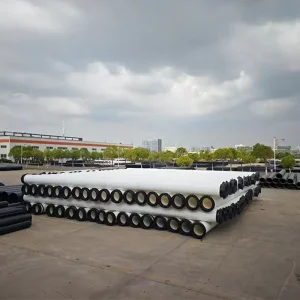
ODM High-Density Pipeline for Efficient Liquid and Gas Transport
Explore Specification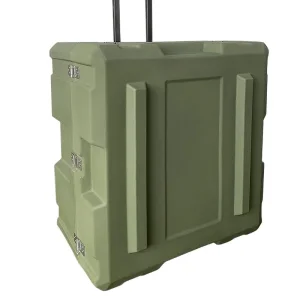
ODM Heavy-Duty Rotomolded Military Airdrop Storage Container
Explore Specification
OEM Foam-Filled Mooring Buoy for Chain-Connected Berths
Explore Specification
Custom Pipe Floats for Long-Distance Floating Pipelines and Water Transfer Systems
Explore Specification
Custom Durable Pipe Floats for Reliable Marine Operations
Explore Specification
Direct Engineering Support
Request Buoyancy Sizing & Factory Specifications
Connect straight to our rotational molding engineering workshop in Huimin County, Binzhou, Shandong. Receive CAD drawings, tensile calculations, and destination container quotes within 24 hours.
Direct Telephone / WhatsApp
+86-158-6665-7686
Instant access to senior marine project engineers.
Technical Drawings & Bids
[email protected]
Submit civil project tenders and CAD design requirements.
Manufacturing Plant
Huimin County, Binzhou City
West Industrial Park, Lizhuang Town, Shandong, China.